Aaron Sorkin: A Hollywood Screenwriter’s Insight on Trials, Protests, and Belarus’ Future
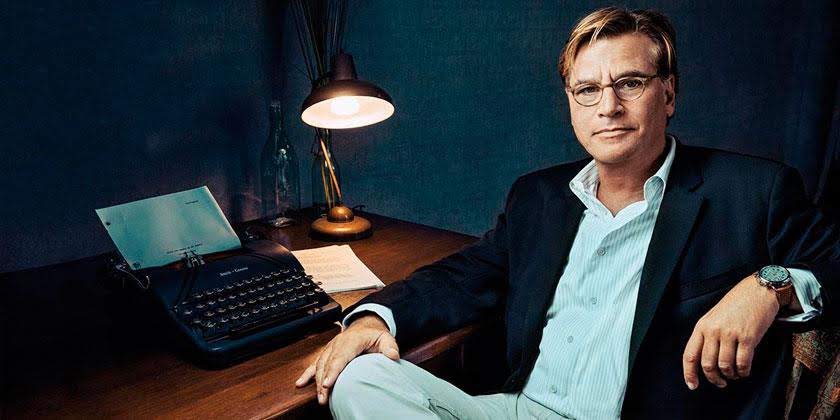
Premiere of “The Trial of the Chicago 7”
In October, the premiere of “The Trial of the Chicago 7,” written and directed by Aaron Sorkin, took place. The captivating and relevant story set in 1968 has positioned the film as a leading contender for major cinema awards this year.
The Art of Screenwriting
In Hollywood, a good script is the backbone of any successful film. It’s a well-known adage in the film industry that “with a good script, you can make both a good and a bad movie, but with a bad script, it’s nearly impossible to make a good movie.” This is why talented screenwriters, who can craft engaging stories and present them effectively, are highly valued. Screenwriting, like playing the violin, requires continuous practice and refinement. Aaron Sorkin is one such screenwriter who has made a name for himself in the industry.
Aaron Sorkin’s Heritage and Career
Sorkin’s surname comes from his paternal grandfather, Isidor, who was the first in the family to build a career in America. Born in Kopys, a town in the Vitebsk region of Belarus, Isidor moved to New York and worked in the women’s clothing industry, eventually co-founding a union known for organizing strikes to improve working conditions. His son, Bernard, became the family’s first lawyer. Unlike his siblings, Aaron was drawn to theater and dreamed of an acting career. After graduating with a degree in musical theater, he struggled as an actor before discovering a passion for writing plays. His play “A Few Good Men,” based on a military legal case, was a Broadway success and later adapted into a film starring Tom Cruise, Jack Nicholson, and Demi Moore. The film’s success, including an Oscar nomination, established Sorkin’s reputation for turning courtroom scenes into emotional dramas.
Sorkin’s Unique Approach to Screenwriting
Aaron Sorkin claims that he became a screenwriter by accident, as his primary focus is writing theater scripts, which he then adapts for the screen by adding visual elements. This method has proven successful, with films like “Moneyball,” “Steve Jobs,” and “Charlie Wilson’s War” receiving critical acclaim. Sorkin’s scripts are characterized by witty dialogues and well-defined characters who relentlessly pursue their goals despite obstacles. He often considers how his characters’ actions would be perceived by a higher power, aiming to portray them in a way that would grant them access to heaven. This empathy for his characters is a defining feature of his scripts, from “The Social Network” (which earned him an Oscar) to the TV series “The West Wing” (which won 8 Emmy Awards over 6 years).
Sorkin’s Directorial Debut
After 25 years of writing scripts for film and television, Aaron Sorkin ventured into directing. In 2017, he released “Molly’s Game,” based on the autobiographical book by Molly Bloom. The film stars Jessica Chastain, who delivers a stellar performance with complex dialogue. Sorkin’s characters are typically intelligent and eloquent, following Aristotle’s advice on idealizing drama heroes. His brilliant dialogues, though not always realistic, leave a lasting impression on audiences. His films are known for their continuous action and dialogue, with minimal silent or static scenes.
“The Trial of the Chicago 7”: A Historical Drama
Sorkin’s latest film, “The Trial of the Chicago 7,” depicts events from over 50 years ago, including a high-profile trial. In August 1968, during the Democratic National Convention in Chicago, numerous protests against the Vietnam War were organized by various youth groups. These unsanctioned protests led to violent clashes with the police, and the leaders of the organizing groups were charged with conspiracy to incite riots. Although the trial lasted about six months and gained significant political attention at the time, it has since faded from public memory. Steven Spielberg initially approached Sorkin to write the script in 2006, but production was delayed due to the Writers Guild of America strike. Sorkin resumed work on the film a decade later, securing the necessary funding for production.
The Film’s Impact and Relevance
The resulting film is bold, inspiring, and visually stunning. Sorkin’s masterful direction of a large ensemble cast creates a cohesive and powerful performance. The film’s non-linear narrative, rapid mood changes, contrasting viewpoints, and diverse character temperaments make it incredibly engaging. The cast includes Eddie Redmayne, Joseph Gordon-Levitt, Frank Langella, Mark Rylance, Yahya Abdul-Mateen II, Jeremy Strong, and Sacha Baron Cohen, who demonstrates his versatility beyond his famous characters Borat and Ali G.
In a virtual interview, Aaron Sorkin discussed the film’s relevance today, the significance of political engagement, and the future of Belarus. He emphasized the importance of understanding history to navigate the present and shape the future.
For more information on Aaron Sorkin and his works, you can visit his Wikipedia page.