Mind-Expanding Books to Boost Your Strategic Thinking
Mind-Expanding Books to Boost Your Strategic Thinking
In life, a good strategy isn’t just about planning and calculating consequences; it’s also about having a broad perspective and a large dose of creativity. Here are some insightful books to enhance your strategic thinking:
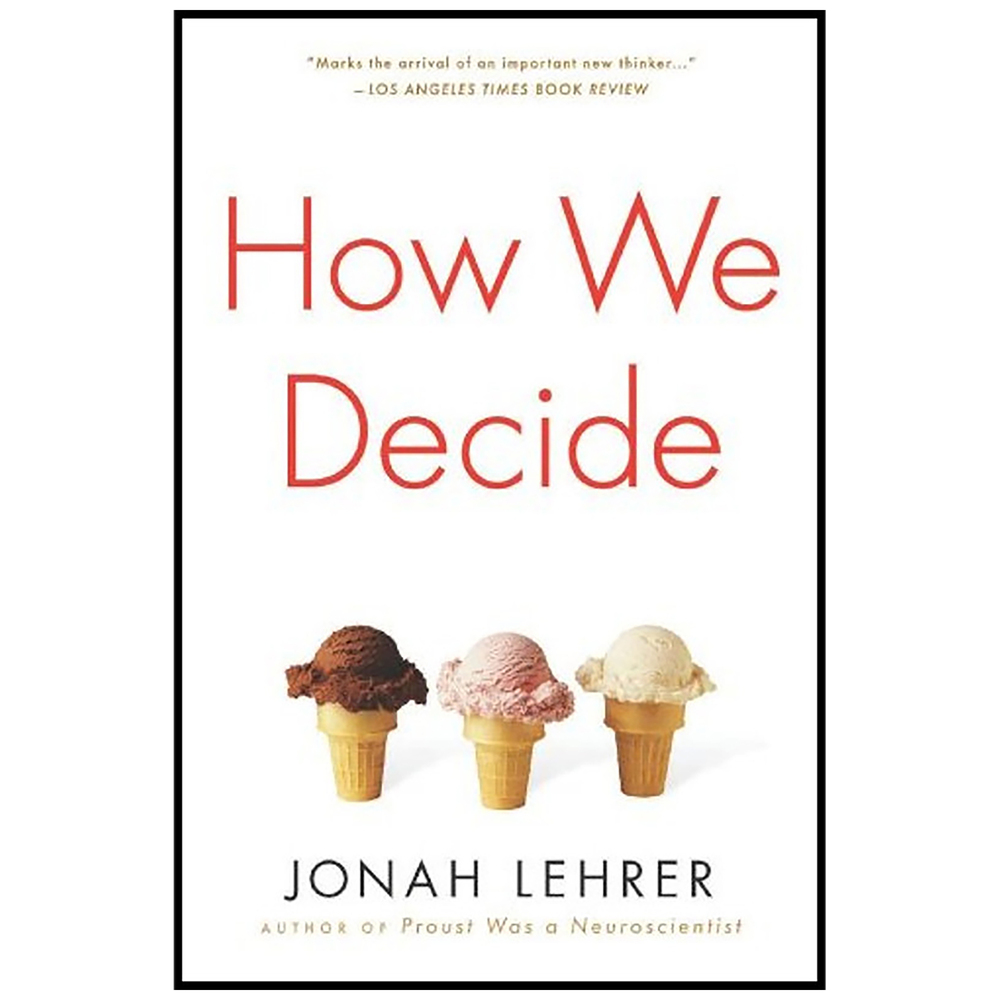
How We Decide by Jonah Lehrer
The theory that we make decisions based solely on rationality, weighing all the pros and cons, has been popular since the time of Plato. It forms the basis of economic models and serious strategies. However, Jonah Lehrer argues that this theory is flawed. He believes that logic and intuition are inseparable. Intuition, especially in critical moments when the brain is working at its limit, helps analyze options and make decisions. Sometimes, our gut feeling leads us to the same answers we would find after careful consideration—just much faster. In “How We Decide,” Lehrer explains how to call upon intuition to aid logic at the right time.
The Blue Ocean Strategy by W. Chan Kim and Renée Mauborgne
One of the most popular examples of Chan and Mauborgne’s theory is Cirque du Soleil. In its early days, this small circus couldn’t compete with larger, traditional circuses due to the high costs of maintaining and transporting animals. At a certain point, the organizers realized that they needed to entertain not just children but also adult audiences. Since they couldn’t afford to keep animals, they focused on the talent of their troupe, creating the world’s first animal-free circus. The main idea of the book is that failures follow trodden paths, wasting energy on competitors, while leaders create their own paths, directing all resources towards victory.
Thinking, Fast and Slow by Daniel Kahneman
Kahneman describes the brain’s tendency to simplify information using the term “exaggerated emotional coherence,” also known as the “halo effect.” When making decisions, our minds rely on past experiences and biases to save time. Often, the answer that seems best may not be ideal—it’s just that the brain didn’t want to delve deeper into the question and re-analyze numerous factors. Learn how to make quick decisions and eliminate biases that can hinder your judgment in this book.
The Art of War by Sun Tzu
A golden classic by a Chinese strategist, philosopher, and experienced military leader. Sun Tzu lived in the 5th century BC and believed that a general who prepares thoroughly for each battle will defeat one who relies on luck. Even in peacetime, the war around us never stops. A successful strategist engages in battles only when confident of victory, protecting themselves from defeat. A failure, on the other hand, enters a battle and only then starts thinking about how to win. The book doesn’t teach warfare but explains how to concentrate resources and achieve quick victories with minimal losses.
Influence: The Psychology of Persuasion by Robert Cialdini
Cialdini provides an example of a jewelry store that doubled the prices of poorly selling turquoise items. Suddenly, the jewelry flew off the shelves due to the principles of status and scarcity. If something is expensive, it must be high-quality and accessible to only a few—hence, it must be bought. If you are an expert in your field and want to reach the September audience, email us at writer@september.is. Include information about yourself, your occupation, and the topic you wish to write about.