Olga Pavlova: Choosing Trust and Believing in the Good in People
Olga Pavlova: Choosing Trust and Believing in the Good in People
Olga Pavlova-Sokolovskaya has been a collaborator with our magazine since its inception. As one of our top authors, she crafts wise, humorous, honest, and engaging articles focused on the psychology of relationships between women and men, mothers and children, and bosses and subordinates. Today, many claim to teach happiness, femininity, charisma, and more. But have all these “teachers” truly achieved success themselves?
About the Project
Alexander Varlamov’s project, “The Club of Successful Women: Creative Workshop,” is a series of interviews with women who, in the author’s opinion, have achieved personal success and make our world brighter and kinder, giving it meaning and wholeness. We are pleased to publish Alexander Varlamov’s interview with Olga Pavlova on our website.
Olga Pavlova’s Introduction
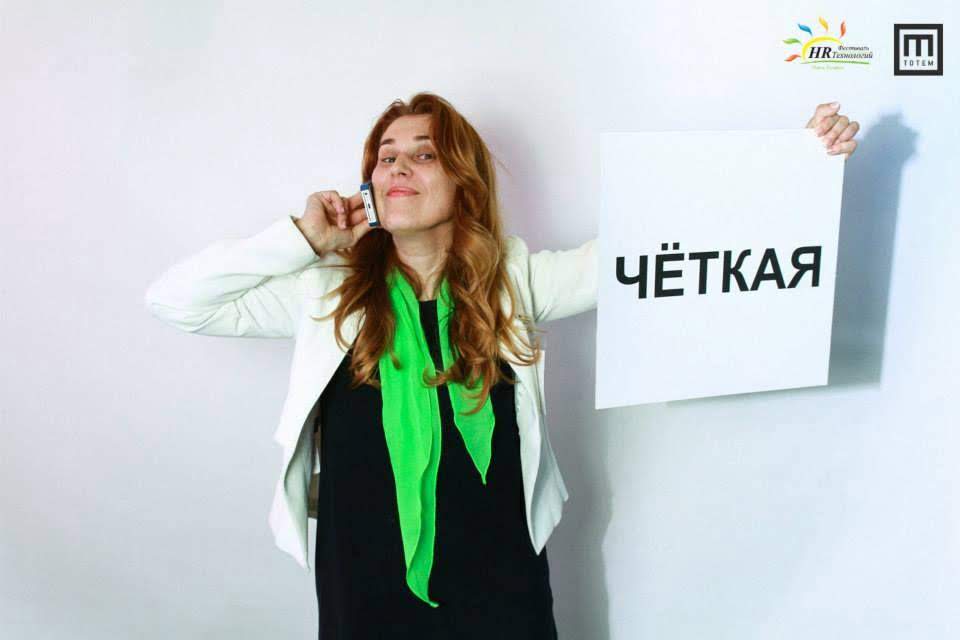
“I am 39 years old. My occupations include being a business psychologist, the key organizer of business events for human resource managers (HR Congress, HR Festival, HR Club for over 10 years), the owner of the Business Growth Center, and a business trainer since 1998. I am also a permanent author of articles on “everyday psychology” for the newspaper “AIF in Belarus,” the magazine “City of Women,” and others.”
Interview with Olga Pavlova-Sokolovskaya
On Perception of the World
Olga, what shapes your perception of the world?
My perception of the world is shaped by my values, my experiences, and the comparison of what happens to me with what is important to me. It’s as if I have internal indicators that help me understand whether I like what’s happening, if I’m growing from it, if I love it, and if it brings me warmth.
On Values
Could you tell us about your values?
Certainly, the main value is love. Love for family, children, friends, work, husband, and the world. My family, my relationships with my children, myself, my boundaries, and just being myself and being different—these are all opportunities for self-expression and freedom, which are very important to me.
Relationships with people, the opportunity for development, and the uniqueness of others are also crucial. I choose trust—whether it’s justified or not, I believe in the good in people. Our world and life are built on trust, and I highly value it. Internal harmony and the balance of different spheres are also important to me.
On Experience
Did you realize these values through experience?
Yes, this is the result of experience, the result of conscious conclusions from past events.
Was the experience difficult?
The experience was varied. On one hand, we all come from childhood, especially a challenging one. On the other hand, the search for oneself, self-actualization, the ability to defend boundaries, believe in oneself, and stay on the chosen path—most people go through this. Surprisingly, the experience of accepting oneself and one’s independence was also difficult, as was the realization that I am a separate person—regardless of whether I am married or not, have children or not, or work in a particular organization. The realization of myself and the ability not to merge with others were not easy. Such boundaries are often built through pain, but sometimes through joy. I have a need to merge with others.
On Support
Is it difficult to live without male support—financial, physical, psychological, and others?
In principle, it’s difficult to live without support. Can a woman cope alone? Yes, of course. In my life, it so happened that most of the women I know relied primarily on themselves, and their question was more about how to learn to accept male support. For example, it was very difficult for me. The idea that “I can do everything myself” and even competition within the family is an interesting experience in my life. Not the most pleasant, but it exists.
Overall, I recently read an article that every self-made person had someone’s help. I think this is true—some had teachers, others had their first boss, company owner, mother, sister, husband, or wife.
The question is whether a person can use support and be grateful for it.
On Betrayal
Have you experienced betrayal?
Yes, I have. A very acute feeling of betrayal recently became a gift of fate. It left a mark on my inner position and inner questions, and as a result, on one hand, it was a terrible pain, a terrible reorientation, and emotional chaos. On the other hand, it was a drive because I quickly realized that this experience was given to me to understand that I am myself, and I remain myself.
Regardless of how people treat me and what they do, I saw in a difficult moment my attempt to depend on people, including dependence on public opinion, my attempt to adapt to people and shift some responsibility for my happiness and goals onto them.
On the other hand, with a complete reset of reality, there was a drive from the fact that I still remain myself. A feeling of freedom and wings, and I had an amazing metaphor—I suddenly feel myself absolutely without support—it’s all knocked out from under my feet, and suddenly you feel wings, and you don’t understand—is this feeling of flight from falling, or are you still flying up.
But the feeling of flight is there, and I focused on this feeling of flight, and it was wonderful—and as a result, I fly, I didn’t fall. Moreover, with an amazing feeling of fullness and joy that I remained with my values, chose them, and not scandal, offense, and so on.
On Dependence and Attachment
Does betrayal come from dependence and attachment?
Yes.
Should one not become attached?
One should evaluate attachment and dependence—they are not the same. Attachment should not be brought to dependence; one should be grateful to people and value those who are with you. You can love them but not expect them to fulfill you in return for what you give them.
At the same time, if people do not fulfill you, if people use you, and you see that they take your energy and do not return it, you need to stop these relationships in time, get out of them, and not try to improve them more and more—do not be afraid to be without them.
Dependence is the fear of being without a source of energy. This should not be allowed.
On Understanding Actions
Do people always understand what they are doing?
No.
Can they do something by mistake?
People are all egoists, and they do everything as it is beneficial to them, unconsciously, of course. There are people who are cruel on purpose—these are people with their own problems and traumas, and that is their life. I do not want to participate in such a life.
There are people who are cruel out of ignorance, out of thoughtlessness—God is their judge, that’s another story. In any case, whether they do it on purpose or not, I am not their judge.
On Achieving Goals
How do you feel about those who pursue their goals without looking back?
When we trample over others, it is not a reliable support. I think such people are driven by a deep-seated fear that they do not realize in themselves—the fear of their own worthlessness, the fear of being in poverty, the fear of not being recognized, the fear of not being, not succeeding, and as a result of fear—a race on a roadless path, an escape, including from oneself.
I know many such people; at some point, they stop, start blaming others, and believe that others need to be punished and taught a lesson. None of them say, “I am trampling over others, and now I will throw away two or three people and get what I need.”
As a rule, people justify their way of advancing by the problems of others and say that they have the right to do so, “since others are to blame.” I think these people are very unhappy deep down. Among such people, I have not seen happy ones.
Are they all, in essence, cowards?
We are all cowards to some extent. We all have fears; this is normal. The question is that we are all scoundrels in our own way, cowards, loners, and unknowing people—people.