Reviving History: A Belarusian’s Global Quest to Restore the Gomel Palace’s Lost Treasures
Reviving History: A Belarusian’s Global Quest to Restore the Gomel Palace’s Lost Treasures
The Gomel Palace of the Counts Rumyantsev and Princes Paskevich is a unique monument in terms of architecture, interiors, creators, owners, history, and art. It is the only palace in Belarus that has managed to preserve over 300 items from its authentic interiors. While much has been irretrievably lost, many artifacts are scattered around the world and can be returned. You can participate in this remarkable endeavor and become one of those who help restore the former grandeur of the Palace and, consequently, the culture of Belarus.
Andrey Fedosov: The Man Behind the Mission
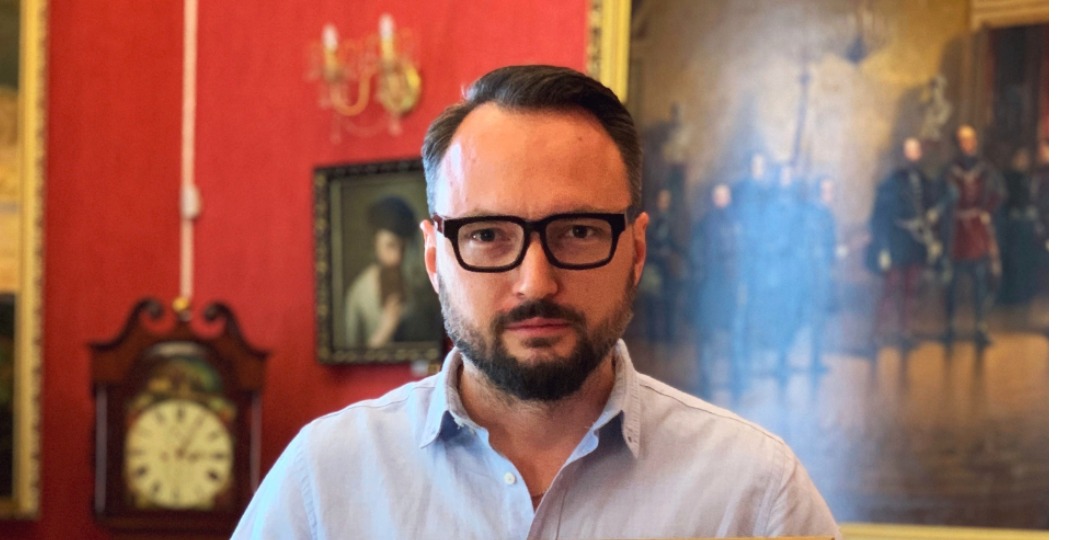
Andrey Fedosov, an architect, designer, and art historian, has been searching the globe for artifacts related to the palace and its owners. Over the past year, he has managed to find, acquire, process, and donate to the museum seven significant lithographs and about ten illustrations and documents. Recently, he discovered several more unique items, but to return them, Andrey needs additional resources.
The Palace’s Past and Present
More than 100 years ago, there were many estates, palaces, and manors on the territory of Belarus. However, the dramatic events of the 20th century did not spare them, and the ideology of the Soviet state finally destroyed what two world wars, revolutions, and nationalization had not. The heritage of the aristocracy was forgotten and slowly turned into ruins. Monuments that were adapted to new tasks fared better: the Nesvizh Castle was turned into a sanatorium, the Grodno Royal Palace into a library, the palace in Krasny Bereg into a school, the palace in Svyatsk into a tuberculosis sanatorium, and the palace in Gomel into a Pioneer Palace.
It was not until the 1990s that people realized the importance of their culture and what it represents. It turned out that there were either ruins or sanatoriums everywhere. From that moment, the process of revival and restoration began, with long restorations and reconstructions, disputes, and discussions. As a result, monuments were brought back to life and became new objects on the country’s tourist map. The Gomel Palace of the Counts Rumyantsev and Princes Paskevich is one of these phoenixes.
An Interview with Andrey Fedosov
We spoke with Andrey Fedosov about how he came up with the idea of returning unique artifacts to the palace and what memorable events the walls of this remarkable palace remember.
A Love for Art and History
Andrey’s life is closely connected with art. He has a creative profession as an architect and designer, his travels always include a cultural program, and his Instagram is filled with photo reports from exhibitions and premieres. His love for art and history is evident in his life.
“I have always had a love for two disciplines – art and history. They are interconnected and help to study each other. The desire to see and possess objects that please the eye and provide aesthetic pleasure has always been with me, as well as the desire to travel.”
In his conscious years, while receiving education and taking his first steps in work, Andrey found inspiration in art. Later, he formed a clear formula: a person can be a creator or a destroyer. These are two extremes: the extreme point of the destroyer is war, and the creator is art. Thus, in art, he sees the highest point of human manifestation in humans. Art ennobles, so it should be present in our lives. And not only in museums – it should decorate our everyday life, and we should be interested in it.
The Palace’s Unique History
The Gomel Palace is unique for many reasons. Firstly, it is the heart of the city, with all central highways oriented towards it. The place where the palace stands was the beginning of the city, with the first settlements, buildings, a wooden fortress, and then a stone palace. Under the palace, there is more than one cultural layer.
Secondly, the owners of the palace, the Rumyantsevs and Paskevichs, did not just live here but turned a small town in the Belarusian Polesie into a modern and developed city. They built factories, educational and secular institutions, hospitals, transport hubs, water pipes, and much more. These two dynasties did everything so that Gomel became the second most important city in our country during the Soviet era.
Thirdly, the creators of the palace and many city buildings were outstanding architects and masters of their time, the best in Europe and Russia. And the owners of the palace were influential representatives of politics, culture, diplomacy, and military affairs of the 18th and 19th centuries, whose decisions determined the fate of states and peoples.
Fourthly, Andrey knows many dramatic and detective stories associated with the palace, which Hollywood screenwriters would envy. And finally, the palace is his homeland.
Memorable Stories from the Palace
One of the most impressive stories is that of the last owner of the palace, Princess Irina Paskevich. She is still respected in the city, even though almost 100 years have passed since her death.
She built an eye clinic in Gomel, about 10 educational institutions, paid for the education of gifted children, and provided dowries for impoverished girls in the city. She donated to the maintenance of a women’s school, orphanages, almshouses, hospitals, and even allocated funds for the construction of a water pipe. She built a men’s classical gymnasium, the building of which became one of the corps of the Belarusian State University of Transport, where Andrey received his diploma as an architect.
During the October Revolution, the princess refused to emigrate and, understanding the hopelessness of her situation, did not wait for the confiscation of property. Instead, she compiled lists of all the property and sent a deed of gift to the new authorities. After that, she left the palace, being a weak-sighted old woman.
In the museum, they say that she became the first guide in the palace, as only she could competently talk about the exhibits and works of art and attribute them.
For more information about the Gomel Palace and its history, you can visit the official website of the Gomel Palace of the Counts Rumyantsev and Princes Paskevich.