2026: A Blast from the Past as Stars Reminisce About Life, Looks, and Love a Decade Ago

2026: A Blast from the Past
As we step into 2026, a wave of nostalgia for 2016 has swept across social media platforms. Users, predominantly from Generation Z, are sharing decade-old photos: Snapchat selfies with colorful filters, festival snapshots, and everyday moments capturing the last ‘normal’ summer.
Celebrities Join the Nostalgia Wave
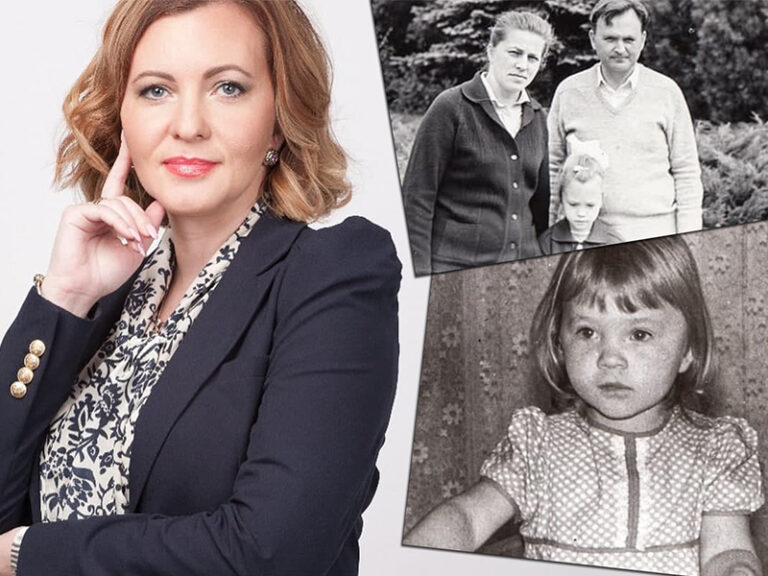
Celebrities have also caught the nostalgia bug. For instance, Karina Istomina shared her photos from that era, recalling how she was 21-22 years old, finishing university, and frequently flying to New York. However, the blogger doesn’t wish to return to that time, feeling much more confident now.
Victoria Dayneko also dove into memories. That year, the singer voiced a character in the animated movie ‘Trolls’ and met the original voice actors, including Justin Timberlake and Russell Brand.
The Unique Charm of 2016
But what made 2016 so special that Russians are yearning for it a decade later? The answer lies in the unique and paradoxical combination of events, atmosphere, and the start of a new era that the world, and our country in particular, found itself in.
Globally, 2016 was indeed a turning point. It was a year when the familiar reality began to crack. The world was swept by pre-election passions in the US, Britain voted for Brexit, and the cultural world bid farewell to icons like David Bowie, Prince, and Carrie Fisher.
The Digital Landscape of 2016
Social media, already an integral part of life, had a unique aesthetic: extravagant filters, challenges, viral flash mobs like the ‘Mannequin Challenge,’ and a seemingly naive belief that the internet was primarily a space for entertainment and self-expression, not ideological battles.
For the generation whose youth fell in the mid-2010s, this was a time of the last sincere digital innocence, the ‘last great summer’ before adult life and global upheavals. Today’s nostalgia captures this emotion—a farewell to youth against the backdrop of a still-stable world.
Russia in 2016: A Year of Complex Stabilization
For Russia, 2016 was a year of complex stabilization and consolidation of a new status quo after the turbulent events of 2014. The economy, which had experienced the shock of falling oil prices and sanctions, was in a state of ‘surplace’—a precarious balance, like a cyclist before a sprint. Macroeconomic indicators began to level out. People adapted to the new reality, where the ruble was no longer the same, and shopping required more thoughtful budget planning.
At the same time, the streets of Moscow were undergoing large-scale improvements under Sergei Sobyanin’s program—granite was being laid, sidewalks were being widened, creating a sense that life in the capital was slowly but surely improving and becoming more comfortable. This contrast between personal economic difficulties and visible improvements in the urban environment created a dual but overall more optimistic mood than the previous year.
Cultural Life in Full Swing
The cultural life of the country was also thriving. 2016 was officially declared the Year of Russian Cinema, and several bright and discussed films were released, such as Alexey Mizgirev’s historical drama ‘The Duelist,’ Pavel Lungin’s chilling thriller ‘Queen of Spades’ with the brilliant Ksenia Rappoport, or the adventurous ‘Convoy.’
The music world also saw highs. Egor Creed was at the peak of his popularity, Eldzhey was gaining momentum, and the masters of the Russian stage released tracks that have stayed with us for years.
The Golden Age of YouTube
Gen Z especially misses YouTube from 2016. Back then, the platform hadn’t been taken over by large companies with million-dollar budgets. Bloggers independently created content—from brainstorming ideas to final editing. Today, it seems that those videos had more soul. Every Gen Z member remembers the cult videos of IvanGai, ‘Fun Fridays’ with Katya Klep, and reviews of funny videos by Max +100500.
The Political Landscape
However, beneath this surface layer of nostalgic aesthetics and cultural diversity, tense political processes were boiling, which determined the further vector. The parliamentary elections in September 2016 strengthened the political system, marking a new convocation of the State Duma. Foreign policy was perceived by part of the expert community as a series of victories: a key agreement was reached with OPEC+ to limit oil production, and on the international stage, according to some analysts, Russia established itself as an independent center of power.
The Magic of Nostalgia
It is in this multifacetedness, in this cocktail of personal hopes, cultural upswing, complex economic adaptation, and a sense of geopolitical certainty that the magic of nostalgia for 2016 lies. Today, looking back from 2026, people nostalgically recall those feelings that will never be repeated. The sharpest turns are already behind us, and what will happen next is not yet entirely clear, but there is a certain support and direction. Social networks were a place for funny videos and communicating with friends, not a source of constant anxiety. Russian pop culture was bright and recognizable.
Nostalgia always idealizes the past, washing away the negative and leaving only warm, selective memories. And 2016, this strange, contradictory, but energy-filled and expectant threshold, is perfectly suited for the role of such a ‘golden age’—the last stop before the world, and Russia with it, finally entered the turbulent, hyper-politicized, and digitally divided present.
For more insights into the cultural phenomena of the past, you can visit Smithsonian Magazine.