The Life and Death of a Costume: An Interview with Costume Designer Alena Igrusha
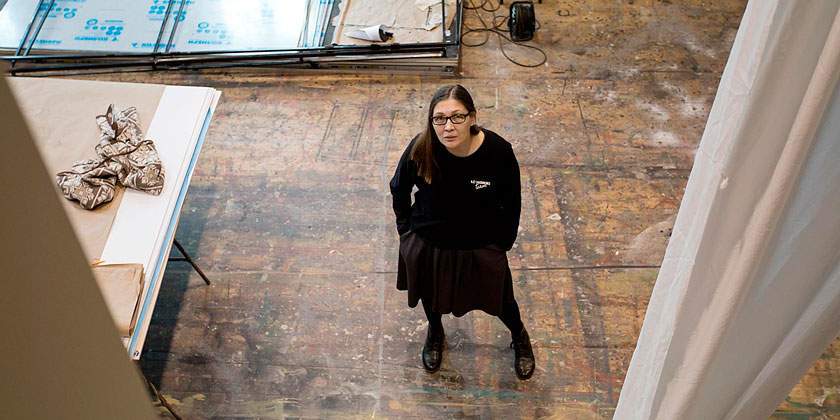
Alena Igrusha: A Master of Her Craft
Alena Igrusha is one of the most sought-after costume designers in theater and film. Her creations have graced the characters of movies like “Anastasia Slutskaya,” “Major Vetrov,” “Wolves,” and plays such as “Pan Tadeusz” and “The Office.” Meeting her at the Belarusfilm studio, surrounded by historical hats, gloves, and dresses, she eagerly shares insights into her latest work. It’s clear from the start why working with her is considered half the battle in any successful production.
The Importance of Collaboration
Is it crucial for a director to have a dedicated costume designer?
“While it’s great for a director to have a go-to designer, I believe in working with different people. It’s enriching. Getting to know a new person is a lengthy process, and time is often limited. Not everyone enjoys changing familiar and comfortable circumstances, but I love working with different directors and getting to know them. Each time, it’s a new manner, approach, and ideas—a challenge for me.”
For instance, Alena has been working with director Katya Averkova since her first play. “I am her designer. Initially, I supported her, but now she inspires me with her ideas. Watching her rehearsals and seeing a play come to life on stage is a pleasure. She is free, while I often tread familiar paths.”
There are times when Alena realizes a director isn’t the right fit. “If our visions don’t align, it’s hard to realize their ideas. I might find them interesting as individuals and maintain friendly relations, but working together becomes difficult.”
The Creative Process
What does “treading familiar paths” mean? Are there boundaries to her creativity?
“Unfortunately, there are limits to material possibilities and directorial tasks that can be quite trivial. I know I’ve solved these problems before and can quickly provide ready-made solutions. When I offer new ideas, some directors see them as foreign territory. I’m forced to take the familiar path, meaning no new creations, just old ideas from the shelf, repeating myself.”
The Birth of a Character
Who or what plays the leading role in a play for her?
“It varies. Sometimes it’s the director. Sometimes it’s an actor I fall in love with, and I’m willing to turn the world upside down for their success on stage. Other times, it’s a personal event I want to share with others.”
Describing how her characters come to life, Alena says:
“Some designers ‘search’ for the image on paper, making many sketches. I wait for the character to draw itself in my mind and then transfer it to paper. The process of creating characters is like a detective story. Initially, I know nothing. I have no idea who my characters are, where they are, or what time they live in. I read the play, live through each character, talk to the director, question the actor cast in the role, and observe people on the street. At night, I walk the corridors, trying to feel the weight of my character’s clothes, understand how they move, as if I’m playing the role.”
“After some time, I know all the ‘whys.’ Why one character cries, another laughs. Why one has an evil look, another a loving one. I enjoy conducting such an investigation.”
The Life of a Costume
Describing the life of a costume, Alena explains:
“First, I come up with the image. Then I introduce it to the director. At this stage, I defend my idea, explaining to the actors why the costumes should be this way. Then I try to bring my creation to the stage without losses, which is very difficult. I encounter the opinions and views of the director, actors, and the capabilities of those who sew the costumes. Even the reality of finding the right fabrics in stores plays a role. Often, after several fittings, the resulting image may not match the original vision.”
“It’s unpleasant to lose the original character at every stage. When the costume finally reaches the stage, it dies for me. It has succeeded, and I’m no longer interested. It begins its own life, its life on stage.”
Historical vs. Modern Costumes
Does she prefer working with historical or modern costumes?
“The form, whether historical or modern, doesn’t matter much to me. What’s important is whether I’ve found the character’s image. I study my character, their behavior, motivation, and gather information from various sources. This search is interesting regardless of the time context.”
Audiences often complain when historical costumes in movies or plays don’t match the period. Can historical inaccuracies in scenery and costumes be a directorial choice?
“Dramaturgy is more important than a scrupulous attitude to details. Is lying acceptable? There are good words: a historical argument will never compare in persuasiveness to a poetic argument. We appeal to the human soul. How to reach it? We strive for it through texture, color scheme, the air between the dress and the skin. Historical truth is the last on the list of helpers.”
“Recently, filming for a movie about Yanka Kupala wrapped up. We tried to visually create the most truthful picture possible, even though we are in a territory where there are very few artifacts from that time. Reconstruction is always very interesting. It enriches you as an artist. But I repeat, the historical truth of the material world tells nothing about a person.”
The Recipe for a Successful Play
What, in her opinion, is the recipe for a successful play?
“The recipe for a good play is simple: everyone who creates the play must aim for the same target. Whether they hit it or not is another question, but they must aim for the same goal. Everyone works on a common idea.”
“If the actor starts telling their story, and the director and designer tell theirs, the play will be either boring, incomprehensible, or pretentious. The audience will leave offended.”
The Role of a Costume Designer
If the audience remembers only the costumes, does that mean the designer has overshadowed the actors and director?
“Yes, and that’s bad. In creating a play, I am fourth. First comes the dramaturgy. We read the author and look for the word that will connect the entire play. Then comes the director, who sets tasks for everyone. It is through their language that the story will be told. After that, the actors, whom I should not overshadow with my costumes. They also have their super-objective.”
“Fourth is the designer. Imagine a scene from the play ‘Woe from Wit.’ The hero is in a tailcoat, with a bow tie, and in combat boots. He plays the entire play in these boots. You will be waiting for the resolution of this detail. Everything else will pass by. You can say that you didn’t see the play because the combat boots captured your attention.”
“Eyes account for 60% of perception. Here it’s important not to interfere with anyone but to help tell their story. It’s better if no one remembers what the costumes were.”
Modern Technologies in Costume Design
Does she use modern technologies in her work?
“Last year, I created a 3D play for the Republican Theater of Belarusian Dramaturgy, ‘Hunting for Yourself,’ directed by Stas Zhirkov from Ukraine. Today, many use new technologies that facilitate work. I always look for new ways to realize ideas, using different materials to achieve the desired effect. The more complex this search, the more interesting it is.”
For further insights into the world of costume design, you can visit Alena Igrusha’s LinkedIn profile.