Svetlana Alexievich: Voices of Utopia and the Pursuit of Happiness
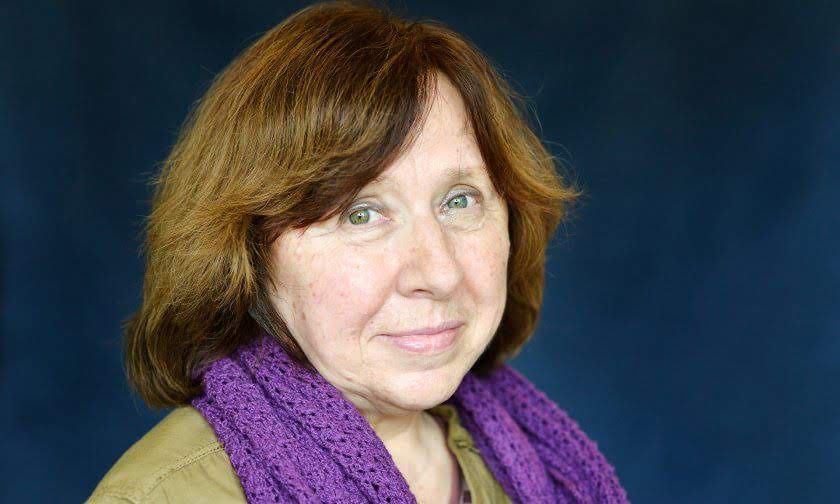
Meeting Svetlana Alexievich: A Historic Moment
Svetlana Alexievich, the first Belarusian Nobel Prize laureate, is a figure of immense historical significance. Meeting her is an honor, and our encounter was initially not planned as an interview. However, the conversation that unfolded was so compelling that it evolved into an impromptu interview, an interview of associations, making it all the more fascinating.
The Alphabet of Memories
A – The Burden of Being First
This letter has always been a challenge for me because, in school, I was always the first to answer. It was a burden, but it taught me responsibility.
B – Beloved Grandmother
My parents lived in Western Belarus; my father was in the air force, and my mother was a librarian. When I was less than a year old, I was sent to live with my grandmother in a Ukrainian village in the Vinnitsa region. My Ukrainian grandmother was the dearest person in my life. A few years later, my mother came to visit. I remember running to my grandmother and saying, “Some aunt has come!” while my mother cried, following me…
D – Dacha: A Sanctuary
I have a country house in Silichi, a remarkably civilized place reminiscent of Switzerland. The cuisine is fantastic, featuring traditional dishes like krovyanka, machanka, and draniki with cracklings. Previously, my dacha was in a small village called Isloch, where we lived by a small river for about twenty years. The post-war generation is now gone; vodka took many of the men, but the women were extraordinary…
Zh – The Buzz of Village Life
For me, this letter is associated with the village—the buzzing of bees, the hum of life.
I – The Complexity of Human Nature
This letter is somewhat tainted. The first association is Judas. Betrayal is a part of life, a sin embedded in human nature. Humans are imperfect and must make choices daily. It’s impossible to be solely good. Circumstances often force us to choose, and it’s unclear if we remain good afterward. Evil is ever-present, dispersed throughout our lives.
S – The Quest for Happiness
Currently, I am writing a book about love. It’s astonishing how Russian literature often overlooks happiness. There’s a moment of love, but then the hero goes off to war. In Belarus and Russia, there’s a cult of death and self-sacrifice. Happiness is not a common topic in our culture.
I want to write a book where the hero has the right to their own life, not entirely dependent on the state. Personal life is significant. Previously, it was considered petty bourgeois; now, it’s seen as vulgar. Today, people are learning to be happy, striving for it.
We are barricade people, raised on violence. We lack experience of a different life. What could our parents or grandparents tell us? About war, revolution, the Gulag… We lack the experience of “simple life”: living for oneself, finding joy in children, work, nature, music… This is enough. Some people prioritize goals and work, but life is singular. We must learn to live life to the fullest.
Books by Svetlana Alexievich
In 1984, the journal “October” published Svetlana Alexievich’s documentary novel “The Unwomanly Face of War,” based on interviews with Soviet women who participated in the Great Patriotic War. In 1985, the book was published separately.
Her next book, “Last Witnesses: Book of Unchildlike Stories” (1985), is based on the memories of children who were 6 to 12 years old during the war.
“Zinky Boys” (1989) is the third book by the Belarusian writer, dedicated to the Afghan War. It includes interviews with mothers of fallen soldiers and those who returned from the war.
Subsequent books by Svetlana Alexievich include “Enchanted with Death” (1994) and “Chernobyl Prayer: A Chronicle of the Future” (1997). In “Chernobyl Prayer,” which focuses on the Chernobyl disaster, Alexievich explores people’s impressions and the impact of the disaster on their lives. The final book in the “Voices of Utopia” series is “Second-Hand Time” (2013), which traces the remnants of the Soviet civilization.
In 2018, the publishing house “Logvinau” decided to release the Nobel laureate’s books in Belarusian without censorship. The project “Voices of Utopia” became the largest in the history of Belarusian crowdfunding. The collection was worked on for 2 years, with translations by famous Belarusian writers, poets, philosophers, and journalists, including Vladimir Orlov, Sergei Dubovets, Valentin Akudovich, Andrei Khadanovich, and Boris Petrovich.
E – The Enigma
An enigmatic letter, as if from another world.
Y – Youth: A Beautiful Time
Youth is a beautiful time, always remembered. My youth was spent in a Belarusian village in Polesie. Nature, the forest… It was a good period despite the hardships. People lived poorly and worked hard.
I remember the hands of women pulling flax, hanging like sausages… It was painful to see women after the war. We were also sent to the kolkhoz. It seemed that people shouldn’t live like this. They have so little time and work so hard for their bread.
There were many young and beautiful women. I remember them sitting and talking about love. They constantly remembered their husbands who didn’t return from the war, recalling the last night, what he said… Then they sang songs. Their husbands remained young for them.
Conclusion
Svetlana Alexievich’s work and life experiences offer a profound insight into the human condition, the pursuit of happiness, and the complexities of history. Her books are a testament to the resilience and spirit of those who have lived through some of the most challenging times in history.
Interviewed by Aksinya Belyavskaya
Read also: Five Amazing Facts About Eliza Orzeszko