Sports, fashion and femininity join forces for a culture-defining ménage à trois
Sports, fashion and femininity join forces for a culture-defining ménage à trois

Like fashion, sport has a penchant for the dramatic. Just think of Venus Williams walking into this year’s US Open dressed in Prada, Alaïa and Bvlgari diamonds, or the fact that the 2024 Women’s FIFA World Cup witnessed the Chinese national team in bespoke suits by Prada, with Emporio Armani outfitting their Italian counterparts. The confluence of fashion and sport isn’t the unlikeliest of alliances—history is littered with examples of star athletes whose style helped change the fashion lexicon forever. Stan Smith’s legendary Adidas shoe debuted in 1973 and has been in production ever since, Michael Jordan’s prolific partnership with Nike launched in 1984 and reshaped the sneaker industry, and decades prior in 1933, French tennis player René Lacoste redeveloped a shirt originating in 1850s India to birth the modern polo. What feels different about the current moment, however, is that for the first time in the shared history of sport and fashion, women are finally being allowed to take their rightful position as vanguards.
Last year, Serena Williams became the first-ever athlete to receive a CFDA Fashion Icon award, whose previous recipients include names like Naomi Campbell and Iman, which added to the trajectory of what has proved to be a very beautiful friendship between women’s sport and capital F fashion. In 2023, Stella McCartney designed a sold-out run of designer jerseys for the Arsenal Women’s team.
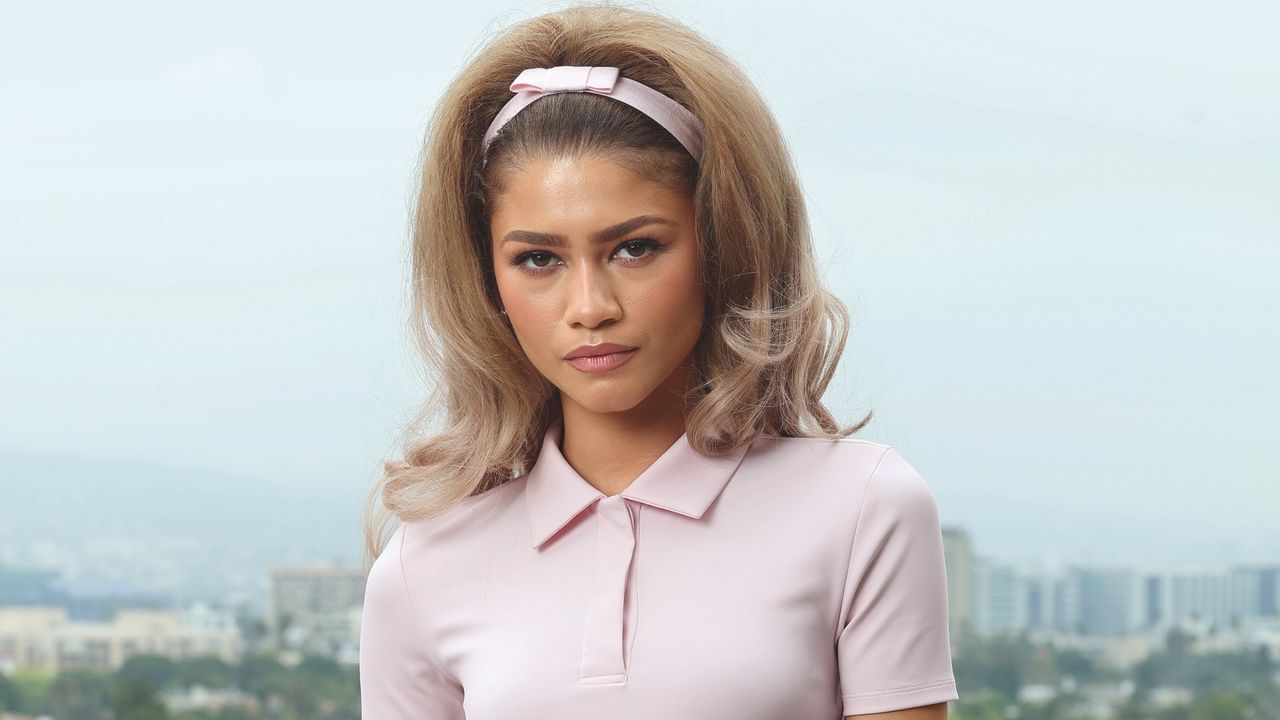
This year, between Zendaya’s tennis-themed premiere looks for the hit summer blockbuster Challengers, and the Paris Olympics, we witnessed the beginning of an era where athletes sit next to models on the front row at fashion week. It laid the foundation for a seismic shift that saw results in the fashion month of September, when Algerian boxer Imane Khalif was papped with Kendall Jenner at Bottega Veneta and gymnast Jordan Chiles crossed the proverbial velvet rope, strutting down the catwalk for Kim Shui’s menswear debut. Fashion’s embrace of female athletes feels significant to those who have memories long enough to remember that sport, fashion and femininity have historically been strange bedfellows.
It isn’t unusual for women athletes to feel as if their bodies are being policed, as evidenced by the fact that sexist uniform codes were on the books until shockingly recently. From the Badminton World Federation attempting in 2012 to attract more attention to its sport by forcing women players to wear skirts to ‘appear feminine’, as quoted in The New York Times, to the Ladies Professional Golf Association issuing guidelines prohibiting ‘plunging necklines’ and shorts or skirts that don’t sufficiently cover a player’s ‘bottom area’. What unites these seemingly disparate but equally restrictive takes on women’s sports uniforms is that they tend towards objectifying the female athletic form.
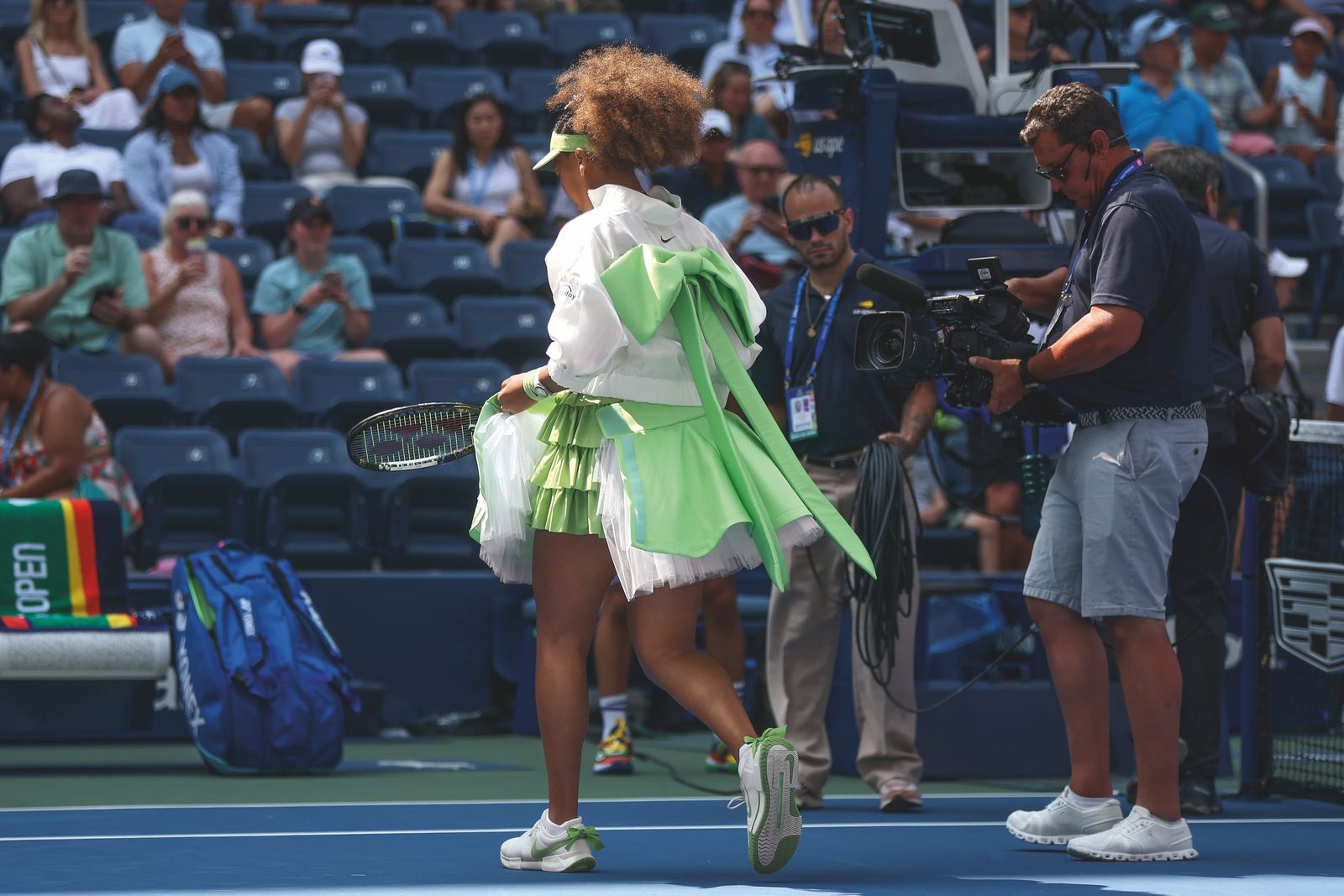
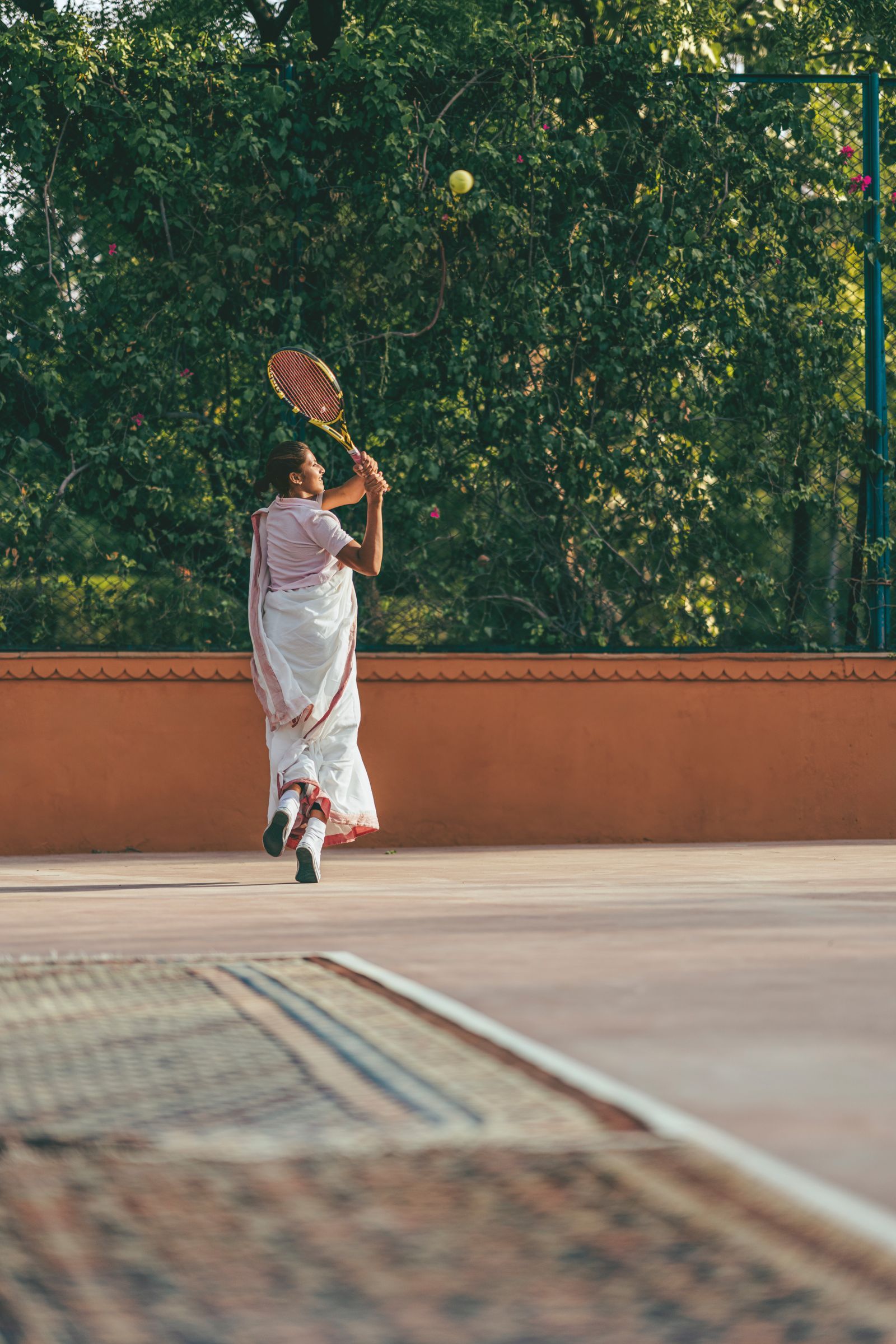
The current cultural moment is a welcome change. Take Naomi Osaka’s dramatically flounced black and white tulle ruffled skirt and black jacket by Yoon Ahn at this year’s US Open, which was liberally garnished with bows, including a statement-making oversized version on her back that seemingly referenced the obi sash of a kimono and dainty iterations on the heels of her Nikes. Osaka’s on court championing of her femininity and cultural heritage finds echoes in a recent Jaipur Rugs campaign that frames women playing tennis in relaxed white cotton saris, canvas keds, and collared shirts, sitting under tasselled parasols and flanked by saturated sandstone walls. The tableau this creates feels at once timeless and modern in its reference to both the stately grace of Maharani Gayatri Devi and the kinetic energy of Luca Guadagnino’s Challengers. There is no greater testament to the staying power of a trend than when it escapes the confines of high fashion and spans the spectrum of the cultural hierarchy. On TikTok, #blokecore, which champions the aesthetic of UK football subculture, and #sportscore have hundreds of thousands of dedicated posts. Taylor Swift, accompanied by a constellation of A-list Hollywood friends, has recently made the WAG relevant again, on her empowered terms.
What was once a relic of 2000s tabloid culture is made fresh with Swift’s notoriously sprawling fan base closely cataloguing the singer’s take on spectator style. With no shortage of eyes following what female athletes wear, both on and off the court, fashion brands are eager to leverage this cultural clout and expand their own fan base through collaborations, such as the one launched earlier this year by Dior announcing that 15 female athletes would join the maison’s roster of brand ambassadors, alongside names such as Anya Taylor-Joy and Rihanna. In line with changing social mores, we are happily racing past the era that was defined by women in sport either being instructed to oppress their femininity or mandated to display it. Instead, we are welcoming a new age that allows female athletes to engage in organic expressions of personality through the way they dress. It is difficult to predict what comes next in what promises to be an exciting new chapter—except to say that we should all be ready and on our marks.