Luang Prabang: A UNESCO World Heritage Gem in Laos
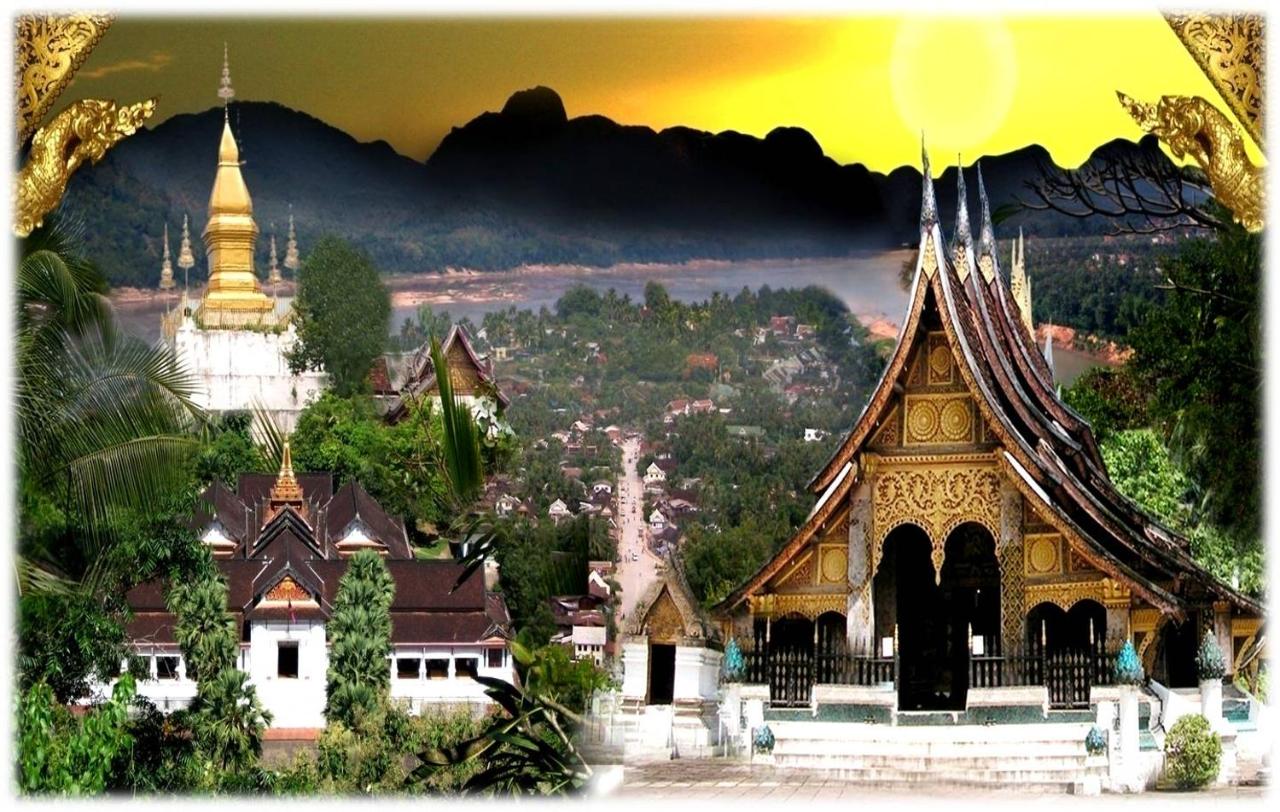
Discovering Luang Prabang: A UNESCO World Heritage City
There are few cities in the world that are entirely protected by UNESCO as World Heritage Sites. One such city is Luang Prabang, the cultural and touristic heart of Laos and a former royal capital. Getting to Luang Prabang from the capital or the Thai border is not straightforward: flying is expensive, taking a night bus on winding roads can be frightening, a slow boat ride on the Mekong can be tedious, and a fast boat ride can be dangerous. Nevertheless, most of the 2 million tourists visiting Laos each year make their way to this small, tranquil city.
A Rich and Complex History
Luang Prabang is believed to have had several names and served as the capital of various empires over its more than two thousand years of existence. The city received its current name in the 15th century, thanks to the unique statue of the Golden Buddha, Pha Bang. Despite being made of bronze rather than gold, the Buddha Pha Bang is a true traveler. Since the 14th century, the statue has journeyed through Khmer, Laotian, and Siamese provinces, with a magnificent temple erected for it at each new location.
In the mid-20th century, with Laos gaining independence, the Buddha Pha Bang found its home in the gardens of the Royal Palace in Luang Prabang, where it remains a symbol of the city. During the annual Boun Pi Mai Lao festival (Lao New Year), the statue is ceremoniously moved to the main temple for three days. Copies of the Buddha Pha Bang still reside in pagodas in northern Thailand and are highly revered by believers.
A UNESCO World Heritage City
It is rare for an entire city, rather than individual landmarks, to be listed as a UNESCO World Heritage Site. In the heart of Luang Prabang, every building is of value. This includes not only the dozens of monasteries and temples dating from the 16th to the 20th centuries but also the ordinary houses, which are not so ordinary after all.
As a former French colony, Laos still bears the influence of France in its cuisine, language, interior decor, attire, and ornaments. Luang Prabang has preserved entire neighborhoods of colonial-style buildings, which uniquely blend with traditional Laotian homes. Consequently, the construction of high-rise buildings is prohibited in the city center, and large trucks and buses are not allowed to enter.
The Alms Giving Ceremony
Tak Bat, the alms giving ceremony, is a unique ancient tradition found only in Luang Prabang. Every morning before dawn, hundreds of monks in orange robes walk through the city streets, silently accepting food offerings. Once, monks made up the majority of Luang Prabang’s population and relied on alms for sustenance, making this tradition essential.
Although tourists are permitted to participate in the ceremony and take photographs, it remains a genuine ritual rather than a performance for foreigners. Hotels offer specially prepared rice that should be respectfully placed in the monks’ alms bowls. It is considered inappropriate to buy rice from street vendors just before the ceremony; preparation should be done in advance.
The Royal Palace
Over 40 years ago, Laos ceased to be a kingdom, and the Royal Palace in Luang Prabang was transformed into the National Museum. The building, constructed by French architects for the last king, houses personal belongings, paintings, furniture, the throne, weapons, gold jewelry, musical instruments, and portraits of the royal family.
Separate exhibits are dedicated to ancient Buddha statues and gifts from foreign ambassadors. The only downside to the rich exhibition is the strict prohibition on photography. Visitors can only take photos in the garage, which houses an impressive collection of royal cars.
In one of the palace buildings, the royal ballet performs four times a week. Although the tickets are quite expensive, the spectacle is worth it: a national show in stunning costumes, beautifully choreographed dances, and unique music.
The Wats of Luang Prabang
In a city with a population of just 50,000, there are over 30 significant monasteries. Guidebook authors debate which temple complex is the most important and beautiful, but it is worth visiting at least the ten largest ones, all located in the city center. The center of Luang Prabang is divided into squares, each containing a monastery. Many locals do not know the street names but navigate using the names of the wats and the colors of nearby houses.
The Most Expensive Wat
The name of Wat Sene translates to “100,000 Kip,” a sum that was once enormous and thus immortalized. The rest of the temple is quite traditional, featuring red and gold images of Buddha and animals on the walls and a large Buddha statue inside.
The Most Artistic Wat
With the support of UNESCO, Wat Xieng Mouane has been transformed into a large art school. Here, students learn traditional painting, sculpture, and wood carving, skills essential for restoring other city temples. Tourists can visit the workshops and observe artists and carvers, mostly young monks, at work. Interestingly, many monks in the city are eager to converse with foreigners in English and French, as language skills are encouraged.
The Golden Wat
Wat Xieng Thong, also known as the Golden Monastery, is a perfect example of national medieval architecture. Built in the 16th century, it has been under the special patronage of the royal family ever since. One of the complex’s buildings houses the royal funeral carriage, adorned with a dragon’s head. Here, you can also find gilded urns for ashes and puppets used in special royal performances.
The Golden Monastery is renowned for its wall mosaics, which vividly depict plants, animals, and birds in bright colors. The gilded panels illustrate rather frivolous scenes from the famous “Ramayana,” and they are not battle scenes.
Wat Xieng Thong was spared during the complete looting of the city by the Black Flag rebels because the leader of this movement had studied at the Golden Monastery in his youth. However, during the Black Flag rule, the temple served as their headquarters.
The Main Wat
Wat Mai is the most photographed temple for postcards and guidebooks. Built in the 18th century in the city center near the Royal Palace, it has been continuously expanded, rebuilt, and repaired until the mid-20th century. Wat Mai once housed the Buddha Pha Bang statue, which gave the city its name. Now, it is home to another large golden Buddha. Wat Mai boasts the most luxurious bas-reliefs depicting scenes from the “Ramayana” and stories from the life of Buddha. It is another wat that was spared by the Black Flag rebels, while others were severely damaged.
The Largest Wat
Wat Visounalat was the largest temple only in the Middle Ages when its construction required 4,000 trees, and the vault was supported by 30-meter pillars. Unfortunately, that grand structure was destroyed by invaders, and it was not until the late 19th century that the temple was restored. The result is far from the original, but the “Watermelon Stupa” is architecturally interesting and indeed resembles a watermelon. Officially named the Stupa of the Great Lotus, it is more commonly known by its folk name.
The Most Famous Wat
Wat Manorom is famous for housing the oldest two-ton Buddha statue in Laos, cast in bronze in the 14th century. The statue is missing an arm, and the culprit is unknown. The tragedy occurred during the colonial struggle between the French and Siamese armies, with the French more often accused of barbarism.
For more information on Luang Prabang and its rich cultural heritage, you can visit the UNESCO World Heritage Centre.