Julia Tarnovetskaya, UNEED Founder: Fashion in Tough Times – A Breath of Fresh Air
Julia Tarnovetskaya: From Shy Beginner to Fashion Entrepreneur
Julia Tarnovetskaya, the founder of the UNEED clothing brand, initially felt too shy to sell her clothes at a market. However, her brand has gained significant recognition among Belarusian women over the past five years. In this article, we delve into Julia’s journey, discussing how mistakes can foster growth and how crises can unveil new opportunities.
The Power of Self-Belief: “A Customer Once Asked Why I Was Shy and Started Helping Me”
Julia’s connection to fashion wasn’t always apparent. As a child, she once wrote in a questionnaire for her friends that she wanted to become a fashion designer, dreaming of creating dresses for Hollywood stars. However, life led her to the IT industry, and her childhood dream faded away. Yet, once she reconnected with fashion, she couldn’t let it go.
“I enrolled in fashion illustration, styling courses, and completed a drawing course. That’s how everything started,” Julia recalls.
Julia decided to launch her own business while still working in IT. Her first collection was a capsule one, featuring a couple of items. She invested in fabrics and hired a remote tailor. All photoshoots were done using a phone. This time, she achieved a small success – she sold the clothes.
As the designer began actively participating in markets, she realized that people start believing in you when you gain significance and your clothes are worn by others.
“It was very challenging for me as I’m shy and don’t know how to sell. Once, a customer approached me, asked why I was shy, and started helping me,” Julia shares.
There were also hurtful experiences. For instance, sellers from other brands would praise her white suits, only to appear at the next market with similar suits, trying to lure customers away. Julia also felt disheartened when customers chose other designers’ clothes over hers.
“Creative people heavily depend on societal approval. It was very upsetting when there were queues at other designers’ stalls, but not at mine. Now I understand that every customer has their own designer, and my clothes might not suit their style. Back then, I was upset,” Julia admits.
However, she persisted. Initially, she wanted to create universal, everyday clothes. She came up with the name UNEED, which sounds like “you need” in English. She hired an assistant to sell clothes at markets and found customers outside of large events.
Gradually, Julia’s husband joined her personal project, and the brand evolved into a family business. Julia’s husband, Alexei, handles accounting and production aspects, while she focuses on creativity: photoshoots, product realization, and content creation.
The Importance of Perseverance: “Our Neighbors Were a Construction Promenade and Fishing Tackle”
Julia and her husband found their first premises in a Stalin-era building near the circus. The location was convenient, with good foot traffic – they liked everything. They ordered a design project, but the contractors postponed the deadlines for four months and eventually presented an unsigned document.
“Of course, we refused to sign such a document. We were sorry not so much for the money spent on the design project, but for the time. After all, we could have already opened,” Julia says.
They opened a store on Bogdanovich Street, but it was unsuccessful.
“When we went to see the premises, I immediately realized that it wasn’t ours. In this building, they sold wallpaper and tiles for 10 years. And nearby, they sold building materials and fishing tackle. But my husband insisted, and I agreed,” Julia recalls.
They worked for a year, but people didn’t notice the store – there was no live traffic. Then the rent was increased. Julia and Alexei decided to move. Only on the third attempt did everything work out. They opened a store on Mstislavets Street, marking a new stage in their development.
Now, several years later, Julia clearly understands what mistakes beginner designers should avoid.
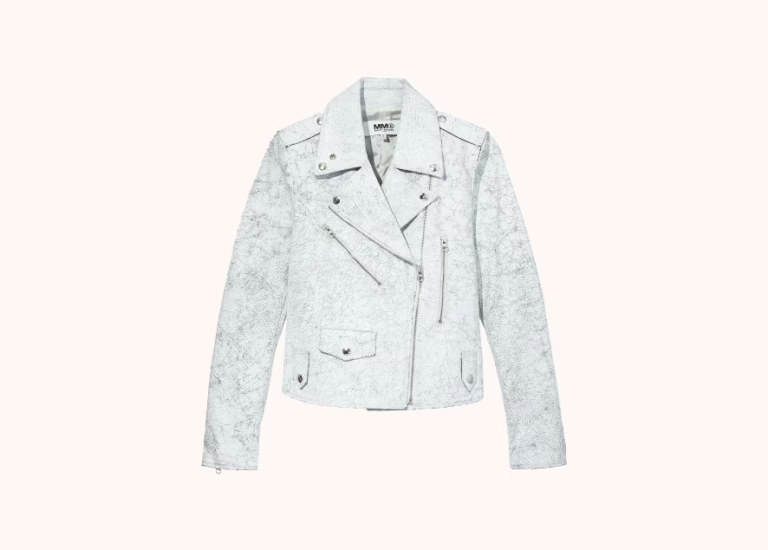
“The first mistake is trying to do everything at once. I did that: today I want a coat, tomorrow – a dress, the day after tomorrow – jeans. The second mistake is not defining the brand’s concept immediately. We spent two years searching for a clear understanding of the brand’s essence. Gradually, we moved from the concept of ‘universality and understandability for everyone’ to ‘festivity and celebration every day.’ Even our everyday clothes are festive: our jackets have a branded trim, and we designed a ‘zebra’ lining for black raincoats,” Julia explains.
They didn’t change the name. By that time, it had already taken root and was recognizable.
The Significance of Knowing Your Customer: “Our People Are Not Ready for Mini Skirts Worn in America”
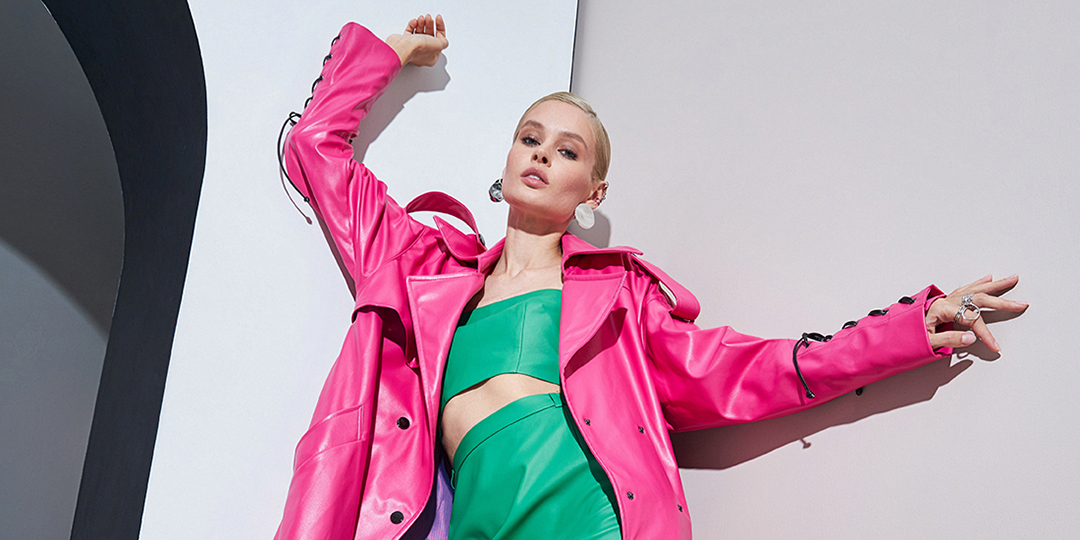
Now, Julia’s style is unmistakable: each model has a unique touch that gives an ordinary everyday item its character. Her favorite color, fuchsia, appears in many of her creations. It’s no surprise that Julia even repainted her car in her favorite color. New ideas are constantly born.
She draws daily inspiration from Western influencers, bloggers on Pinterest, Instagram, and other platforms. If she sees an interesting image in a movie, she pauses and takes a screenshot. Even a random passerby on the street can inspire the designer with a new idea. All this helps her stay on trend and create what people are interested in.
“When you have an innate sense of style and good exposure, it’s easy to guess what the consumer likes. You shouldn’t chase every trend, but rather, considering general tendencies, create something unique. It’s more challenging, but it works,” Julia advises.
In Belarus, designers have a head start and time to prepare: the trends of 2021 are only reaching us now. Julia knows perfectly well what will be fashionable this summer and even next winter. However, blindly following general trends is dangerous. It’s crucial to understand the specifics of the Belarusian consumer.
“Not all trends will take root here. For example, mini skirts that are already widely worn in America. Our people are not ready for that. But acid colors will be very relevant this summer,” Julia notes.
Regarding why Belarusians have started choosing local brands over world-renowned ones easily found in any store, Julia responds:
“People come to us not because we are a Belarusian brand, but because we have great clothes. Yes, now you can find almost any brand, but it’s cool to mix. There was a case when a girl came in and said that our jackets are more interesting than ZARA’s.”
The Importance of Fashion: “Our Psyche Needs a Celebration”
COVID-19 became a test for many clothing stores. But not for UNEED: at the height of the pandemic, there was a large-scale opening of a store on Mstislavets Street. During that period, Julia shifted the focus from festive images and focused on outerwear, which people continued to wear.
“Fashion is very important in our lives. Our psyche needs a celebration. When you wear beautiful clothes, you feel better. During the pandemic, we realized that fashion is a breath of fresh air,” Julia concludes.
For more information on fashion trends, you can visit Vogue.