How the Internet Shapes Our Self-Esteem: A Deep Dive
How the Internet Shapes Our Self-Esteem: A Deep Dive
In today’s digital age, it’s natural to compare ourselves to others. This tendency begins early in our psychological and social development, around the ages of 7 or 8, when children start comparing their abilities with those of their peers. As we grow older, our comparisons become more complex, encompassing relationships, romantic interests, and physical appearances.
Why Do We Compare Ourselves to Others?
Comparison is a fundamental aspect of human behavior. It helps us determine how well we fit into society. We start with objective criteria like weight and height and gradually move to more subjective attributes such as beauty and intelligence. Social comparison is a psychological reaction that helps us define ourselves based on what we see in others.
The Dual Nature of Social Comparison
Social comparison can have both positive and negative effects. On one hand, seeing someone else’s achievements can motivate us to improve ourselves. For instance, encountering a fitness enthusiast on Instagram who is just starting their journey can make us appreciate our own progress. On the other hand, it can lead to feelings of inadequacy if we perceive others as being better than us.
Social media platforms like Instagram and Pinterest often showcase idealized images of beauty and success. While these platforms can inspire those with high self-esteem and a rational approach to success, they can also create unrealistic expectations. The key is to use these platforms as a source of motivation rather than a benchmark for self-worth.
What Drives Us to Compare Ourselves?
Several factors contribute to our tendency to compare ourselves to others on social media:
- Highlight Reels: Social media users often present an idealized version of their lives, sharing only the best moments and most flattering images. This can create a distorted view of reality.
- Lack of Awareness: Many people are unaware of the extent to which photos and posts are edited and curated, leading to unrealistic comparisons.
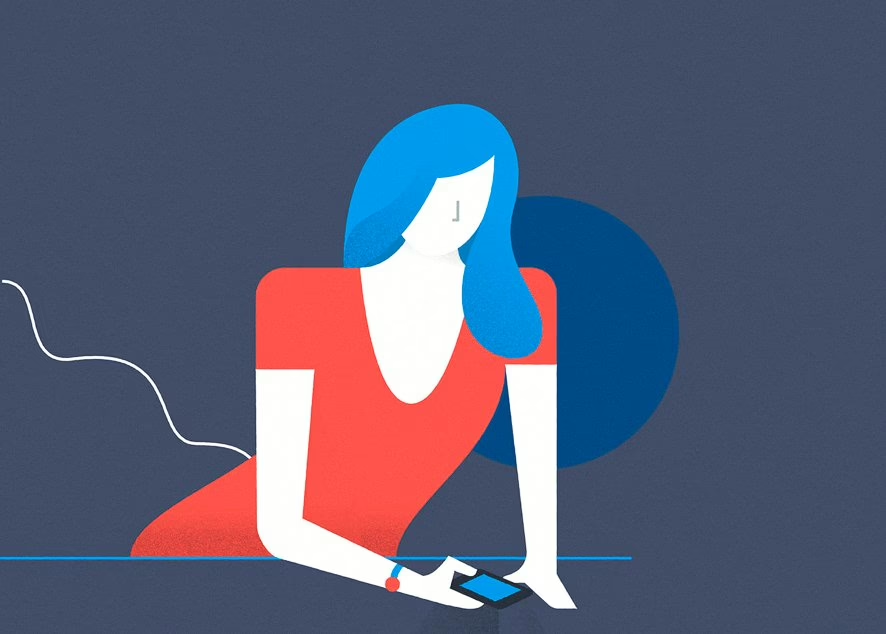
- Constant Access: With social media always at our fingertips, we often find ourselves mindlessly scrolling and comparing our lives to others.
Protecting Yourself from the Negative Effects of Social Media
To mitigate the psychological impact of social media, consider the following strategies:
- Set Realistic Goals: Use social comparison as a tool for motivation, but ensure your goals are realistic and achievable.
- Take Breaks: If social media makes you feel down, take a break and reflect on why you feel that way.
- Curate Your Feed: Unfollow accounts that make you feel negative about yourself. Surround yourself with content that inspires and uplifts you.
- Self-Definition: Remember that you define yourself, not the content you consume. Take control of your life and focus on what truly matters to you.
In conclusion, while social media can have both positive and negative effects on our self-esteem, it’s crucial to approach it with a critical and mindful perspective. By setting realistic goals, curating our feeds, and taking breaks when needed, we can harness the motivational aspects of social comparison while protecting our mental well-being.
For further reading on the impact of social media on mental health, you can visit American Psychological Association.