How 25 Seasons of Belarusian Fashion Week Transformed the Fashion Industry in Belarus
How 25 Seasons of Belarusian Fashion Week Transformed the Fashion Industry in Belarus
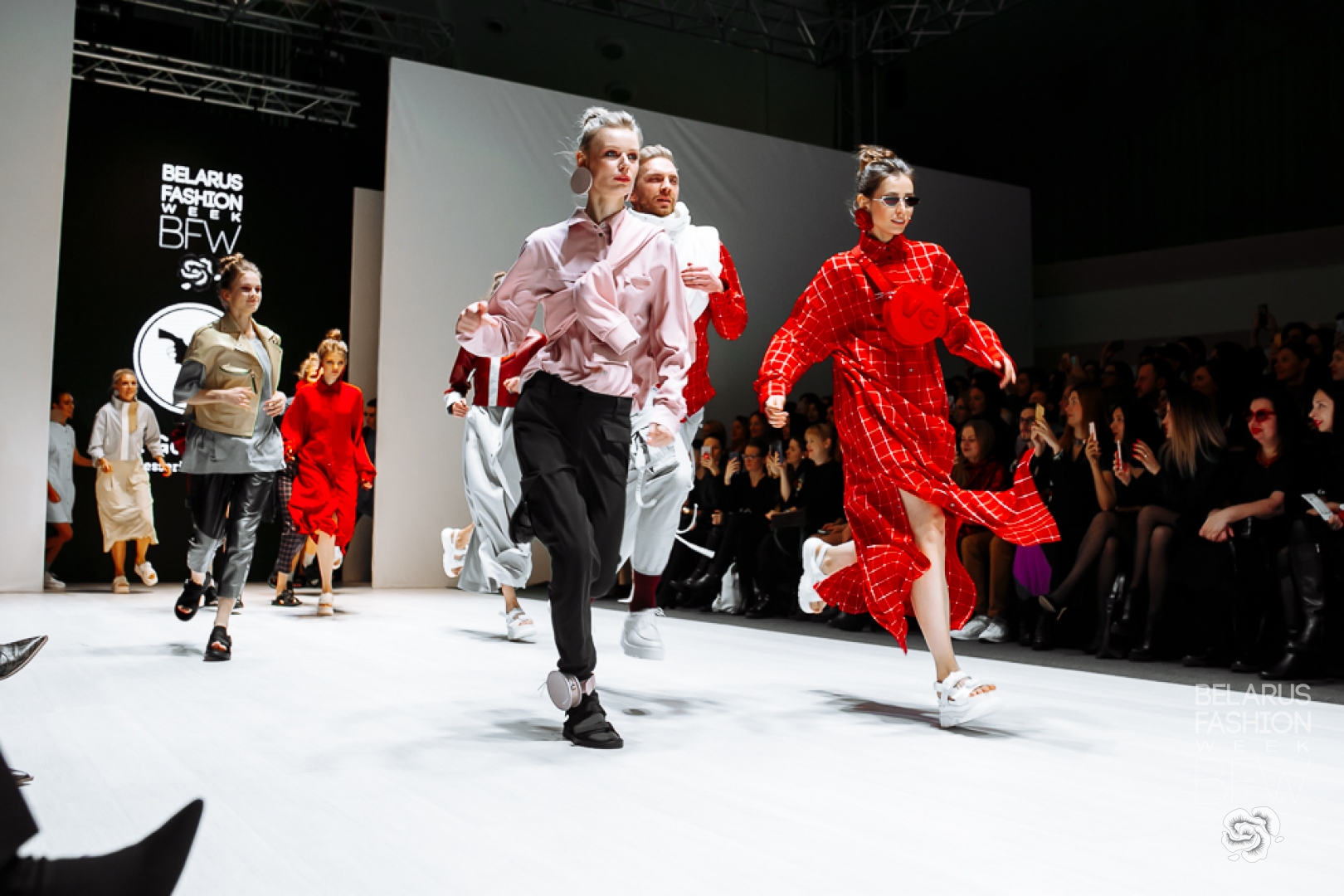
On September 15th, the 25th season of Belarusian Fashion Week (BFW) took place. In collaboration with its partner, the brand TRESemmé, we explore how this fashion week has influenced the fashion industry and changed the self-perception of Belarusian women.
The Birth of Belarusian Fashion Week: 2010
The inception of Belarusian Fashion Week was met with skepticism. Critics argued that Belarusians were not interested in designer clothing, and others claimed that the fashion industry in Belarus was not mature enough for its own fashion week. However, on October 4, 2010, the first Belarusian Fashion Week officially opened, showcasing collections from 40 designers from Belarus, Russia, Ukraine, Poland, Croatia, Norway, and Iran over five days.
The event featured renowned Belarusian designers such as Olga Samoschenko (SAMOSCHENKO), Lena Tsokalenko, Tatiana Arzhanova (Tanya ARZHANOVA), Yulia Latushkina, Petr Malkovich (MALKOVICH), Tatiana Marinich (Marinich), Polina Kartovitskaya, and Larisa Stepanova (Historia Naturalis). Notable guests included performance artist Andrei Bartenyev, stylist Vlad Lisovets, and editors-in-chief of global fashion media. The legendary designer Vyacheslav Zaitsev, who opened the event, was the first to learn about the project from a young director from Gomel, Yanina Goncharova, during her internship at Zaitsev’s Fashion House in Moscow.
The organizer of Belarusian Fashion Week, Yanina Goncharova, was the director of the Fashion and Beauty Center in Gomel, “Crystal Nymph,” a director, and a model. To ensure the fashion week was a success, she spent a year attending fashion weeks in Copenhagen, Paris, Stockholm, Berlin, and London. She networked, communicated with fellow organizers, asked questions, and filmed everything to later train her team.
The first Belarusian Fashion Week attracted the crème de la crème of society, including beauty industry representatives, business figures, government officials, and potential buyers from retail chains and fashion houses. The shows were broadcast on two TV channels and projection screens across Minsk, accessible only by invitation. The goal was achieved: fashion had arrived in Belarus.
“Thanks to the emergence of a runway and a fashion week in Belarus, fashion designers have appeared in the country,” Yanina Goncharova explained in one of her interviews. Designers existed in the country before, and many were known abroad. But Belarusians perceived them as ‘those who can sew to order.’ As soon as a national runway, i.e., Belarusian Fashion Week, appeared, these designers became associated with the fashion industry in people’s minds. And immediately, a fashion community and fashion industry emerged.”
The Evolution of Fashion Weeks
The first-ever Fashion Week, known as “Press Week,” took place in New York in 1943. Before that, the fashion world was centered in Paris, but World War II changed the dynamics. However, the concept of fashion weeks dates back even further. In 1860, French designer Charles Frederick Worth introduced the idea of showcasing his clothing on live models, a departure from the wooden mannequins used previously. Around the same time, the famous Englishwoman Lucile created the first fashion shows, sending out invitations, gathering guests, and preparing models who walked the runway to music.
French designer Paul Poiret began organizing fashion balls in Paris where guests could view and try on garments. Dressing rooms were introduced, and models started walking the runway one by one instead of all at once. Immediately after World War II, in 1945, France established rules for couture fashion week participants, requiring designers to showcase a minimum of 35 looks each season. These rules remain in place today.
Paris held its Fashion Week in 1973, followed by Milan and London. New York, Paris, Milan, and London—the “Big Four” of fashion—continue to lead the industry, with their shows influencing global fashion trends.
2011-2014: Fashion and Designers
By this time, no one questioned whether fashion existed in Belarus. Belarusians had begun to take fashion seriously, and Fashion Week had become a familiar and anticipated event. It became clear that providing a platform and opportunities for young designers would continuously bring forth new talent.
BFW launched special programs to support emerging designers, including the Off Schedule program for young and new brands and the New Names BFW competition for young designers. In 2014, BFW began collaborating with educational institutions that train designers, tailors, fashion designers, and technologists.
- Over 20 designers participated in each fashion week.
- New faces emerged every season.
- Designers were required to present 36 to 44 unique looks to participate in BFW.