High Heels: A Man’s Invention to Empower Women
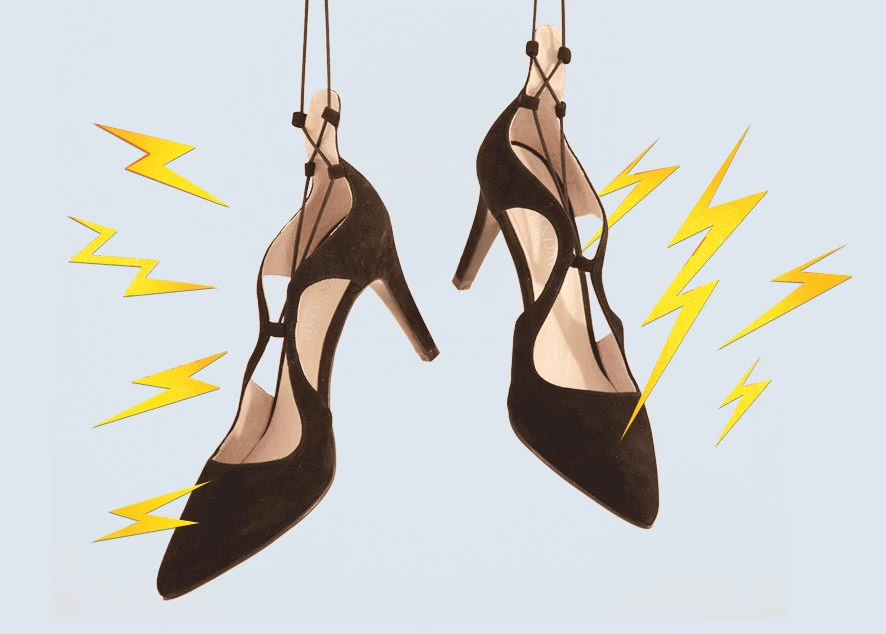
High Heels: A Man’s Invention to Empower Women
For a long time, high heels have been one of the most mystical elements of fashion. They have gone in and out of style numerous times throughout various epochs, but the true essence behind the invention and popularity of heels remains shrouded in misunderstanding. The movie “She’s the Man” has led many to believe that heels are a result of male influence, designed to oppress women. However, the idea that men invented high heels to complicate women’s lives, aiming to make their posteriors more toned and sexual, is not entirely true. The history of one of the most feminine fashion inventions is far from straightforward and is indeed quite masculine.
Heels for the Elite
Given the impracticality of this fashionable accessory, which was confirmed in the past and remains questionable today, it’s understandable why, at the dawn of their invention in the 1600s, only the nobility dared to wear heels. In other words, people who did not have to work from morning till night. At that time, heels were part of the male wardrobe, emphasizing social status and adding a metaphorical touch to the aristocratic image, as the nobility was literally and figuratively above everyone else.
However, inventing such footwear solely to highlight the differences between the nobility and the common folk would be too absurd. Therefore, the creation of men’s heels had practical purposes: heels on men’s shoes helped riders stay on their horses, as such footwear was convenient for securing the foot in the stirrup.
Women Adopt Heels
Women, as expected, began wearing heels to adopt male authority. They cut their hair short, wore elements of the male wardrobe, smoked pipes, and, of course, wore heels. Why not? While women experimented with a masculine image, heels gradually became less unambiguous and soon were fashionable for women as well. Later, common people also began to eye heels, daring to challenge the nobility and feel a bit superior—a peculiar social filter.
Soon, heels were divided into two groups: thick for men and thin for women. The first high-heeled women’s shoes were created by Catherine de’ Medici, wife of the Duke of Orleans and King of France, to make her legs appear longer. The Duke was a very tall man, and Medici was a petite woman, which presumably made her uncomfortable. As a result, women’s footwear found its first practical application: to make the figure visually more attractive, hide flaws, and emphasize virtues.
The Decline and Return of Heels
Over time, heels disappeared from the male wardrobe, as men grew tired of constant comparisons with women and direct encroachments on their masculinity and status. However, the popularity of high heels did not last long, and such footwear was ultimately deemed impractical and faded into oblivion. If heels were seen, they were low. After the French Revolution, people generally refused to wear heels, as they did not want to have anything in common with the nobility, let alone resemble them, so such footwear was extremely unfashionable.
The Resurgence of the Trend
By the time high heels had earned a reputation as overly revealing footwear with erotic undertones, common people no longer wore them, but prostitutes did. Additionally, during the Victorian era, there was a growing popularity of pornography, where high heels were used to emphasize the sexuality of models. The former functions of high heels were forgotten, and such footwear now belonged solely to women as an erotic accessory, designed to attract attention not only to social status but primarily to the body.
Later, high heels and now stilettos began appearing in pin-up photography. During World War II, postcards with images of pin-up models were a joy and comfort to lonely soldiers, bringing popularity to heels. They made women’s posteriors toned and their backs seductively arched. In 1954, the first official stilettos were created by fashion designer Roger Vivier for Christian Dior’s fashion collection. The name “stilettos” was given due to associations with a dagger, and in shape, such heels resembled a cold weapon. This trend was immediately recognized as a symbol of sexuality and found its place among Hollywood stars.
It is believed that Marilyn Monroe wore shoes with one heel shorter than the other to create her legendary walk and posture. However, this is not certain. In any case, she was a true pioneer of women’s footwear, considering how many designers worked for her alone. Feminists, on the other hand, considered heels a symbol of male domination and oppression of women, as this uncomfortable and impractical footwear, in their opinion, was created for men to enjoy the image of a sexual woman, while for the woman herself, such footwear was torture. Given that feminists called on women to dress as they pleased, not as men wanted, this situation is quite understandable.
Modern Perceptions
In the modern world, heels have already gone through a series of condemnations related not only to contemporary trends and feminist movements but also to dress codes that prohibit women from wearing low-heeled or flat shoes. However, today the situation looks much simpler. Men, for the most part, do not care about the footwear women choose, and women, in turn, are free to decide for themselves what heel height makes them feel more sexual or if heels do that at all.