From Dead Flies to Dangerous Powders: The Evolution of Makeup
From Dead Flies to Dangerous Powders: The Evolution of Makeup
Decorative cosmetics have become an essential attribute of the modern woman. However, thousands of years ago, powders and blushes were literally deadly, lipstick was made from fish scales, and mascara was crafted from dead flies. Let’s delve into the journey women have undertaken to look beautiful and well-groomed.
The Origins of Cosmetics
Scientists discovered the first cosmetics in Egyptian tombs dating back over 4,000 years. Around 1,500 years ago, the first cosmetic recipe was written on papyrus, and Cleopatra published the world’s first collection of such recipes.
The Evolution of Mascara
The precursor to mascara appeared in Egypt as a wax and resin-based ointment. Later, in Europe and Russia, mascara was made from soot mixed with water. More extravagant versions included dead flies, ant eggs, and lead in Ancient Rome. The modern version of mascara was created in 1913 by Terry Williams, who mixed Vaseline and soot. This innovation led to the founding of the global brand Maybelline.
Mascara continued to evolve with contributions from Max Factor, who added carnauba wax for shine, and Helena Rubinstein, who made it waterproof with turpentine. Initially, mascara was dry and applied with a wet brush. The familiar packaging with a brush appeared in 1958, thanks to Helena Rubinstein.
The History of Eyeliner
The first eyeliners emerged in Ancient Egypt, where black paint based on antimony was used to create the iconic “cat-eye” look. In other regions, charcoal and soot were common. The discovery of Tutankhamun’s tomb in 1922 revived the ancient Egyptian style, making bold eyeliner fashionable. Brands like Maybelline, Revlon, and Max Factor capitalized on this trend.
Eyeliner was not particularly popular in the 1940s but made a comeback in the rebellious 1960s, with model Twiggy popularizing colorful eyeliners. The 1963 film “Cleopatra” further cemented the trend of thick black eyeliner. In the 1990s, natural beauty and subtle makeup became fashionable, leading to softer eyeliner styles.
The Story of Eyeshadow
The first eyeshadows were created in Egypt using crushed minerals like malachite and lazurite, mixed with animal fat and silicon oxide. In Ancient Greece, ashes from plants and flowers were used to achieve a smoky eye effect. In the 17th to 19th centuries, geishas used red pigments from Japanese saffron flowers for their eyes and lips.
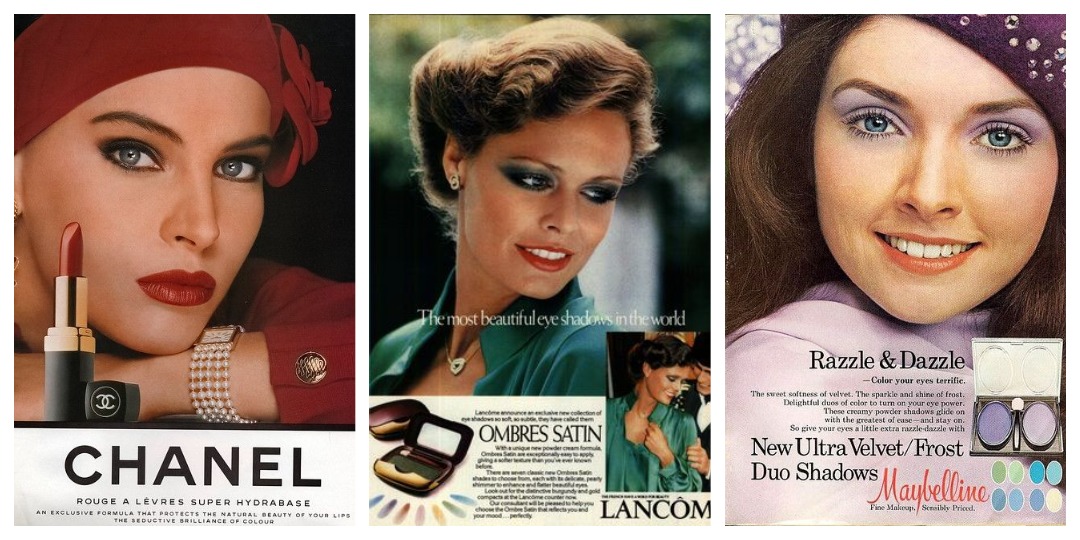
The modern era of eyeshadow began in the 20th century with developments by Helena Rubinstein and Elizabeth Arden. Max Factor introduced eyeshadows with henna extract, and Maybelline released eyeshadows in four shades: black, green, brown, and blue. The 1960s saw a surge in the popularity of bright eyeshadows, thanks to model Twiggy. Subsequent years saw experiments with colors, forms, and packaging, including liquid eyeshadows.
The Journey of Lipstick
The first lipstick appeared in Egypt, where Cleopatra made it from crushed red beetles, ant eggs, and fish scales. Less affluent Egyptian women used iodine and bromine-based lipsticks, which were dangerous and known as the “kiss of death.” In Russia, women used berries like cherries and raspberries to color their lips.
Lipstick compositions remained similar, based on pigments, fats, and beeswax, with varying shades. The first modern lipstick was presented in 1903 at the World’s Fair in Holland, stored in a simple tube. The familiar twist-up mechanism appeared in 1915, making lipstick widely popular. Initially, lipsticks were available in one color, carmine, but later expanded to include a wider palette. The 1960s saw a boom in bold lipstick shades, and the 1990s introduced lip gloss as a popular alternative.
The Dangerous History of Powder
The prototypes of powder appeared in Ancient Egypt and Greece, where pale skin was fashionable. Lead-based powders were used to achieve a pale complexion, despite their deadly effects. Cheaper alternatives included mixtures of wheat and bean flour or ground chalk. In the 18th century, natural skin tones became fashionable, and powder was made from talc, making it safer and lighter.
For more insights into historical beauty practices, you can explore resources from authoritative sources like the Smithsonian Magazine.