From Chopines to Louboutins: The Evolution of High Heels in Fashion
From Chopines to Louboutins: The Evolution of High Heels in Fashion
It’s time to delve into history once again and explore the pages of romantic fashion from the past. This time, we’ll trace the evolution of one of the most important elements of a woman’s wardrobe—high-heeled shoes.
The Origins of High Heels
High heels owe their appearance to the ancient Egyptians, but they first became truly popular in the 16th century. High-heeled shoes and platform shoes of intricate shapes were called chopines. Initially, they were associated with Venetian prostitutes, adding a touch of sexuality and depravity to their appearance. However, they soon became extremely popular among aristocrats, as these shoes allowed their garments to avoid trailing on the ground.
The 18th Century: High Heels for Men and Women
In the 18th century, high-heeled shoes, typically associated with women’s fashion, were also worn by men. French aristocrats, including Louis XIV, wore high-heeled shoes alongside women like the Marquise de Pompadour. This footwear was highly impractical and difficult to walk in, which likely contributed to its popularity among the royal court.
The 19th Century: Elegance and Femininity
The 19th century brought elegance and femininity with heeled boots adorned with buttons and lacing. These boots were worn with long, thick skirts as a nod to modesty. As women’s clothing gradually became shorter, high-heeled shoes became more visible.
The Roaring Twenties: Simplicity and Sophistication
By the 1920s, high-heeled shoes with straps became fashionable, combining simplicity and sophistication. These shoes were made from shiny satin, soft velvet, or simple leather, often decorated with large buckles. The 1920s also saw the introduction of the T-strap model, popular among contemporary stars, and the first high heels in 1929.
Hollywood Glamour and Beyond
The dreamy and romantic Hollywood of the 1930s gifted women the image of charming starlets wearing glamorous, lower-heeled shoes with deep cuts. In 1936, beach shoes became fashionable, predating today’s popular flip-flops. The new wave of high-heeled fashion arrived in 1938 with Ferragamo, who created the first platform shoes with a rainbow print, popular among actresses like Judy Garland.
The 1950s: Feminine and Kitten Heels
The 1950s saw Ava Gardner appearing in public in incredibly sexy sandals with ankle straps, sparking a trend for various colorful sandals. With the rising popularity of feminism, neat shoes with a feminine bow in the middle became fashionable. Roger Vivier released magical butterfly shoes for Christian Dior, and the first wedge heels appeared in 1940, becoming very popular.
The 1960s and 1970s: Kitten Heels and Disco Glam
The 1960s introduced the kitten heel, with Audrey Hepburn becoming a style icon of the decade. The 1970s brought glamour and disco, with high-heeled and platform shoes becoming popular, often lacquered and bright, as seen on Jane Birkin.
The 1980s and 1990s: Neon and Minimalism
The 1980s neon era saw sparkling designs becoming fashionable, with many stars embracing the trend. By the late 1980s, a more restrained design with thin heels and satin Dyeables became popular. The 1990s fashion was striking, with Naomi Campbell in 11 cm platform shoes from Vivienne Westwood. Mid-1990s saw metallic thick-heeled shoes and minimalism, as demonstrated by Mariah Carey’s choice of a black dress and ankle-strap shoes.
The 2000s and Beyond: From Britney Spears to Christian Louboutin
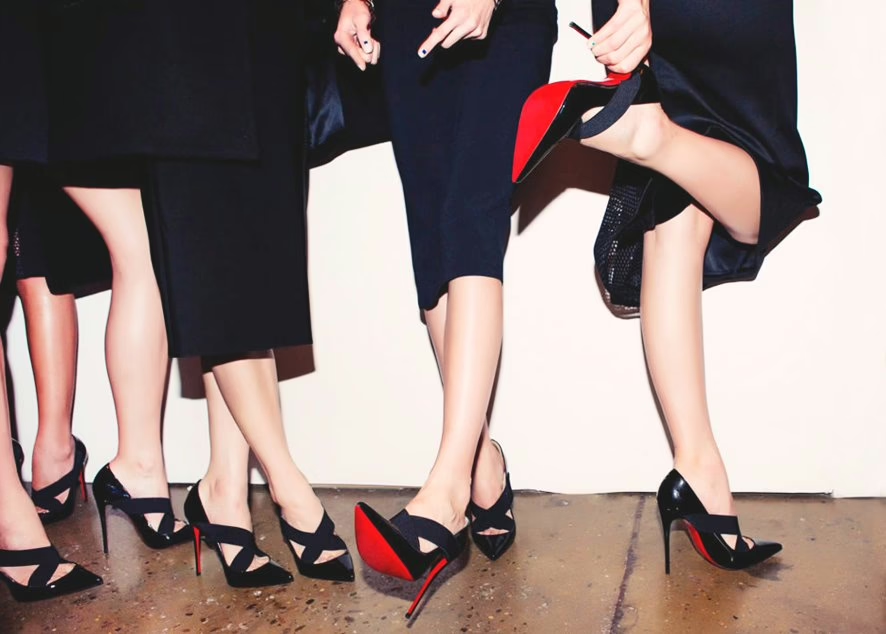
The early 2000s were challenging for the fashion industry, with Britney Spears’ square-toed sandals being one of the lesser evils. Pointed-toe high heels became fashionable again, often paired with jeans for a casual chic look. By the end of the decade, fashion regained its sense, and Christian Louboutin introduced his famous shoes—classic black in the front and seductively red in the back.
Recent Trends: From Valentino to Yves Saint Laurent
In recent years, lacquered classic stilettos with a small platform in nude beige have become popular, reflecting the cult of naturalness in modern fashion. Valentino’s Rockstud combined boldness and femininity, and in 2015, Yves Saint Laurent’s new disco model, inspired by the fashion of the 1970s and 1980s, became the most popular.
For further reading on the history of fashion, visit this authoritative source.