Foundation and Powder Mistakes You’re Making: Expert Makeup Artist Reveals All
Foundation and Powder Mistakes You’re Making: Expert Makeup Artist Reveals All
If you have noticeable dark circles under your eyes, you need to use a specific shade. Otherwise, the issue may become even more pronounced. Dry skin requires a special kind of powder, and you shouldn’t choose your foundation by testing it on your wrist, as we often do. Professional makeup instructor Daria Kondruts shares the secrets of makeup application.
About the Expert
Daria Kondruts is a makeup artist and instructor at the Beauty Art educational center. She has participated in numerous photo projects and fashion events such as Brandfashionshow, Kidsfashionshow, and I Model.
The Secret to Fresh and Beautiful Makeup
According to Daria, the key to fresh and beautiful makeup is well-groomed skin. However, it’s equally important to choose and apply the right foundation. This is the initial and crucial step in creating a ‘canvas’ for the rest of your makeup. Here’s what you need to keep in mind.
A Drop of Oil and Understanding Undertones
To even out your skin tone and prolong your makeup’s wear, use a makeup primer before applying your foundation. If you have dry skin, especially during winter, you can add a couple of drops of facial oil to your foundation. This isn’t necessary when using lighter textures like CC or BB creams.
The purpose of all foundation products is to conceal imperfections and redness without being noticeable on your skin. Foundations differ not only in shades but also in undertones (warm, cool, neutral, matte, or radiant).
To choose the right shade, always test the product on your jawline, where your face and neck meet. Be attentive: distribute the product so that the foundation isn’t visible on your face and neck. I don’t recommend choosing a foundation shade by applying it to your hand. The skin color on your hands often differs from your facial skin.
A Separate Product for the Eyes
If you have redness or blood vessels close to the surface of your skin, choose a foundation with a complementary undertone that will ‘cancel out’ the imperfections rather than emphasize them. For example, this could be a foundation with a neutral olive undertone.
The same applies to the eye area. The skin here is the thinnest and lacks a fatty layer, so you should use a product with a denser consistency, typically a concealer.
If you have ‘dark circles,’ choose a concealer with a salmon undertone. If you have visible blood vessels or redness, opt for an olive undertone again.
Don’t Apply Foundation with Your Hands
It’s better to apply foundation with a dense brush with a perfect cut or a beauty blender. I don’t recommend using your hands, as this doesn’t allow for even product distribution. It’s best to distribute the foundation along the massage lines: from the center to the periphery. When working with a beauty blender, you can achieve lighter coverage. In this case, you’ll need a damp sponge. A dry one is for denser coverage.
Mineral Powder: A Must-Have
To set your foundation, use powder. I prefer mineral, loose powder. In my opinion, and that of many women, this is the best option for the face.
I also believe that this beauty product is a must-have for everyone. The mineral composition absorbs sebum secretions, eliminates and prevents oily shine, making this powder indispensable when you need to mattify your entire face or the T-zone.
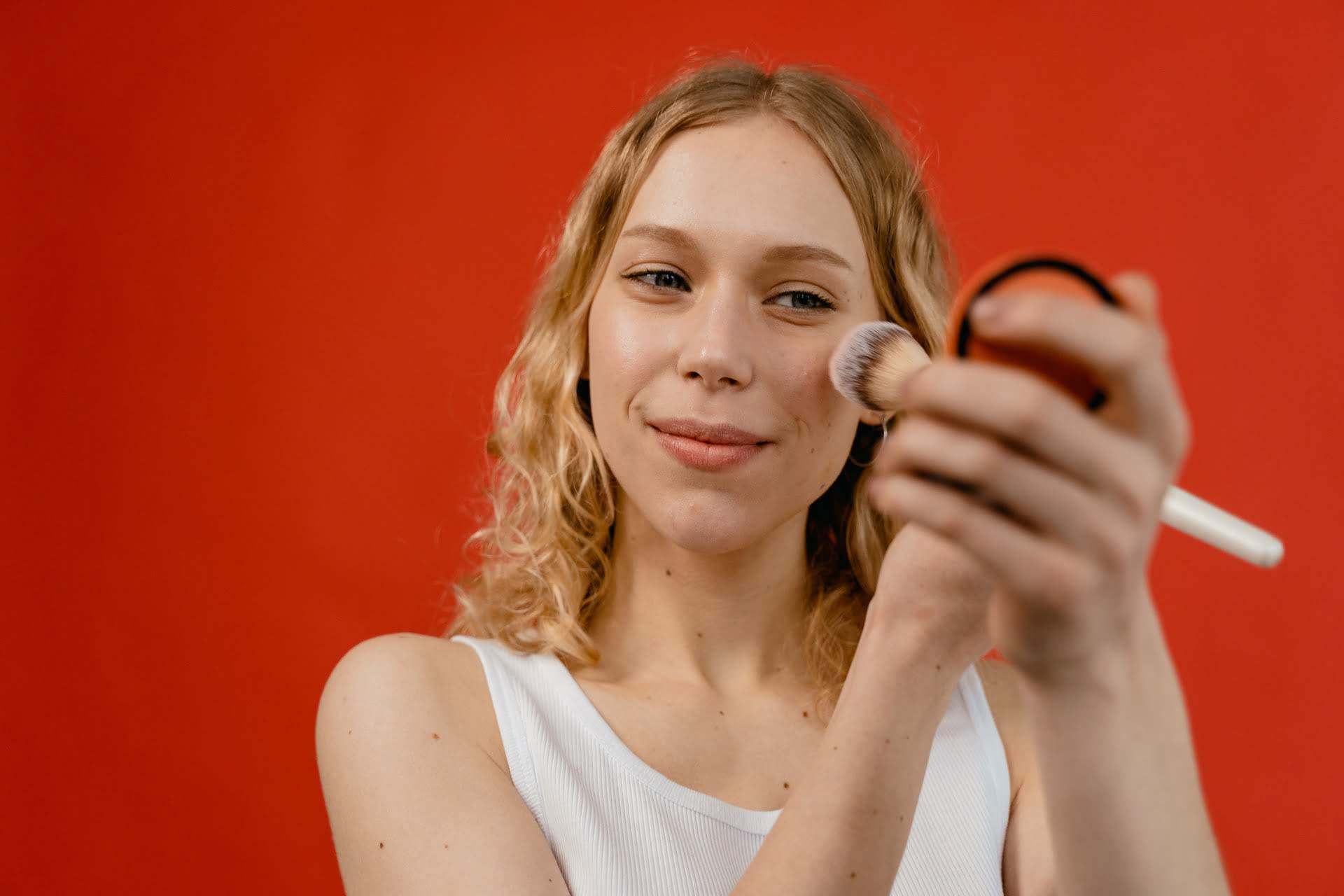
The particles of fine powder are not pressed and lie on the face evenly, in a very thin layer. They are applied with a roller brush or a standard fluffy brush, creating a weightless velvety veil.
You can also use compact powder, which provides denser coverage. However, you should be careful with it if you have oily or dehydrated skin prone to flaking.
So, we’ve prepared our ‘canvas’ for applying further beauty products. Now we can confidently continue with face sculpting, as well as eye and lip makeup. Stay beautiful!