Experience the Enchantment of ‘Kupalle’: A Belarusian Ballet Masterpiece
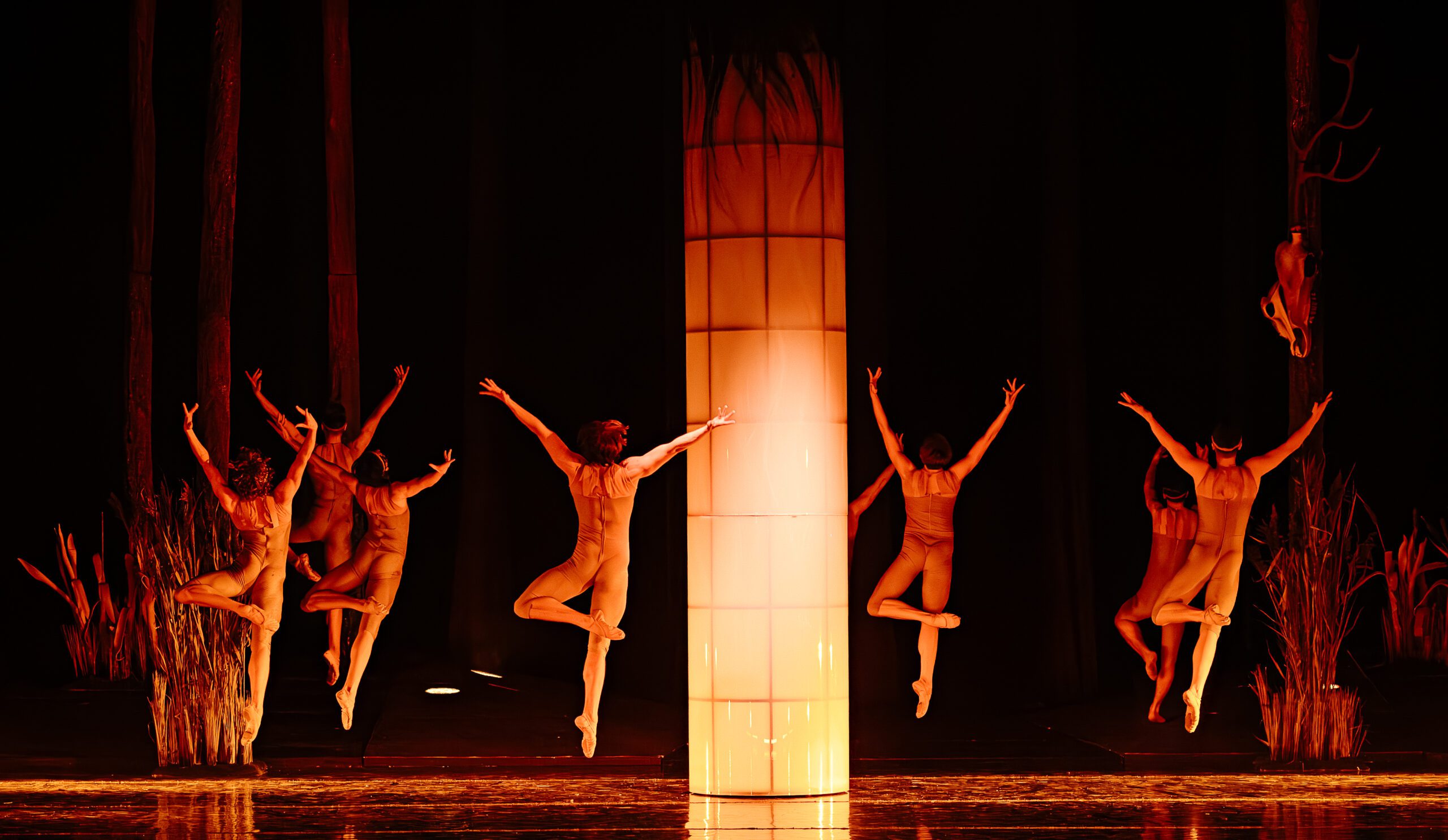
Experience the Enchantment of ‘Kupalle’: A Belarusian Ballet Masterpiece
This season, the Belarusian State Academic Musical Theater’s ballet troupe has been captivating audiences with their stunning performances. The premiere of the ballet “Kupalle” and the revival of the choreographic masterpiece “The Cherry Orchard” took place on the eve of the Kupalle celebration, on July 6th. The ballet, inspired by Chekhov’s play, was Sergey Mikely’s graduation performance and marked his first major production for the Musical Theater, where he now serves as the chief choreographer of the classical ballet troupe.
The Magic of ‘Kupalle’
The premiere of “Kupalle” in April garnered rave reviews from both critics and audiences alike. The overwhelming positive response led us to attend another performance on June 27th, where the Musical Theater was filled to capacity. The interest in this ballet, which explores one of Belarus’s oldest and most cherished folk holidays, is undeniably high. However, this also presented a significant challenge for the producer, as the ballet delves into a well-known celebration with established rituals and traditions.
Transforming a pagan-rooted folk holiday into a ballet worthy of an academic theater stage, without creating a pseudo-folk craft but rather a true work of art, is an immense task for any choreographer. Sergey Mikely and his team have undoubtedly succeeded in this endeavor. The audience’s enthusiastic response, with cries of “Bravo!” echoing through the theater, is a testament to their achievement.
A Fairy Tale from the First Minute
From the very beginning, the performance immerses the audience in a fairy tale, evoking the atmosphere of “the legend of ancient times.” The three figures representing the ancient deities of Water, Fire, and Earth are so vivid and awe-inspiring that they send shivers down the spine of the viewers. Each deity presents its chapter in the performance, guiding the audience through the rituals dedicated to them during the Kupalle holiday. The costume designer, Ilya Podkopayev, deserves special mention for creating impressive, multi-layered outfits for the mythical deities. In contrast, the costumes of the people celebrating Kupalle are minimalistic, emphasizing their vulnerability and humanity against the extravagance and eternity of the deities.
Scenography and Choreography
The scenography for the performance, created by Evgeny Yermolovich, is subtle and unobtrusive, allowing the dance to take center stage. Yermolovich’s design visually connects the earth and the sky, serving as a bridge between the real world of people and the fairy-tale world of mythical deities. This minimalistic approach ensures that nothing distracts the viewer from the main attraction: the choreography.
Sergey Mikely, as the choreographer, masterfully utilizes the entire stage space and every beat of the music. The performance is continuous, with no gaps in the narrative or choreography, and is divided into two acts. The intermission does not disrupt the unity of the impression; instead, the curtain opens to reveal a breathtaking scene that leaves the audience in awe. The ballerinas, sitting on the shoulders of the dancers, merge into one silhouette, evoking images of ancient giants, mythical creatures, or bird-people. This openness to interpretation is a hallmark of true art.
Following the Kupalle ritual step by step, Sergey Mikely leads the audience through the climax of the performance, which occurs in the frenzied dances after the sacrifice to the Earth, and towards the sun. As in the celebration of Kupalle, the final point of action in the ballet is the meeting of the dawn. This light, bright, lyrical finale is like a liberation and purification, to which every participant of Kupalle aspires. It is also a bold move by the director, who leaves the end of his work seemingly open.
Despite the strong, rhythmic, pulsating music written for the ballet by composer Elizaveta Loban, who drew inspiration from the musical heritage of the Belarusian Polesie, the performance leaves a light and bright aftertaste. This ballet does not tire or overwhelm; instead, it invites the audience to return and experience the thrill of the captivating magic of the stage mystery and enjoy the synchronous, rhythmic, almost ritual dance of the ballet. “Kupalle” is not a seasonal performance tied to the calendar cycle or time of year. Sergey Mikely has managed to create a distinctly Belarusian ballet that subtly highlights the real art hidden in our ancient holidays, indigenous beliefs, folk customs, and traditions.
Interview with Sergey Mikely
Sergey Mikely: “The first thing I do when starting a new production is fall in love.”
Question: You mentioned that the idea to stage the ballet “Kupalle” came from the realization that there was no national ballet in the repertoire of the Belarusian State Academic Musical Theater—and therefore, it had to be created. But why did you choose Kupalle as the theme for the production?
Sergey Mikely: “Kupalle is a very significant and iconic holiday for Belarusian national culture. It has been celebrated since pagan times and continues to be widely observed in Belarus today. Not only has the tradition of the holiday been preserved, but there are also many songs, dances, plays, and literary works in our cultural heritage that mention and describe this summer solstice celebration. There is a Kupalle scene in the production of the musical ‘Sofia Golshanskaya,’ staged in our theater, and in the ballet ‘Vitovt,’ staged at the Belarusian Bolshoi Theater by choreographer Yuri Troyan. However, there has not been a dedicated ballet exploring this rich tradition until now.”