Belarusian Fashion Centre: A Legacy of Style and Innovation
Belarusian Fashion Centre: A Legacy of Style and Innovation
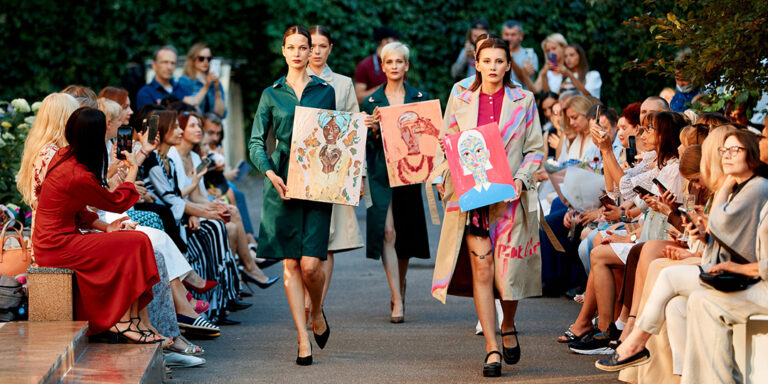
The walls of the Belarusian Fashion Centre have witnessed the visits of legendary fashion icons like Pierre Cardin and the showcasing of collections by equally renowned Ted Lapidus. Its models have graced international fashion catalogs, and its shows, styled as grand spectacles, have been staged on the runways of Italy, France, Germany, Spain, as well as distant lands like India, Japan, and Canada, and even in socialist countries such as Bulgaria, Romania, Poland, and Yugoslavia. The Centre’s history is a tapestry woven with the atmosphere of the late 1940s’ “joy with tears in the eyes,” the enthusiasm of the 1950s, the romance of the 1960s, the scarcity and privilege of the 1970s, the conservatism of the 1980s, the upheaval of the 1990s, and the optimism of the new millennium. The Belarusian Fashion Centre is the successor to the renowned Belarusian House of Models of the Soviet Union, and in November, it celebrated its 70th anniversary. Happy Birthday, Belarusian Fashion Centre!
The Early Years
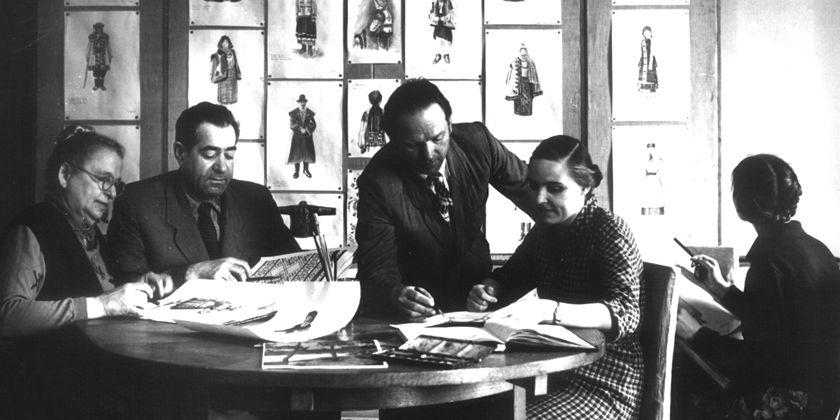
The original name of the current Belarusian Fashion Centre was the Minsk House of Models of Belshveitrest. Its primary function was to develop samples for garment and footwear enterprises. During the Soviet era, the House of Models designed “everything or almost everything” – from men’s and women’s clothing and footwear to headwear and school uniforms. Essentially, it was the sole enterprise responsible for developing samples for most of the light industry enterprises in the Byelorussian SSR and beyond.
Former mannequins recall what their work was like: standing for fittings daily and showcasing clothing to the members of the artistic council once a month. Today, with many large enterprises having their own development departments, the Fashion Centre focuses exclusively on designing women’s clothing. The profession of mannequin, or “model demonstrator” as it was previously known, disappeared from the staff schedule in the 1990s with the emergence of the first modeling agencies in the country.
New Names, New Era
The history of the Belarusian House of Models is inseparable from the names of Vladimir and Inna Bulgakov, a designer duo who brought it fame during the Soviet era. Today, the Fashion Centre’s history is being written by new designers whose names are already well-known. Anton Yaroshchik, Anastasia Korneva, and Inna Gonchar each have unique, distinct, and individual creative styles.
Designer Inna Gonchar
Inna Gonchar’s profession is a childhood dream come true. Strict classics and elegant femininity are what Inna Gonchar has remained faithful to for many years. This formula allows her models to be timeless and always in vogue.
Designer Anton Yaroshchik
Minimalism, conciseness, freedom, and elegant silhouettes define Anton Yaroshchik’s style. Decorative elements, handmade finishes, oversized silhouettes, and references to legends, fairy tales, and stories of big city dwellers are the key aspects that give his collections a special charm.
Designer Anastasia Korneva
Anastasia Korneva prefers pastel shades, soft lines, lightness, and elegance. Her collections often feature floral embroidery, appliqués, and romantic flounces – all those feminine “codes” that have always been present in the Fashion Centre’s collections.
A Blend of Public and Private
Unlike in the past, the country’s most fashionable house is no longer entirely state-owned. The state’s share is less than half, yet it provides the essential support without which the Centre could not function. If the Centre were not part of the Bellegprom concern, its fate might have been different, as the primary goal of any commercial enterprise is to generate profit, and fashion, unfortunately, does not always bring that. Rather, it requires investments and other forms of support.
The Anniversary Cake
The four layers of the anniversary cake represent four new collections, each composed of unique ingredients gathered according to an original author’s recipe, and each with an unforgettable taste. The three fillings between the layers symbolize the improvised performances that reveal the enterprise’s history from its creation to the present day.
A real celebratory cake must have a surprise – something unexpected yet highly anticipated. In this case, it is the idea of reproducing women’s clothing models from the 1960s and 1970s, adapted to our time. The decoration is the esteemed audience: notable figures from the worlds of culture, art, and fashion, and stars of the show business. And what modern cake would be complete without the proverbial cherry on top? The anniversary event features mannequins from past decades.
Igor Selitsky, the director of the Belarusian Fashion Centre, says:
“The release of three to four collections a year, maximally filled and diverse, implies the participation of the Belarusian Fashion Centre in two major fashion events or shows – in spring and autumn. Since last year, we have decided not to participate in mass shows organized by various event organizers, but to prepare and conduct our own events and shows so that they are bright and significant for both business partners and employees, and for everyone interested in the world of fashion.”
In 2017, such an event was the show of exclusive women’s clothing collections made of linen, and in 2018, it will be the show of collections created for the anniversary.
The Chef Behind the Scenes
The kitchen of the Belarusian Fashion Centre must be arranged so that the client is confident in the impeccability of the processes taking place there, does not doubt the quality of the products, purchases them with pleasure, and uses them with enjoyment.
In modern conditions, this is possible with a leader who has deep knowledge of effective management rather than a creative background. The current head of the Fashion Centre is Igor Selitsky, whose education is not directly related to the fashion industry. However, his previous experience working at a garment manufacturing enterprise allowed him to step into his new role so that the Fashion Centre became his second home in less than five years. As a lawyer, economist, and graduate of the Executive MBA program at the Leon Kozminski Academy in Warsaw, he sees his main task as creating favorable conditions for the creative forces working there.
Today, the Fashion Centre has several tasks that seem radically different from each other: creating fashion collections, developing corporate styles for domestic companies, and producing goods for the mass market. It is one of the few enterprises that can qualitatively produce an individual business suit, clothing for the president’s protocol service, or, for example, national linen costumes for the Miss Belarus contest, as was the case this year.
Former mannequins recall what their work was like: standing for fittings daily and showcasing clothing to the members of the artistic council once a month.
Can we say that the Belarusian Fashion Centre today is a brand that creates brands? After all, an important part of its activity is representative clothing.