Beijing Unveiled: Essential Tips for Tourists to Avoid Pitfalls and Experience Everything
Beijing: A World Within a City
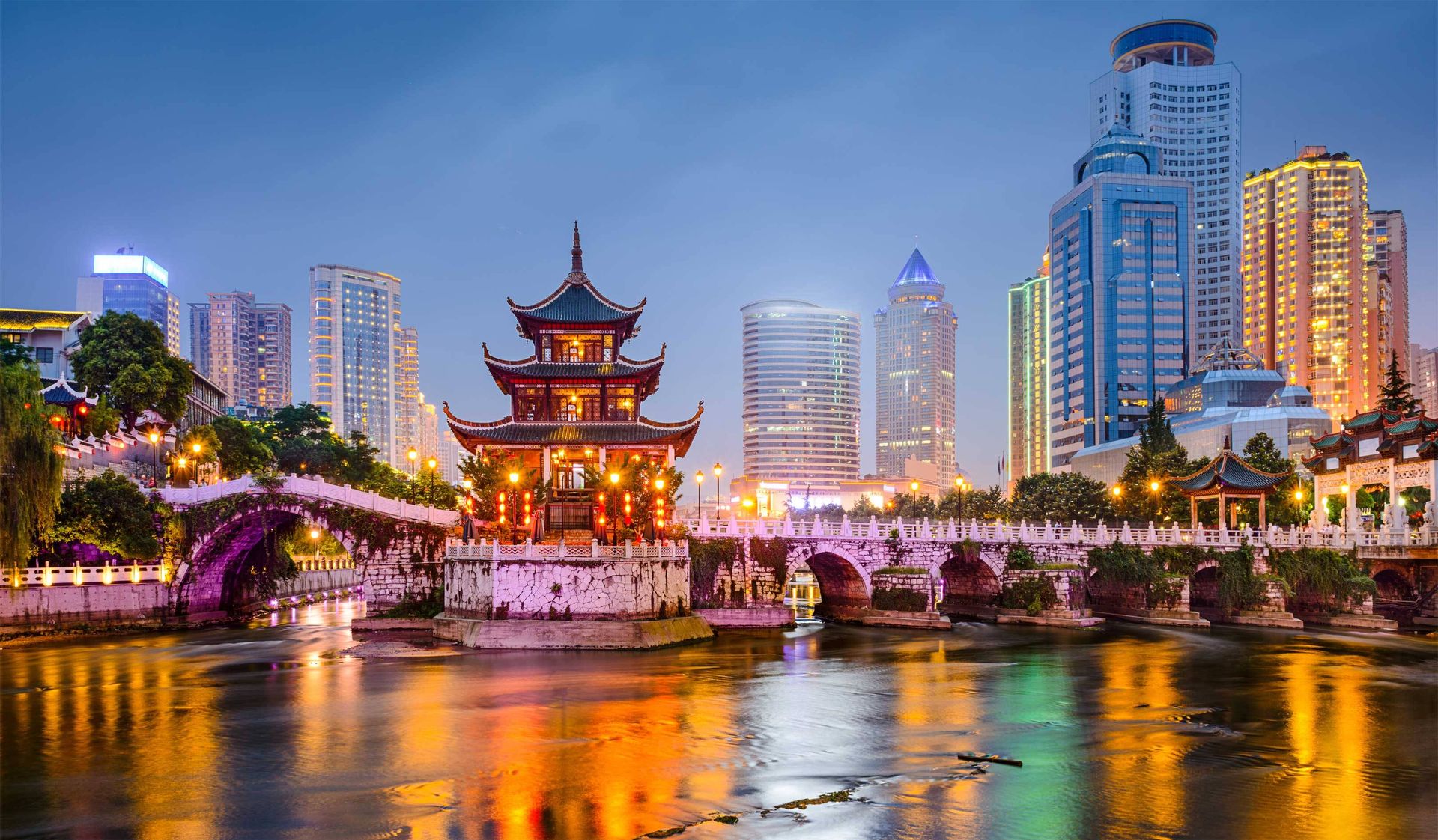
Beijing is not just China; it’s an entirely different world. Visiting the capital is like stepping into a separate country. The first word that comes to mind when describing Beijing is “diverse.” Skyscrapers, modern highways, industrial tech design, Olympic venues, grand hotels—this is Beijing. Narrow ancient alleys, Feng Shui houses, pedicabs, lush parks, carp ponds—this is also Beijing. Five-story buildings reminiscent of our own, tiny courtyards, laundry hanging out to dry, benches by the entrances, chickens—this too is Beijing. Tourist promenades, bustling night markets, bars and clubs, neon lights—all of this is Beijing.
Historical Roots and Modern Growth
Cities with different names but similar functions (economic, political, and cultural centers) have existed in the place of the modern capital since before the Common Era. However, Beijing’s expansion to the point of requiring six ring roads began relatively recently.
Despite the government’s plans for reasonable resettlement, over 30 million residents, including labor migrants and foreigners—not to mention numerous tourists—practically enjoy traffic jams and overcrowded public transport around the clock.
Exploring the Forbidden City
It makes sense to start your acquaintance with Beijing from its center—the Imperial Palace. When I say center, I mean it literally. Since Beijing is built according to Feng Shui principles, it has a square shape, and the main attraction—the largest square in the world, Tiananmen Square—is located right in its heart. Here, besides the Forbidden City, you can find the National Museum, which houses the complete history of the Chinese revolution, and the mausoleum of Comrade Mao. The mausoleum is open only in the first half of the day and not every day, so it’s better to check the schedule in advance and be prepared to stand in line for a long time.
Preparing for Your Trip
Before traveling to Beijing, prepare for three important things:
- Beijing’s attractions are not European in scale—you can’t explore every temple or palace in a day.
- Domestic tourism is well-developed in China, so among those wishing to visit the excursion sites, there will be a billion local residents.
- It’s unrealistic to remember the complex names of pavilions, temples, and palaces, just as it’s unrealistic to remember the long translations of their pompous meanings. Don’t burden yourself—just enjoy the sights.
The Forbidden City: A Closer Look
The Forbidden City, also known as the Imperial Palace, Gugong, or the Purple City, is the largest palace complex in the world. Over a million people built Gugong, its area exceeds 700,000 square meters, and legend has it that it contains 9,999 rooms. According to legend, the heavenly emperor had 10,000 rooms, and the earthly emperor, his son, had one less as a sign of modesty. The Forbidden City has three imperial gardens and numerous pavilions, the highest and most important of which is the 30-meter-high Hall of Supreme Harmony. All official ceremonies were held here, and troops marched in the courtyard.
All the buildings of the Purple City, their colors, and statues follow the canons of Feng Shui and have symbolic meanings. It’s difficult to remember all the details during the tour, but you can grasp the essence: everything you see leads to health, happiness, wealth, longevity, and other positive things. This is tradition.
Unfortunately, most of the valuable interior decorations were taken to Taiwan, and China has been refused their return to this day. Therefore, the interior is not as magnificent as the exterior, but the imperial thrones in the pavilions have been preserved.
Another attraction of the Forbidden City is a cypress tree, almost as old as the palace itself. Beijing’s gardens have many trees over 100 years old, marked with yellow plaques. Trees over 300 years old are marked with red plaques, and those over 500 years old have detailed plaques with full descriptions—almost biographies.
Traditional Houses
Previously, all of Beijing consisted of Siheyuan houses designed according to Feng Shui principles. Now, several quarters with traditional buildings are lyrically preserved in the city center, where you can go for a walk or on a tour. During the tour, tourists are shown one of the Siheyuan, and the owners willingly talk about their ancestors. We found out that in the 17th century, such a house could be bought for 2,000 yuan—the equivalent of today’s 300 dollars—a solid amount of money for that time. But they didn’t live in Siheyuan in pairs, but in large families of 15-20 people, plus servants.
It’s hard to find fault with the layout of traditional housing—Chinese houses are quite convenient. All the rooms are located inside the wall, which serves as a fence, and inside there is a common courtyard, which is also a dining room. Everyone has enough personal space, as parents, children, and grandparents live autonomously, even having separate entrances to their rooms.
Ritan Park
Ritan Park is one of the favorite places for Beijing residents to relax. The Chinese admire the picturesque blooming lotuses, exercise on free simulators, ride attractions with children, participate in painting and sculpting workshops, practice Wushu, Kung Fu, and some kind of aerobic gymnastics, catch real and toy fish in real and artificial ponds, walk and eat in numerous small cafes.
Nearby is the bustling “Russian” quarter with a shopping center for Russian shuttle traders, warehouses for them, cafes-bars-clubs, massage parlors, and even a restaurant “Moscow” stylized as the Kremlin, where they serve borscht and pelmeni. In the vicinity of Ritan Park, pedicab drivers know a few words in Russian, and in cafes, they serve menus with dishes like “monolithic tentacles customs confiscate.”
Museums and Shops
In Beijing, foreigners are offered a whole list of interesting places organized on the principle of “factory—museum—shop.” Admission is free. First, you are shown the production technology and your questions are answered in detail, and you may even be allowed to participate in simple processes. Then you find yourself at an exhibition of luxurious and super valuable products, and finally, you are invited to a shop with mass products and souvenirs. A guide, tea, and treats are included as a bonus. If you don’t have time to visit all such museums and shops, you should at least see jade, enamel, porcelain, carved furniture, embroidery, mother-of-pearl, and silk.
Jade Factory
In China, there are dozens of types of jade: white, green, black, red, brown, speckled, and even almost transparent, glowing from within. In several huge halls of the museum, incredibly expensive exhibits are stored—in accordance with the ancient saying: “Gold has a high price, jade is priceless.” Real jade is expensive due to its hardness—it is very difficult to process.
Cutting, polishing, turning, drilling are still done by hand. The most popular product is the famous ball, inside which there are many more balls. And tourists, imbued with Feng Shui, eagerly buy thin carved jade cabbage—a symbol of money.
Cloisonné Enamel Factory
Traditional Chinese enamel, also known as cloisonné enamel, was born in Beijing in the 13th-14th centuries and enjoyed the patronage of emperors during the Ming and Qing dynasties. The enamel was called cloisonné due to the manufacturing technique: metal strips were soldered onto porcelain, and the gaps between them were filled with enamel. The Ming Dynasty is mainly blue, and then brighter colors became popular. All these vases are still made by hand.
First, a copper base, then soldering copper wire to the base, forming the future pattern. When the pattern is ready, the gaps formed by the wire are filled with colors: yellow, blue, green, red. There can be several firings, then polishing and firing again, and grinding again. The final stage of the birth of a masterpiece is gilding in a silver solution.