Estrogen Face Explained: Why Menopause Changes Your Skin & How to Fight Back
What Exactly Is Estrogen Face?
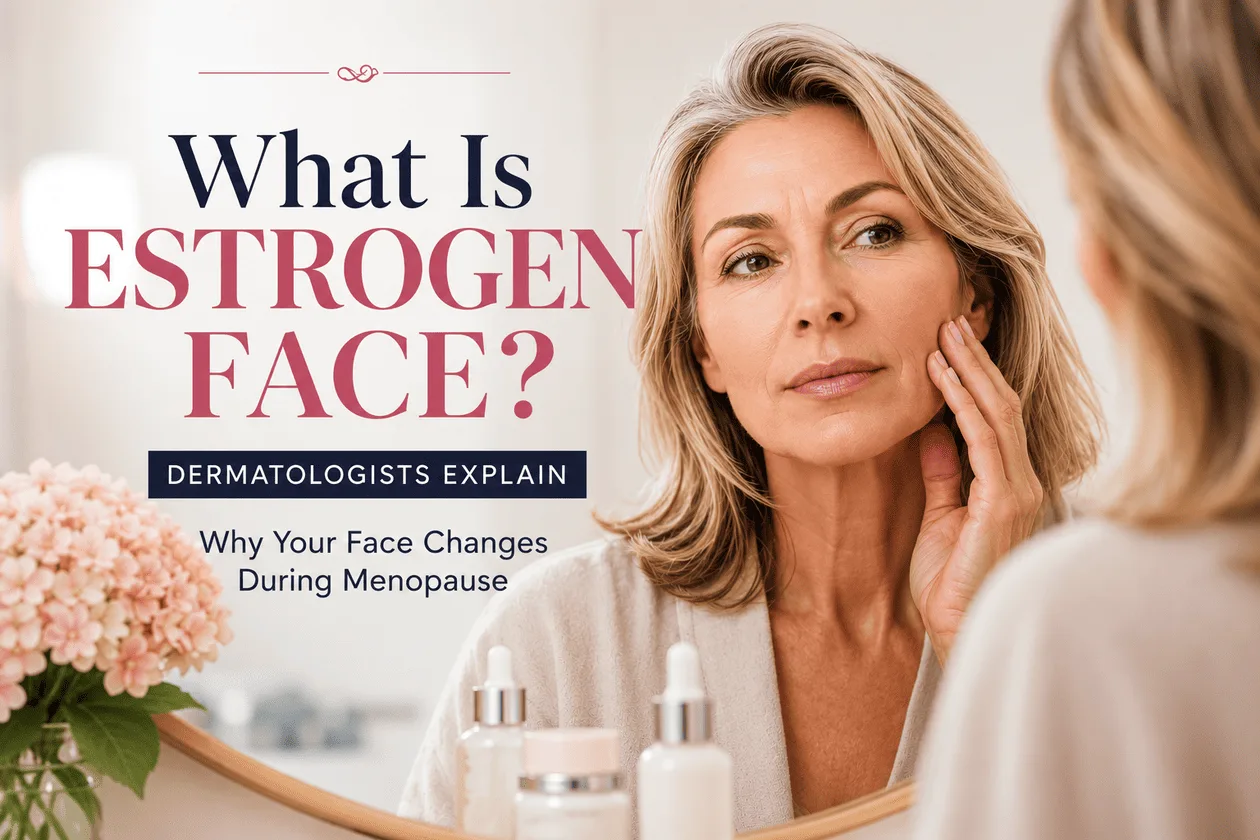
There’s a moment many women know all too well: you glance in the mirror and pause. When did my face change? It’s not about a new wrinkle or a sudden flaw—it’s something subtler. Your cheeks aren’t as full. Your jawline has softened. Your skin feels drier, and even after a full night’s sleep, you still look tired. If this sounds familiar, you’re far from alone.
Dermatologists have coined the term “estrogen face” to describe the collection of facial changes women often notice as estrogen levels drop during perimenopause and menopause. While it’s not an official medical diagnosis, it’s a helpful way to explain why so many women feel like their appearance has shifted almost overnight. The truth? These changes start long before you see them in the mirror.
The good news? Understanding what’s happening puts you in control. You can’t stop menopause, but you can support your skin to age gracefully—just like the rest of you.
Why Does Menopause Transform Your Face?
Estrogen is one of the most critical hormones for healthy, youthful skin. Most people associate it with reproductive health, but it also works behind the scenes to keep skin thick, hydrated, elastic, and resilient. Estrogen boosts collagen production, maintains your skin’s moisture barrier, supports blood flow, and even influences where fat is stored in your face.
As estrogen declines during perimenopause and menopause, all these processes slow down. The result isn’t a single dramatic change—it’s a gradual shift that alters your face’s structure. Skin becomes thinner, collagen breaks down faster, facial volume decreases, and elasticity fades. Over time, you might look in the mirror and feel like your face has changed shape entirely.
The Collagen Crash
One of the biggest culprits behind estrogen face is collagen loss. Collagen is the protein that gives skin its firmness and structure—like a framework holding everything in place. Research shows women can lose up to 30% of their skin’s collagen in the first five years after menopause. After that, collagen continues to decline by about 2% each year.
But collagen isn’t the only thing disappearing. Your skin also produces less oil, making it harder to stay hydrated. Blood circulation slows, so skin doesn’t receive nutrients as efficiently. Elastin—the protein that helps skin snap back into place—also decreases. Meanwhile, the natural fat pads that once gave your face a youthful fullness begin shrinking and shifting downward.
None of these changes happen overnight, but together, they create a noticeable difference.
Signs You Might Have Estrogen Face
If you’re experiencing estrogen face, you might notice some (or all) of these changes:
- Dry, Thirsty Skin: Your usual moisturizer suddenly feels ineffective, and makeup settles into fine lines instead of gliding smoothly. Declining estrogen weakens your skin’s protective barrier, allowing moisture to escape more easily.
- Loss of Facial Volume: Cheeks that once looked lifted may appear flatter, and the area under your eyes might look hollow. Smile lines deepen, not because you’re smiling more, but because the tissue underneath isn’t as supportive.
- A Softer Jawline: Instead of a defined profile, your lower face may look softer. Collagen loss, reduced elasticity, and gravity pull tissue downward, making jowls more noticeable—even if you haven’t gained weight.
- More Pronounced Wrinkles: Fine lines around your eyes and mouth become more visible because thinner skin doesn’t bounce back like it used to. Even sleeping on your side can leave creases that eventually become permanent.
- Thinner, More Translucent Skin: Your skin may bruise more easily or look more see-through than it did in your 40s. This is another result of thinning skin and reduced collagen.
It’s Not Just Aging—It’s Hormones
It’s easy to assume these changes are just part of getting older, but hormones play a much bigger role than most people realize. Both men and women lose collagen as they age, but women experience a steeper decline because of menopause. Estrogen acts like a maintenance crew for your skin, constantly repairing, rebuilding, and protecting it. Once estrogen levels drop, those repair systems become far less efficient.
That’s why two women the same age can have dramatically different skin, depending on genetics, lifestyle, sun exposure, and where they are in the menopausal transition.
Can You Prevent Estrogen Face?
There’s no magic cream that stops hormonal aging—despite what some ads promise. But dermatologists agree that the right skincare routine, healthy habits, and a little patience can significantly improve your skin’s appearance.
Think of it less as trying to look 30 again and more as helping your skin be the healthiest version of itself today.
Build a Skincare Routine That Supports Collagen
If there’s one ingredient dermatologists consistently recommend for mature skin, it’s retinoids. Whether you choose an over-the-counter retinol or prescription tretinoin, these vitamin A derivatives are the gold standard for encouraging collagen production and improving skin texture. They require consistency and patience, but few ingredients have stronger scientific backing.
Vitamin C deserves a permanent spot in your morning routine. It helps protect collagen from environmental damage while brightening your complexion and supporting healthy skin repair. Pairing a vitamin C serum with sunscreen creates one of the best defenses against premature aging.
Peptides have also gained popularity because they act like tiny messengers, signaling your skin to produce more collagen. While they’re not miracle workers, they can be a valuable addition to a routine focused on maintaining firmness.
For women struggling with dry menopausal skin, ingredients like ceramides and hyaluronic acid are game-changers. Ceramides repair the skin barrier and reduce moisture loss, while hyaluronic acid attracts water into the skin, giving it a smoother, plumper appearance.
Sunscreen Is Non-Negotiable
No skincare routine is complete without daily sunscreen. UV damage accelerates collagen breakdown, so protecting your skin from the sun is one of the best ways to prevent further aging. Look for a broad-spectrum SPF 30 or higher and apply it every morning—rain or shine.
Lifestyle Matters Just as Much as Skincare
What you put in your body is just as important as what you put on it. A diet rich in antioxidants, healthy fats, and lean proteins can support skin health from the inside out. Staying hydrated, getting enough sleep, and managing stress also play a role in how your skin looks and feels.
Exercise improves circulation, which helps deliver nutrients to your skin. And while it might sound counterintuitive, strength training can help maintain muscle tone, which supports your skin’s structure.
Finally, avoid smoking and limit alcohol, as both can accelerate skin aging and worsen dryness.
The Bottom Line
Estrogen face is a real—and frustrating—part of menopause for many women. But it’s not something you have to accept without a fight. By understanding the changes happening beneath the surface and taking proactive steps to support your skin, you can maintain a healthy, radiant complexion at any age.
Remember, aging is natural, but looking and feeling your best doesn’t have to be a battle. With the right knowledge and tools, you can embrace this new chapter with confidence.
For more on menopause and skin health, check out this authoritative resource.