Sudan’s War: The Silent Suffering of Women One Year After the Conflict Began
The Humanitarian Catastrophe Unfolding in Sudan
One year after the violent clash between the Sudanese Armed Forces (SAF) and the Rapid Support Forces (RSF) erupted, Sudan has become the epicenter of one of the world’s most devastating humanitarian crises. As a lifelong advocate for women’s rights, I’ve seen firsthand how this war has torn apart communities, leaving millions trapped in a cycle of starvation, violence, and displacement. The situation is dire, and the world’s attention is urgently needed.
Fleeing for Survival: A Personal Account of Escape
When the fighting began, I faced an impossible choice: stay and risk my life or leave behind everything I knew. As the Executive Director of Zenab for Women Development, a Sudanese organization dedicated to empowering women, I’ve always spoken out for justice. But in a warzone, activism can make you a target. Despite the dangers, I remain committed to giving a voice to Sudanese women—women whose strength and resilience are often overlooked, even as they hold their families and communities together in the face of unimaginable hardship.
A Country on the Edge: Hunger, Displacement, and Collapse
As we mark the one-year anniversary of this brutal conflict, the war has only grown worse, spreading across Sudan and pushing the nation to the brink of total collapse. According to the United Nations, nearly 18 million people—almost half the country’s population—are now facing acute hunger, with food assistance critically needed to prevent famine. Over 7.4 million have been forced to flee their homes, making Sudan the country with the largest number of displaced people anywhere in the world.
The crisis has deepened in recent months, with fighting now engulfing Gezira state, home to Africa’s largest agricultural project. Early in the conflict, Gezira became a sanctuary for internally displaced persons (IDPs), but now even its residents have been forced to escape to states like Blue Nile, Gadaref, and Kassala. With Sudan’s food production under attack, supply chains have collapsed, making it nearly impossible to deliver food to those who need it most.
Overcrowded IDP camps are struggling to accommodate the influx of displaced families. Conditions are appalling: food and clean water are scarce, sanitation is inadequate, and malnutrition is widespread. The risk of waterborne diseases is rising, and humanitarian organizations face immense challenges in delivering aid due to ongoing security threats.
The Heavy Toll on Women and Girls
While men are often left behind to fight, women and girls bear the heaviest burden of this crisis. Forced to flee for their safety, they struggle to find food for themselves and their children. What little food is available is often insufficient and lacks proper nutrition, leading women and girls to eat last and least. This scarcity has fueled a surge in gender-based violence, including intimate partner violence, sexual exploitation, and forced marriages.
Reports of widespread rape and militia forcing young girls into marriage and slavery are horrifying but far too common. Access to lifesaving services—such as sexual and reproductive healthcare, clinical management of rape, and emergency contraception—has been decimated as health facilities are destroyed and displacement cuts off access to care. The mental and psychological toll is devastating, with many women expressing feelings of hopelessness and even suicidal thoughts.
Hanan, a mother displaced twice by the conflict, shared her heartbreaking reality: “We are living in poor conditions with limited access to food, water, and health services. I don’t know what will happen next—will we be displaced again? It breaks my heart to see my children living without education, without hope. The stress is unbearable.”
Women Leading the Way in Crisis Response
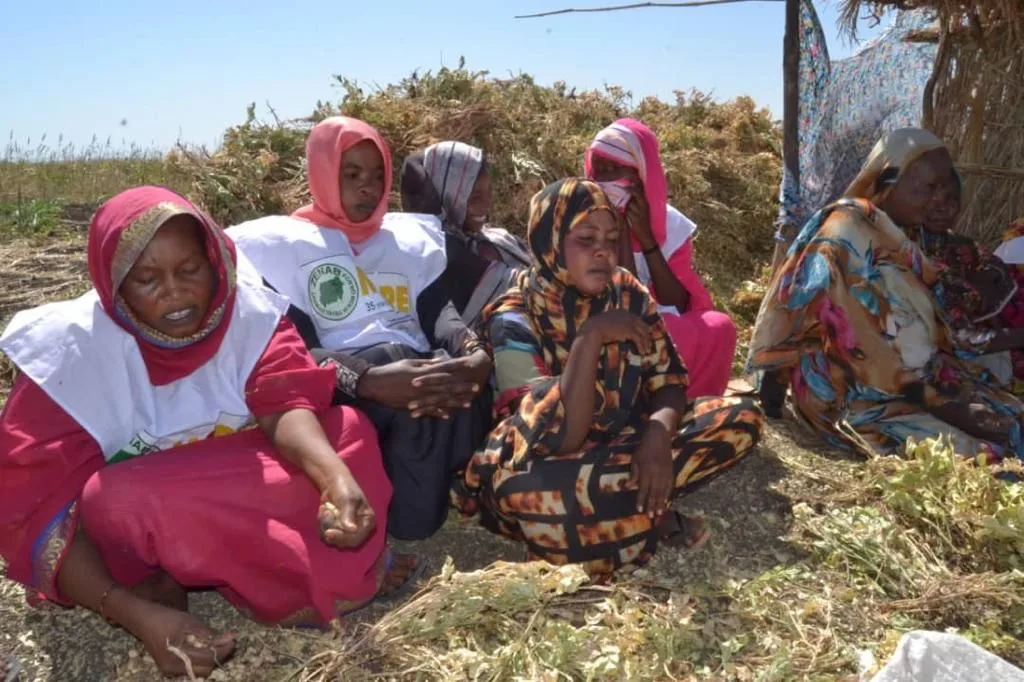
Despite these unimaginable challenges, Sudanese women continue to rise. They are the backbone of their families and communities, risking their lives to provide support where it’s needed most. Through a grant from Women for Women International, Zenab for Women Development is providing food baskets and essential non-food items to 250 households in Gadaref state. These efforts include distributing hygiene kits to an estimated 500 women and girls, as well as raising awareness about nutrition, hygiene, sanitation, mental health, and protection.
As a women-led organization, we are calling on the international community to take urgent action. Recently, I had the honor of representing Sudanese women at a UN Security Council briefing, where I emphasized the need for immediate peacebuilding initiatives and unobstructed humanitarian aid. Women’s rights organizations are a critical pillar of the frontline response, yet we face severe limitations in funding, technical support, and staff care.
A Global Call to Action: The World Must Respond
The women of Sudan are not just victims—they are leaders, caregivers, and survivors. But they cannot do this alone. The international community must act decisively to address this crisis. We need an immediate ceasefire, unfettered access to humanitarian aid, and support to remove the barriers preventing women’s organizations from reaching those in need.
This is not just a Sudanese crisis—it is a global one. The world must not forget the women of Sudan. Their resilience is inspiring, but their suffering is real. Now is the time to stand with them.
URGENT: Sudan Emergency
With violence escalating, women in Sudan need support more than ever. Your emergency gift can make a life-changing difference.