Mastering the Art of Hanging Pictures: A Guide to Perfect Home Decor
Mastering the Art of Hanging Pictures: A Guide to Perfect Home Decor
A picture can seamlessly blend into your interior decor, serving as an organic detail, or it can stand out as a striking accent that defines the surrounding environment. However, even a masterpiece like the Mona Lisa can appear out of place if not positioned correctly. To ensure your artwork enhances the overall atmosphere of your room, follow these essential guidelines for hanging pictures. These rules apply to paintings, posters, and photographs alike.
Find the Perfect Spot Before You Buy
If you fall in love with a painting in a gallery or store, don’t rush to purchase it. First, determine if you have a suitable place for it in your home. Measure the dimensions, create a cardboard mockup, and try it out on different walls, adjusting the height as needed.
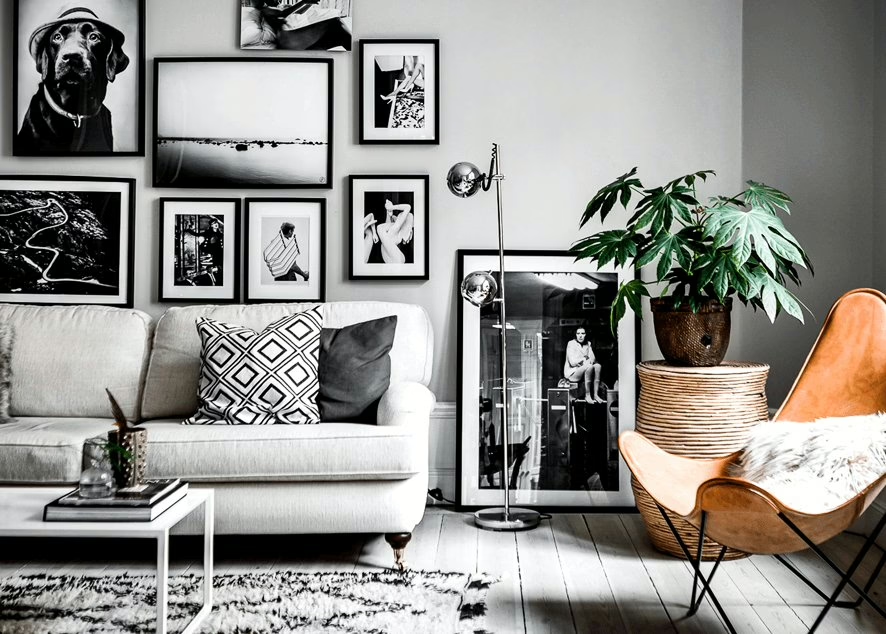
A large painting doesn’t necessarily have to be hung; it can be leaned against a wall. This style of placement, reminiscent of an artist’s studio, has become increasingly popular. It works best if you have a spacious empty corner or a spot where the artwork won’t be overshadowed by furniture. Be prepared to rearrange your space to accommodate your new decorative piece.
Proportion is Key
It’s crucial to ensure your artwork is proportionate to its surroundings, neither too small to be overlooked nor too large to overpower the space. When hanging a picture above furniture, the ideal scenario is for the outer edges of the frame to be slightly shorter than the length of the console, table, or sofa. This rule applies to both single pieces and compositions of multiple objects.
A vertical painting can make a wall appear taller, while a horizontal one can make it seem longer. Use this to your advantage to correct the perception of space in your room.
Choose the Right Frame
The frame is just as important as the artwork itself. To prevent your painting from blending into the wall, consider using a contrasting frame. A substantial frame can help balance a large piece of furniture, such as a console or sofa, beneath which the artwork will hang.
When creating compositions, pay attention to the frames as well. For symmetrical arrangements, identical frames work best. For a more eclectic look, consider hanging pictures with different frames in a cluster, with one central image surrounded by others.
You can order custom frames for your paintings, mirrors, and other items from the Russian Baget Workshop. Their talented artists, decorators, and designers will create the perfect framing for your artwork, beaded embroidery, photograph, or poster, tailored to your interior’s unique characteristics. You can browse their selection of frames and place an order from the comfort of your home on their website.
Additionally, the Russian Baget Workshop offers photo printing on canvas and custom modular paintings. So, any image you love can find its place in your interior.
Less is More
Avoid the temptation to adorn every wall in your home with artwork, no matter how beautiful it may be. Too many pictures can make each one lose its impact. Remember, artwork is an accessory that demands attention. Therefore, it’s essential to leave some breathing room around each piece, proportional to its size.
A close arrangement of pictures only works in a composition. If a composition covers an entire wall, it’s best to leave the other walls bare. The eye should be drawn to the artwork, not overwhelmed by a chaotic array of images.
Lighting Matters
You’re likely aware of how crucial lighting is for a great photograph. The same principle applies to your wall art. Ensure your artwork is well-lit but not exposed to direct sunlight, which can damage it or create unpleasant glares. If you must hang a picture on a sunny wall, consider using anti-glare glass.
Take into account both natural and artificial light. With proper lighting, your artwork will look stunning and won’t fade into the evening shadows.