Relationship Advice: Whose Tips You Should Avoid
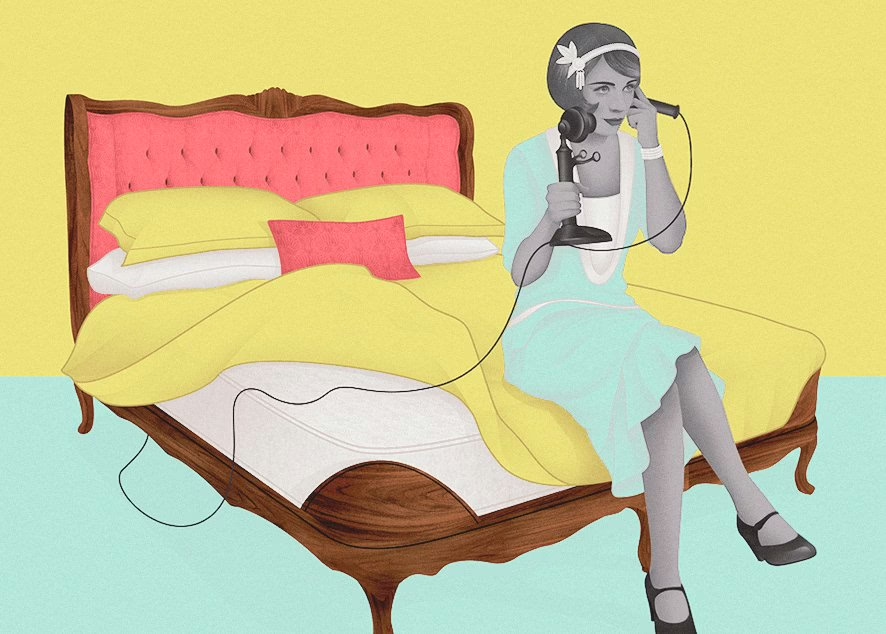
We all need good advice more often than we think. Whether it’s the fear of taking responsibility for our own lives or simply wanting to see a situation from a different perspective, many of us seek the input of others. However, even though every relationship is unique and we often know what’s best for us, we still look for approval, evaluation, or recommendations from those we consider more experienced or from the first person we encounter during our moments of doubt.
Let’s explore which advice and, more importantly, from whom you should avoid if you want to preserve your relationships.
1. Bitter and Resentful People
Seeking advice from people who are currently bitter, going through a rough patch in their relationships, or have never been in a relationship is not wise. Their perception of the world is skewed, and they will view your situation through the lens of their own disappointments. They are likely to warn you that things could turn out as badly as they did for them or offer advice that has nothing to do with healthy, fulfilling, and happy relationships.
An upset person is more likely to complain about life and need advice themselves rather than provide constructive feedback. Bitter individuals often exhibit cynicism or feigned harshness rather than wisdom and maturity. If you can’t avoid talking to them, listen but remain calm and neutral. Don’t take their words to heart or look for similarities between your situation and theirs.
2. Those Focused Only on External Factors
For many people, external factors like appearance, job, financial stability, and education play a significant role in choosing a partner, often more so than basic compatibility, shared views, or romantic attraction. If you seek advice from such individuals, don’t expect much help. Their reasoning will likely be too materialistic rather than sensitive and wise.
3. Overconfident People
Self-assured people and confident people are not the same. Confident individuals don’t feel the need to prove they are right; they are content with their ability to act as they wish. They can offer good advice, likely drawing your attention to what’s important for you, not for their self-affirmation, which is characteristic of those with inflated self-esteem.
Such self-esteem arises when being better than others is not an aspiration but a necessity to get what they want at the moment. These individuals might advise you to humiliate or otherwise self-realize at the expense of others. For example, a guy wanting to attract the attention of a girl who he feels is ignoring him might resort to being rude, bold, or insolent to make her doubt herself, thereby making her more vulnerable and accessible. It’s best not to take advice from such people on how to meet or start relationships, as their issues stem from a lack of self-confidence and basic human decency.
4. Non-serious People
For non-serious individuals, relationships are a game where they shuffle the deck, change partners, pretend to be someone else, or simply can’t approach relationships maturely. Such a person might tell you something like “there are plenty of fish in the sea” or otherwise imply that worrying too much about someone is a waste of time. While this advice might be useful if you’re indeed spending time on someone who indirectly shows that things won’t work out, it won’t help if you’re facing problems in a more fruitful relationship. At best, you’ll realize that you haven’t been given any useful advice; at worst, you’ll make mistakes that worsen your relationship with your partner.
5. Overly Happy People
The term “overly happy” might sound strange, as happiness is something we all strive for. We all want to live like “that happy couple.” However, be cautious when seeking advice from overly happy people, as their success in relationships might be questionable. In some cases, these people might not have faced problems, giving them the feeling that they are fortune’s favorites, making it too tiring for them to understand your situation. In other cases, their confidence in being the “best couple of the year” might make them believe they know everything and do everything right. Their advice will likely be a display of vanity rather than genuine empathy.
However, there’s a fine line here. Happy people can indeed be role models, but not blindly. Good advice from such individuals will help you understand yourself better rather than offering personal “ideal” examples that might make you feel even more disappointed. Seek advice from those who don’t strive to give advice to everyone but through their actions and worldviews show that they are moving in the right direction.
6. Overly Unhappy People
Overly unhappy people are a variation of the previous point. Naturally, no sensible person would seek advice from someone whose position on a matter they don’t respect. However, unhappy couples might be closer to you than you think. For example, parents whose marriage recently or long ago hit the rocks, divorced friends who keep making the same mistakes, or people who stay together for the wrong reasons. They might be part of your close circle, and because of your relationship with them, you might turn to them for advice when life deals you a blow.
Be careful when listening to the “wise” elders—there might be some truth in their words, but it’s often framed by a worldview and upbringing far from yours. Divorced couples who haven’t worked on their issues need advice themselves and will often fall under the previously described points. Ultimately, an unhappy person can’t make someone else happy; to move forward, one must first make themselves happy.
What Should You Do?
As a wise proverb goes: “The best advice is your own.” Learn to analyze your feelings, understand, and admit to yourself what you want and where you might be wrong. Before running to friends, parents, or the nearest bartender for advice, try to look at the situation yourself. Put yourself in your partner’s shoes and, of course, discuss everything with them. If you’re just starting a relationship and need advice on how to attract a man, consider the emotional state of the people you’re turning to for help.
For further reading, you can check this resource on relationships and emotional well-being.