Leon Gurvich: The Musical Maverick’s Journey Home
Leon Gurvich: The Musical Maverick’s Journey Home
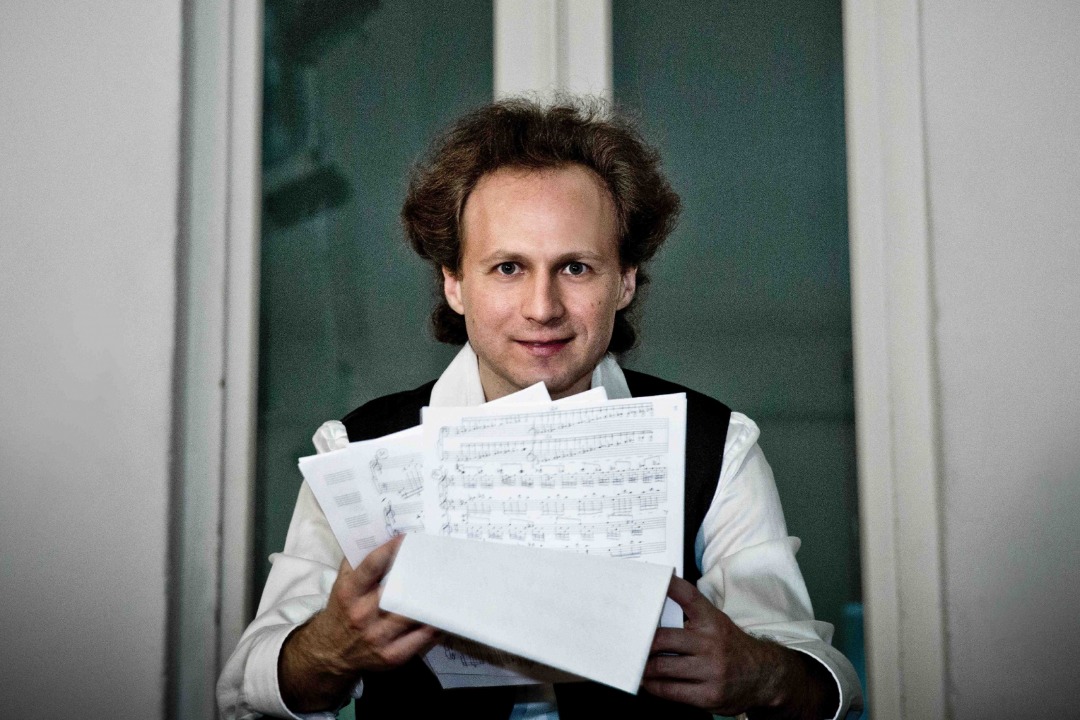
Leon Gurvich, a renowned pianist, conductor, and composer, is a professor at the Johann Brahms Conservatory in Hamburg. With over 300 compositions and arrangements to his name, including the score for the Oscar-winning director Menachem Golan’s film “Death Game,” Gurvich has made a significant impact on the world of music. Born and raised in Minsk, he has been living and working in Hamburg since 2001. His concerts attract full houses across Germany, the Netherlands, Switzerland, France, Belgium, Italy, and the USA. However, his first concert in Belarus after moving abroad only took place at the end of 2016. In this interview, we explore the reasons behind his long absence from his homeland and delve into his musical rebelliousness.
The Long-Awaited Return
Fifteen years is a long time to be away from home. When asked about the reason for his prolonged absence, Gurvich ponders, “I ask myself the same question. You never know how life will turn out. I hold no grudges against anyone or anything; I simply moved to another country. I immersed myself in work and concert activities. I wanted to come to Belarus with a concert, but something always came up.”
Finally, in 2016, the opportunity arose. Inga Bukhvalova, the director of the concert agency “Equilibrium Arts,” and the management of the Goethe Institute invited him to participate in the “Jazz Bridge” in Minsk. Gurvich agreed, and in September 2016, he performed a jazz music program titled “American Masters” with American vocalist Love Newkirk.
In January 2017, Gurvich returned to Minsk with a different program. At the Grand Hall of the Belarusian State Philharmonic, he and the State Chamber Orchestra of the Republic of Belarus presented a concert of classical and contemporary music. They performed works by Haydn, Shostakovich, Schnittke, and several of Gurvich’s own compositions, including the world premiere of his piece for string orchestra, “Con Anima.” “I think this can be considered a new stage in my Belarusian life,” Gurvich smiles.
American Masters: A Unique Interpretation
“American Masters” is Gurvich’s unique interpretation of works by George Gershwin, Duke Ellington, Dave Brubeck, and Miles Davis. “Unfortunately, it’s impossible to cover the entire jazz heritage of America in one program,” Gurvich explains. “So, I selected diverse compositions, many of which are well-known to the public. I also included one of my own pieces.”
Performing alongside Gurvich was American vocalist Love Newkirk, who also lives in Hamburg. “Choosing the ‘voice’ of the program was not easy,” Gurvich admits. “I work with different singers, each with a unique voice. I invited Love to a joint rehearsal, and everything worked out from the first try, even though she had a challenging task: to understand and convey my vision of the music. My arrangements are not the easiest to perform, but Love did brilliantly. She is incredibly artistic and charismatic. I’m very happy with our creative tandem.”
The Risk of Interpretation
When it comes to authorial arrangements of well-known works, there’s always a risk that the interpretation may not resonate with the audience. “I don’t aim to create music that only a narrow circle of intellectuals can understand,” Gurvich states. “I want my music to be accessible to a wide audience. However, I don’t pander to the public either. For example, I’ve presented the ‘American Masters’ program in various European cities, and the audience, which included not only Germans but also foreigners, including Americans, always responded positively. As the concert in Minsk showed, Belarusians also appreciated my interpretation of famous jazz compositions.”
Current Projects and the Creative Process
Gurvich’s schedule for 2017 is packed. The highlight of the year is his solo concert at New York’s Carnegie Hall in March, where he will perform as both a pianist and composer. “This is not my first performance in the USA, but it is my first time on one of the most prestigious world stages. I hope to meet the audience’s expectations and represent Belarus and Germany well,” Gurvich shares.
He is also working on completing several orchestral pieces and choral compositions. The premiere of one of them, “Cantata Domino,” will take place this year at St. John’s Church in Hamburg, performed by the New Youth Choir of Hamburg.
Describing his creative process, Gurvich says, “It’s a complex question for a composer to explain how he writes music. Moreover, this process is absolutely individual for everyone. But the fact that it’s a mysterious action is a fact.” He compares himself to a miner who descends into a mine and works tirelessly. “I write using the traditional classical method, just like composers did 300-400 years ago: piano, sheet music, and a pencil. Sometimes without an instrument, but that happens rarely and mostly at night.”
Gurvich’s process is laborious and lengthy. Some pieces can take several years to complete, as he constantly refines and polishes them. “The idea of a piece comes quickly, but its realization… I would compare it to processing a diamond: to turn a wild stone into a valuable diamond, you need to put in a lot of effort,” he explains. His self-criticism also slows down the process, as he constantly adds, removes, and consults with musicians. He welcomes constructive criticism and changes, even in pieces he wrote 10-15 years ago.
A Classical Rebel
Gurvich received a classical music education but does not want to limit himself to any specific genre. “Jazz has strongly influenced me; I love it, but I can’t say that I’m a jazz musician. Jazz for a musician is freedom and expansion of boundaries, it’s improvisation—something that rarely happens in classical music. I’m more of a classical rebel. I’m not interested in following strict canons and rules, waiting for someone to show me how and what to play. But first and foremost, I see myself as a composer who, like a sponge, absorbs the best and creates something unique,” Gurvich concludes.
With over fifty musical programs ranging from pure classical to contemporary music and jazz, Gurvich values thematic pieces that require thought, exploration of connections, and dramaturgy. Each of his concerts is a creative experiment, often held in unusual venues, such as a shipyard in Hamburg or places with beautiful views of the canals in Amsterdam.
For more information about Leon Gurvich and his upcoming concerts, visit his official website here.