Rhinoplasty: Aesthetics or Health Necessity? An Interview with a Plastic Surgeon
Rhinoseptoplasty: When Surgery is About More Than Aesthetics
Rhinoseptoplasty is not always about aesthetics. Sometimes, the desire to change the shape of the nose stems from the need to breathe freely, eliminate the consequences of injuries, or correct anatomical features. In any case, this decision requires a balanced approach: it is important not only to find an experienced surgeon but also to understand your own motives and expectations—a consultation with a psychologist can help with this.
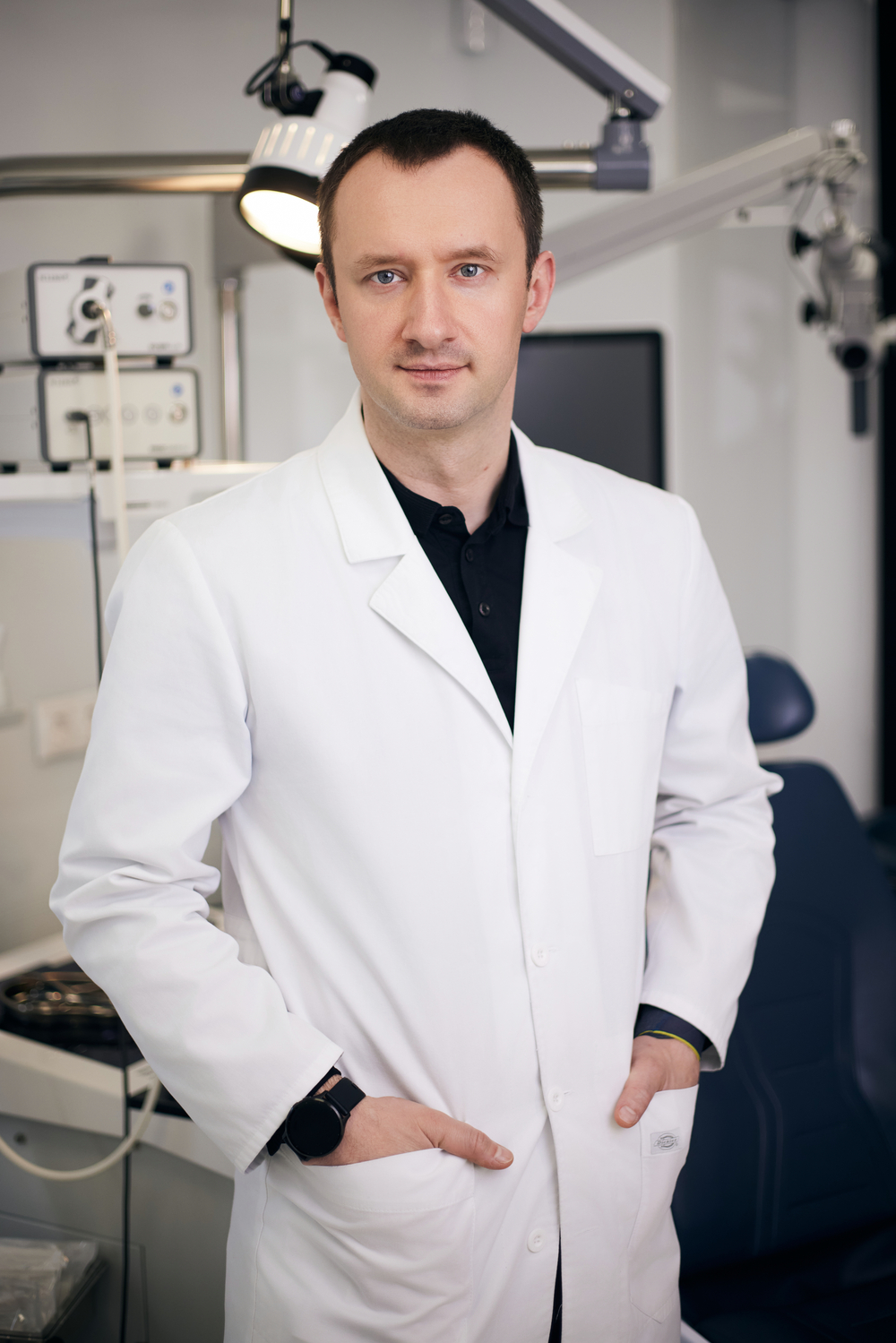
Interview with Otolaryngologist Ivan Grynko
Ivan Grynko is an otolaryngologist, surgeon, candidate of medical sciences, and a first-category doctor. He specializes in reconstructive and aesthetic rhinoplasty to restore breathing and harmoniously change appearance. He is also the founder of the RHINO Otolaryngology Surgery Clinic and the Pivnyk Charity Foundation, which helps military personnel needing hearing restoration surgeries.
Everything About Rhinoplasty with an Otolaryngologist
1. Rhinoseptoplasty: When is the Operation About More Than Aesthetics?
The nose is primarily about breathing. Aesthetics are important, but everyone wants not only a beautiful nose but also to breathe freely. Often, deformation of the external nose is accompanied by breathing problems or sinus pathologies. Therefore, rhinoseptoplasty should improve not only the appearance but also the functionality.
2. Can You Change the Shape of the Nose Without Surgery?
Yes, you can change the shape of the nose using injections (fillers) or threads. However, I am against using threads. As for fillers, they can be appropriate in some cases:
- If patients lack volume, especially on the bridge of the nose;
- If minor changes are needed;
- If there are minor defects or a lack of tissue volume after a rhinoplasty.
It is important to remember that this procedure should be performed by an experienced specialist. Injections should be done with a cannula, not a needle.
3. How to Choose the Right Surgeon?
This is a conversation for both parties. There must be complete understanding and trust between the patient and the doctor. The patient must understand that the doctor can realize their wishes, and the surgeon must see that these expectations are realistic and achievable.
What to pay attention to:
- Specialization: This should be an otolaryngologist who understands not only the aesthetic component but also the functional one.
- Experience and Tenure: The doctor should be proficient in basic ENT operations and regularly upgrade their qualifications through courses and masterclasses in rhinoplasty. After the internship, it should take 3-4 years of practice to be considered a good surgeon in rhinoplasty. Although, of course, there are exceptions when a young doctor grows under the guidance of a strong mentor and team.
- Social Media Monitoring: Most surgeons publish the results of their operations. This is a good way to understand if you like their work.
- Number of Operations per Year and Queue: The number of operations per year and the queue to the surgeon are also indicators. However, the price should not be the deciding factor in the choice.
4. Psychological Preparation for Rhinoplasty
This should be a well-considered step, not an impulsive decision. Before making a decision, consult with a psychologist to clearly understand your motives. The patient must be prepared for all possible outcomes of the operation. There may be complications with the skin or bone tissue, as well as the risk of not getting the expected result. And the patient must realize this before the operation.
The goal of the surgeon is to achieve an aesthetically and functionally good result, but, unfortunately, this does not happen in 100% of cases. Therefore, I always openly discuss all the risks with patients at the consultation stage. And if after this they are ready for the operation, we plan the intervention.
5. Does an “Ideal” Nose Exist?
Yes, it does. If the nose harmoniously fits into the facial features and the person likes it, then the nose is ideal.
6. What Affects the Result of the Operation?
More than a hundred factors influence the result. I would divide them into three main categories:
- Doctor (Clinic):
- Experience and skills of the surgeon;
- Quality of equipment and instruments.
- Patient:
- Compliance with recommendations before and after surgical intervention;
- Individual characteristics of the body: health status, immunity, reaction to drugs, presence of chronic diseases and allergies, anatomical structure of the nose (thickness of skin/cartilage/bone tissue), genetics, bad habits, etc.
- Environment and Unpredictable Factors:
- Household situations, for example, when a child suddenly jumps on you or you awkwardly open a cabinet door;
- The mood and attitude of the patient also play an important role.
7. Rehabilitation: Life Hacks and Important Nuances
Rehabilitation is individual for everyone: for some, it is easier than removing wisdom teeth, for others, it is a real test. But there are several universal recommendations:
- For 1 month, apply a plaster to the nose to reduce swelling;
- For 2-3 months, limit salt intake, physical activity, direct sunlight, alcohol, and fluid intake (the closer to the evening, the less water to consume);
- For the first 2 months, sleep in an elevated position (you can use a travel neck pillow);
- If you wear glasses, switch to lenses for the first 2-3 months;
- Learn to wash your hair by tilting it back—this will be the only allowed method for 2-3 months after the operation.
If you are coming for the operation from another city or country, you need to plan in advance where you can stay for 14 days, as mandatory check-ups are on the 7th and 14th days.
Keep in mind that the body’s reaction can vary: some feel good 2-3 hours after the operation, while others need time to recover. Be prepared that the first 2-3 days will be the most difficult: severe swelling will appear, it will be difficult to breathe through the nose, sleep and general condition may worsen. But from the 4th day, it becomes significantly easier.
8. Revision Rhinoplasty: Causes and Risks
Repeat rhinoplasty occurs when the patient is dissatisfied with the result of the previous operation—for objective or subjective reasons. Dissatisfaction is most often associated with complications (fibrosis, bone callus, bone fragments) or overly high expectations. However, the decision to undergo revision rhinoplasty should be made no earlier than a year after the first operation—only then can the final result be assessed.
Why are secondary rhinoplasties usually more complicated?
- Due to altered tissues, there is often a lack of the patient’s own tissues, so there is a need to take an additional fragment of rib cartilage. This complicates the rehabilitation.
- If additional cartilage is not needed, the rehabilitation will not differ from the rehabilitation of the first rhinoplasty.
9. How Many Times Can Repeat Operations Be Performed?
Reoperation can be done several times (in my experience, there was a tertiary rhinoplasty). But, in my opinion, patients should adequately assess the possibilities of surgery, the amortization of their body tissues, recovery possibilities, and the risks of complications.
There are several scenarios after the operation:
- The patient and the doctor are satisfied with the result.
- The patient is satisfied, but the surgeon sees nuances that could be improved.
- The doctor is satisfied, but the patient is not. Most often, this is due to mismatched expectations.
- Both the patient and the doctor are dissatisfied—this is a direct indication for repeat surgery.
According to statistics, about 70% of patients are satisfied with the result after rhinoplasty.