8 Fabulous Fashion Trends Pioneered by Feminists
8 Fabulous Fashion Trends Pioneered by Feminists
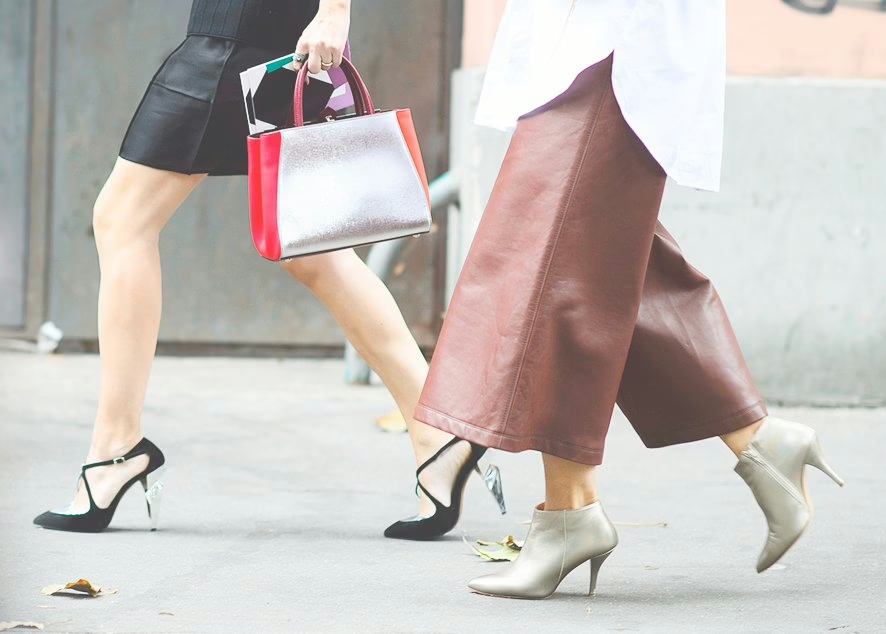
From chic wide-leg pants to stylish blazers and groovy vintage looks, we owe a huge debt to the feminists of the 60s and 70s for these timeless trends. These trailblazing women not only carried the torch lit by suffragettes in the fight for social, economic, and political rights but also revolutionized women’s fashion forever. Betty Friedan, the iconic author of The Feminine Mystique, rejected traditional women’s fashion, arguing that it limited women’s practical freedoms. For her, clothing was just one piece of the larger puzzle of women’s liberation. Meanwhile, fellow activist Gloria Steinem believed that clothing was a powerful form of self-expression.
Fashion as a Statement
Despite their differing views, both of these feminist pioneers reshaped women’s clothing through their political lenses. While fashion reform wasn’t their main goal, their fight for gender equality helped dismantle the rigid fashion norms of their time that dictated how women should look. Interestingly, many of the fashion trends from that era continue to inspire and define our style today. From baggy jeans to blazers that pair perfectly with dresses, these pieces symbolize the ongoing struggle for women’s equality and freedom.
Mini Skirts: A Symbol of Liberation
Mini skirts were a hot topic in the fashion world during the second-wave feminism era. Once this style hit the scene as a serious trend in the 60s, it was quickly seen as a liberating statement. In 1966, designer Mary Quant boosted their popularity by selling this emancipatory fashion piece at Bazaar. Mini skirts were soon celebrated as practical and comfortable, a stark contrast to the restrictive clothing women previously wore for the sake of modesty. Many feminists saw mini skirts as a crucial step towards embracing femininity, helping to eliminate body shaming and reveal true sexuality. They represented a rebellion against clothing that concealed the natural female body in the name of practicality and decency.
However, some feminists viewed short skirts as an attempt to draw male attention to heightened female sexuality, even though the mini skirt’s creation was rooted in political protest. In the 70s, as the feminist movement gained even more momentum, the skirt became a tool of objectification, losing the interest of many feminists. The debate between objectification and liberation raged on for years, but mini skirts remain popular today. They remind us that while we can celebrate female sexuality, the path to complete freedom and equality is still a work in progress.
Blazers: Breaking Gender Stereotypes
The male blazer effortlessly made its way into women’s fashion and remains a staple in the modern woman’s wardrobe. Feminists adopted the male blazer as a protest against gender stereotypes reinforced by clothing. Fighting for personal rights and professional freedoms, feminists rejected styles that could be seen as provocative or seductive. Instead, women wore large-sized pants and male blazers alongside men to emphasize that they could share the same fields of activity. The concept of the blazer as a unisex piece of clothing was born, and it continues to be a powerful symbol of gender equality in fashion.
For more insights on the intersection of fashion and feminism, you can explore resources from authoritative sources like the National Women’s History Museum.