2 women share their self-harm stories to help others find mental health support
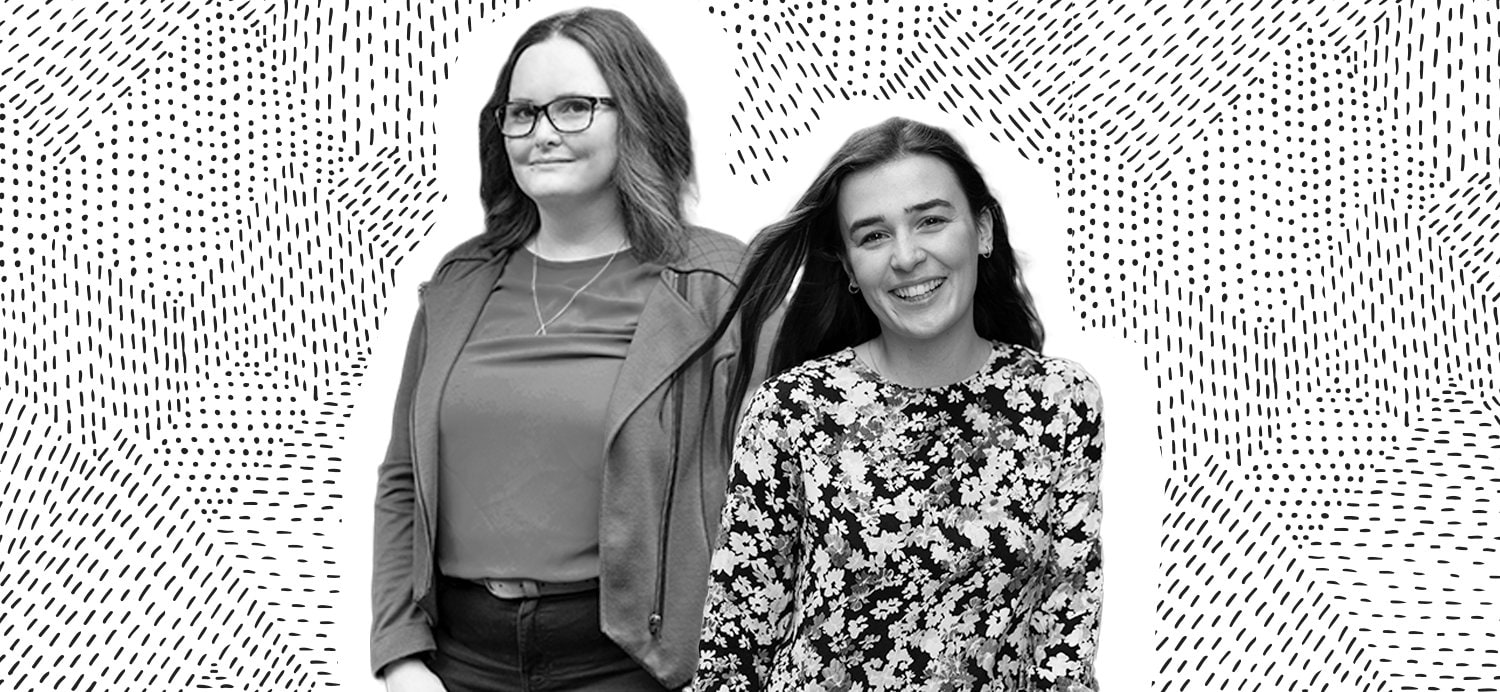
Two Women Share Their Self-Harm Stories to Help Others Find Mental Health Support
Being a teenager can be tough, and more and more young people are self-harming as a coping mechanism. We talk to two brave women about their journeys.
Lucy McSweeny
One of the difficult parts of adolescence—a time filled with challenges—is the transition between high school and university. Lucy McSweeny, 25, was vaguely aware of the concepts of “mental health” and “mental illness” during her early high school years, but they always seemed distant.
“I remember thinking, ‘That’s not something that would ever happen to me,'” she says. As an academic student who did well in school, her depression and anxiety diagnosis in her final year of high school was a shock to many. “My friends knew something was wrong, but it didn’t occur to any of us that what I was experiencing was depression or anxiety.”
After Lucy told her parents she was self-harming, she was taken to her doctor and diagnosed. Self-harm, Lucy says, acted as a “temporary reprieve” from the constant overwhelm she was feeling.
“Even though self-harm doesn’t make things better in the long term—even though I knew it didn’t help—in the short term, it meant I didn’t have to think about anything else,” Lucy reveals. “That’s why we need more support for young people, because self-harm is nobody’s first choice.”
Lucy believes that when young people have other outlets and support, they will choose better ways to express their feelings. “Self-harm is something that people only choose when they’re not getting the support they need,” she says.
Now in recovery, Lucy has become a passionate advocate for increasing mental health education in schools. She even took a petition to the government in 2017 to have it added to the curriculum. She felt she had no choice but to start talking about it, as her friends noticed she was no longer attending classes at university and was missing exams due to her illness.
When she spoke up, she received two types of reactions. “People would say to me, ‘Yeah, me too!’ And these were people I had been sitting in class with for years, going through the same things I had—we just never spoke about it. The other common response was, ‘Wow, you’re the last person I would ever expect to be going through this.'”
Talking about self-harm was harder than talking about depression or anxiety. “It’s hard because self-harm is scary, and you don’t want to scare people. It’s frightening for people to see their friends distressed, and there’s a lot of shame around that. I also think it’s about not wanting other people to panic.”
Lucy believes that if we want to encourage kids to speak up when they’re in distress, we need to ensure help is available. “We cannot tell young people to reach out for help if we’re not actually going to help them. Communities, schools, the wider health system—they need to have the resources to make sure that when we tell people to reach out, the help is actually there.”
The key thing, Lucy believes, is letting young people know there’s nothing wrong with them. “You are not weird, you are not broken, and you are not alone in this,” is her message. “What you’re feeling is a pretty normal and natural response to a lot of stuff that’s really difficult, so please don’t be ashamed.”
She suggests finding people you feel comfortable talking to. In her own case, when it came to telling her parents as a teenager, it was a journey for all of them. “It took a while to be able to explain what I needed from them and to get on the same page—it was scary for them as well. But they’ve been fantastically supportive.”
Jenna Sayring
It took Jenna a long time to find a therapist she connected with, but now she’s on her healing journey and hasn’t self-harmed for two years.
As anyone diagnosed with a mental health condition knows, the road to diagnosis can be as complicated as the road to recovery. For Jenna Sayring, 33, her diagnoses of OCD (obsessive-compulsive disorder), anxiety, and depression came years apart, but each played a significant role in her life.
“I felt different from the other kids growing up, and I didn’t seem to handle life as well as others,” Jenna says. “I was diagnosed with depression when I was 20, which helped me understand some things. Then I was diagnosed with an anxiety disorder at 25. But there was always a missing link, and when I was eventually diagnosed with OCD at 31, everything started clicking into place.”
Jenna first entered the mental health system at 16 after telling her parents she was self-harming. “Before that, I did skin picking, which I know now is a fairly common compulsion with OCD. But when I turned 16, that’s when I started doing a lot of cutting.”
Her parents took her to a psychologist, which was a good step, but her relationship with therapy was bumpy. “I would go and see a counselor for maybe 10 sessions, and at that point, I would give up and think, ‘This isn’t changing anything,’ and I would just act as if I was better, and they would agree that they’d hit the nail on the head.” Every time, she says, she would hit a wall with treatment until, by the time she was 25, she was so frustrated at not finding a helpful therapist that she decided to forgo therapy and just focus on medication.
Her self-harm impulses continued, on and off, until her early thirties, and the reasons shifted as she grew older. “In my twenties, I was incredibly depressed and just needed to feel something other than ‘depressed.’ Having that quick pain interruption was a break. As I got older and my OCD became worse, self-harm became a way to reboot my brain and stop the constant flow of obsession, like creating a short circuit.”
The perceived shame around self-harm kept her mostly silent for years, Jenna says. “I’m still not as open with people about my self-harm as I am about my OCD, because there’s so much more stigma.”
For more information on mental health support, visit National Institute of Mental Health.