Discovering Life’s Purpose Through Art Therapy
Discovering Life’s Purpose Through Art Therapy
In recent years, the term “art therapy” has gained popularity. Art workshops, coloring books, and various courses often attract us with the promise of this intriguing concept. But how can creativity genuinely assist us in real life? To understand what art therapy is and how it can address common personal issues, we spoke with one of the most renowned art therapists in the international community, Elena Tararina.
Who is Elena Tararina?
Elena Tararina, based in Kiev, Ukraine, is a highly qualified practical psychologist, business trainer, and coach with over 16 years of consulting experience. She has worked as a school psychologist for 11 years and taught at a university for 7 years. Elena holds a Ph.D. in Pedagogical Sciences and is the creator of the international art therapy festival “Art-Practitioner,” which takes place in 8 countries worldwide.
Elena is an expert featured in major Ukrainian publications and television channels. She is the author of 23 popular books on practical psychology, metaphorical cards, transformational games, and international charitable projects. She also trains art therapists from 58 countries around the world.
What is Art Therapy?
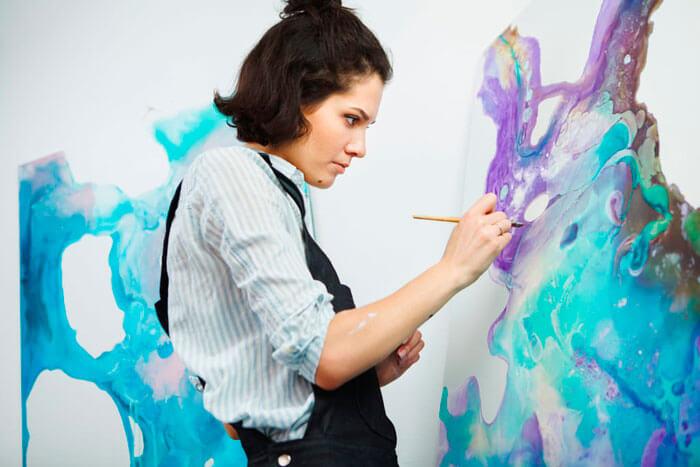
Art therapy is a form of therapy that uses creative expression to improve mental health and well-being. The primary goal is to achieve harmony in one’s mental state through self-expression and self-discovery. The inner “self” of a person is reflected in visual images created through drawing, sculpting, or writing stories.
Art therapy is conducted by a specialist in a safe, private space. The therapist helps the individual interpret their work by asking the right questions, allowing the person to discover the meaning themselves. Therefore, painting in a café or using an anti-stress coloring book does not qualify as art therapy. Even attending a Japanese painting workshop or visiting a potter does not count. Art therapy involves trained professionals helping others communicate with their soul through creative images.
Situation 1: Feeling Lost
“I feel like I haven’t found myself yet (and my age is already ‘over the hill’), living someone else’s life…”
As an art therapist, I would recommend “landscape art therapy” combined with photo therapy. The person’s request itself provides clues through verbs like “find,” “untangle,” etc. This means you need to go out and gather experiences and strength, following the “magic ball” to your destination. For example, once a week, embark on a small creative journey (to a field, forest, river, or even a neighboring street) and photograph everything beautiful. When we appreciate beauty, it initiates a desire to see the beautiful aspects within ourselves. Usually, when someone feels “lost,” their attention focuses on the “non-beautiful” aspects, which further entangles them in the problem.
Situation 2: Searching for a Soulmate
“We don’t say ‘looking for a partner’ or ‘looking for a pair’… We say ‘looking for a soulmate’! How can I create to find my soulmate?”
The situation is straightforward: we all seek a soulmate to fill our emotional void and avoid loneliness. There’s a universal law: “You reap what you sow.” Therefore, if I don’t want to be lonely, it’s essential to create a premise or intention for someone else not to be lonely.
Think about who you can help overcome loneliness. In the cities of Belarus, there are many lonely elderly people whose lives haven’t turned out as they hoped. Some live in nursing homes, while others live alone in their apartments. If you decide, not for praise but from the heart, to genuinely help a lonely grandmother or grandfather, alleviating their loneliness (which is always challenging and inconvenient), you will eventually meet the partner you need. Here, art therapy involves creating a creative process for yourself. In every moment of communication, you will be creating relationships, painting a picture of the world with your soul.
Situation 3: Losing Life’s Meaning
“I’ve experienced everything, have a lot of life experiences, a husband, children, home, career, car, but there’s still no meaning in life.”
Life lacks meaning when we engage in many empty conversations. A wonderful bodily practice called “five fingers” can help: every time you want to engage in a meaningless conversation or express your opinion, raise your right hand, cover your mouth, and walk away from the situation. This way, you don’t “drain” your energy but preserve it for positive moments and the search for that very meaning.
Regarding creativity, I would suggest conducting a “review” of the words and conversations in your life: create their “sculptures” using foil, plasticine, or even dough. This will show which significant words carry the most weight and what elements your communication with others consists of. The remarkable thing is that during the process, you can change a negative image into a positive one by giving the objects-words a different, attractive form or even by removing them from your worldview.
Situation 4: Not at Peace with Oneself
“I’m smart and beautiful, but it’s not exact. I bought a new cream, but I don’t love myself…”
We can only love ourselves by creating beautiful events for others. When we see an ocean of gratitude in someone’s eyes, even if they don’t say anything, at that moment, we love ourselves, reflecting in those eyes as incredible people. And through these moments, the best therapy occurs: helping others create joy in their lives.
I would recommend marking love for oneself not through acceptance but through giving. Take art therapy and bibliotherapy, for example, by keeping a creative art diary: today, I gave someone a smile, someone else attention. Beautifully and creatively record these events in your diary. Draw, make collages, noting all the good things you did today. Life can be woven from such “gifts,” plan them not only on birthdays. If you’re “cool,” plan “gifts” for strangers. If you’re “super cool,” plan gifts for those you consider difficult people. Become a person who gives joy and keep an art diary of these joys.
Situation 5: Family Struggles
“I built a family, but there’s no joy, happiness, or mutual understanding…”
When dealing with family conflicts, the art therapy technique “aquatint” is very helpful. We apply a certain amount of paint to specially, safely edged glasses, then leave free imprints of this paint on sheets of paper. This process releases some “constricted” feelings in our soul: often these are resentment, claims, dissatisfaction… With the help of special questions about the images created by the imprints, the art therapist helps to draw attention to the conflicting parts within a person, to the fact that the “burning coals” that a person holds in their hand with the intention of throwing at the offender, cause pain to themselves. Is it worth being offended, proving one’s rightness – or is there another solution? The answer lies within the images created by the person with the help of paint, glass, and paper.
Art therapy has many directions and techniques. We can express our emotions and feelings through drawing (art therapy), working with mandala circles, musical art therapy (playing sounds, singing, listening to one’s state), bodily art therapy (special dance, body art), fabric, landscape (related to the use of natural materials and natural resources), photo, sand, play, art therapy with reading texts (bibliotherapy), dough sculpting, cinema therapy, art therapy by creating healing tales… And this is far from everything! The world of art therapy has so many creative opportunities for creating mental resources and maintaining the integrity of the soul.
For more information on art therapy, you can visit The American Art Therapy Association.