Zero Waste Living: Transform Your Life and the Planet
Zero Waste Living: Transform Your Life and the Planet
Imagine fitting an entire year’s worth of trash into a single liter jar. It sounds impossible, but Bea Johnson and her family of four did just that. This remarkable achievement embodies the zero waste lifestyle, a philosophy that promotes responsible consumption and minimal waste. But why does this matter, and how can you get started? Let’s explore the world of zero waste and uncover its significance.
Understanding Zero Waste
The zero waste philosophy, also known as responsible consumption, has been gaining traction in recent years. This concept centers around reducing household waste by refusing unnecessary items and reusing materials. Dave Bruno, an American activist and creator of the 100 Things Challenge, posits that people only need 100 essential items to live comfortably. The rest, he argues, is superfluous.
The Importance of Zero Waste
The global community began discussing responsible consumption in the early 1970s. It became clear that the environment was deteriorating rapidly, a trend that persists today. This realization led to the 3R rule: Reduce, Reuse, Recycle. The zero waste concept emerged as a response to the growing popularity of mass consumption.
Today, zero waste is more than just an approach to waste collection and sorting. It’s a value system, a lifestyle that involves making conscious choices about food, clothing, and everyday items. Unlike mass consumption, responsible consumption focuses on long-term needs, health preservation, and conserving the planet’s resources.
Getting Started with Zero Waste
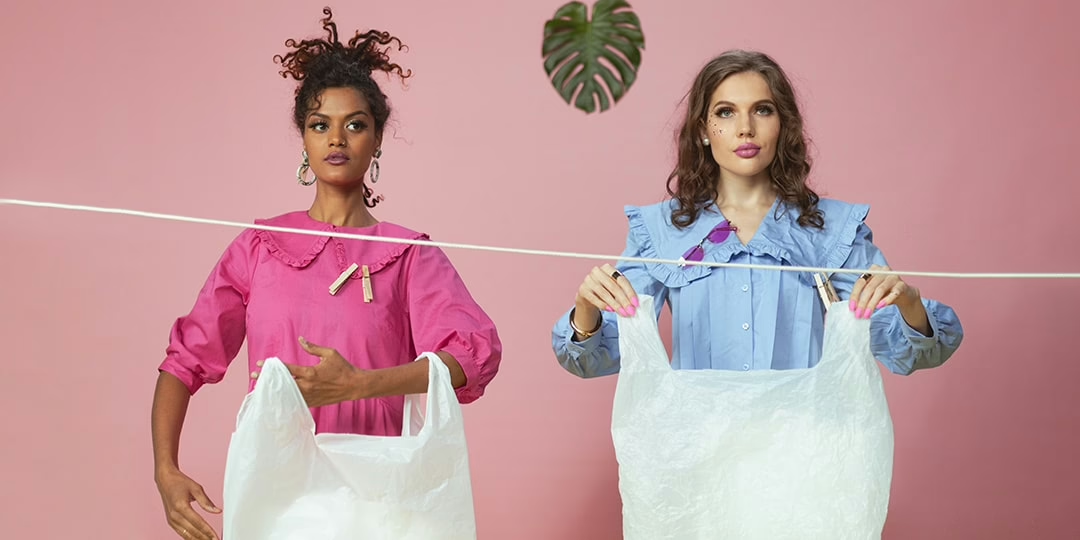
The harmful effects of plastic on nature and humans are well-documented, but the true scale of the problem is often underestimated. Plastic is gradually killing animals, as seen in the 2015 video of a sea turtle with a plastic straw stuck in its nose. A few years ago, veterinarians in Thailand fought for five days to save a dolphin that had ingested over 80 plastic bags. These horrifying incidents highlight the urgent need to reconsider our plastic usage.
Fortunately, everyone can contribute to reducing plastic waste. Start by replacing single-use items with durable alternatives. For instance, use zip-lock bags, cloth bags, and reusable shopping bags instead of plastic packaging. In terms of hygiene, consider switching to bamboo toothbrushes, cloth pads, and menstrual cups.
If you’re a coffee lover, bring your own cup to cafes. Many establishments offer discounts for customers who bring their own cups. This small change can significantly reduce your plastic waste.
Expert Insights
Maria Suma, an eco-activist, notes that while Belarusians are not yet fully engaged in eco-friendly practices, the movement is gaining popularity thanks to various public initiatives and individual efforts. The government is also taking steps to reduce plastic usage, gradually replacing it with glass packaging.
Suma encourages mindfulness in purchases and waste reduction. The zero waste theme permeates various consumption sectors. For example, consumers can avoid cosmetics containing phthalates and opt for certified safe products or make their own cosmetics from natural ingredients.
Fashion is another critical area. The fast fashion industry is incredibly wasteful and toxic. Instead of impulsive buying, consider creating a universal wardrobe with timeless pieces. Second-hand shopping is also an eco-friendly alternative. If you no longer need an item, donate it to charity.
Organic waste constitutes about 40% of total waste in Belarus. To combat this, Suma suggests the “prevention method”: share excess food with those in need.
Inspiration for Your Zero Waste Journey
If you’re inspired to learn more about responsible consumption, check out Greenpeace’s guide “A Million Actions for the Planet: A Future Without Plastic.” This comprehensive resource discusses plastic pollution and ways to combat it. It also provides a guide on engaging the public in environmental issues.
Bea Johnson’s bestselling book, “Zero Waste Home,” is another excellent resource. Johnson shares practical tips for creating an eco-friendly home. Her family’s experience proves that a zero waste lifestyle is achievable.
For real-world examples, look into local eco-initiatives like Ecokit, a creative workshop that produces useful items from eco-materials, and My_Cup_Please, a movement advocating for the refusal of disposable tableware.
For more information on zero waste, visit this resource.