Wartime Fashion: The Rise of Handmade Trends and Practical Elegance
Wartime Fashion: The Rise of Handmade Trends and Practical Elegance
Did you know that World War II gave birth to some of the most iconic fashion items we know today? From cork-soled shoes to straw ballet flats, nylon stockings, bikinis, and oversized bags, the harsh realities of war sparked a wave of creativity that led to the creation of practical and stylish items we now take for granted. So, what was fashion like in the 1940s? Women’s wardrobes were minimal yet maximally practical, characterized by modesty, naturalness, and a strong sense of patriotism. It was also a time when elegance truly blossomed.
The Impact of War on Fashion
The world had barely recovered from the Great Depression when it was plunged into another crisis: World War II. The war effort demanded vast resources, leaving little for civilian use. This scarcity led to a simplification of women’s clothing, with minimalism and the absence of decorative elements becoming the norm. The ban on using natural fabrics like cotton, silk, and leather for non-military purposes paved the way for artificial materials. Nylon, introduced in the late 1930s, became a staple in producing women’s stockings and underwear in the 1940s.
The Convergence of Soviet and European Fashion
The 1940s saw an unprecedented convergence of Soviet and European fashion. The war leveled the playing field, with women across the continent donning modest, dull-colored clothing and forgoing cosmetics, which were virtually unavailable. Lipstick, for instance, was considered an unacceptable luxury, except in the United States, where women could choose from a variety of shades.
With leather reserved for military use, Italian designer Salvatore Ferragamo innovated by creating shoes from straw, felt, hemp, and even cellophane, using wooden or cork soles. Meanwhile, the oversized bags that are a staple in today’s fashion emerged from the necessity to carry gas masks.
The Shift of Fashion Epicenter to Hollywood
In 1940, Paris, the world’s fashion capital, fell to the Nazis. This gave Hollywood the chance to claim the title. Many designers fled occupied France for the United States, including Elsa Schiaparelli. Others, like Coco Chanel, retreated from the limelight, waiting for the war to end.
However, Hitler had no intention of losing Paris as a fashion hub. Design houses like Lanvin, Balmain, Balenciaga, Rochas, and Nina Ricci remained open, albeit under the constraint of creating clothing that aligned with the Third Reich’s ideals of womanhood.
Fashion Trends Dictated by the Third Reich and Scarcity
The German ideal of beauty in the 1940s was a strong, athletic woman who worked in the fields and raised children. This led to the incorporation of peasant and medieval motifs into fashion, with floral prints, embroidered blouses, checked hunting suits, and wide-brimmed straw hats becoming popular. The image of a beautiful peasant woman gathering flowers in an open field became a favorite in fashion magazines.
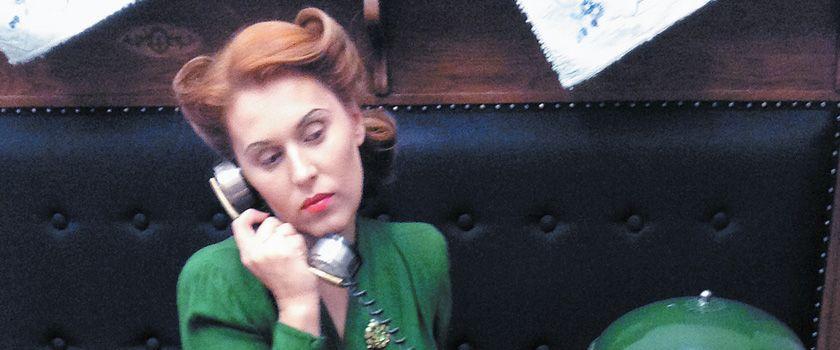
With resources scarce, women often had to repurpose men’s clothing. A typical 1940s woman’s outfit might include a simple dress topped with a man’s jacket featuring large pockets and padded shoulders. Knitting, patchwork, and handmade items became mainstream during this decade.
Post-War Fashion: The Bikini Explosion and the Return of Elegance
After the war, the bikini became the decade’s hit. In 1946, American designers introduced this daring swimsuit, named after the Bikini Atoll, where the U.S. conducted its first atomic bomb tests. The bikini, like the atomic tests, was a bold and unprecedented phenomenon that caused a sensation.
In the late 1940s, Christian Dior rose to fame in post-war Paris, restoring elegance and grace to women’s fashion. In 1947, Dior unveiled his “New Look” collection, featuring the iconic “Bar” suit with an X-line jacket, a nipped-in waist, a small peplum, and a voluminous mid-calf skirt. Despite criticism for restricting women’s freedom and being out of touch with the times, Dior became the most popular designer of the late 1940s and 1950s, with countless admirers on both sides of the Atlantic.
Interestingly, hats almost disappeared during the war due to fabric rationing. They were replaced by scarves, berets, and shawls. However, Dior successfully brought hats back into fashion in the following decade.
As I prepared this article, I looked through dozens of old photographs of my relatives, friends, and acquaintances. Studying the fashion of the 1940s, I realized that most of the people in these photos are no longer alive. Their lives ended in different ways: some perished on the front lines, others, like my great-grandfather, went missing in action, and some returned home safely and lived long, happy lives. What unites all these photographs is a sense of gratitude for their courage, their fight, and their belief. They all look so beautiful, with a dignity, simplicity, and authenticity that seems lost in our time. As long as we remember them, they live on.
During World War II, women heroically fought alongside men. By 1945, over 2 million women worked in the military industry, and hundreds of thousands volunteered as nurses or joined the army. In the USSR alone, hundreds of thousands of women served in the military.
For further reading, visit the authoritative source that inspired this article.