Tranquil Haven: A Writer’s Finnish Cabin Escape
Tranquil Haven: A Writer’s Finnish Cabin Escape
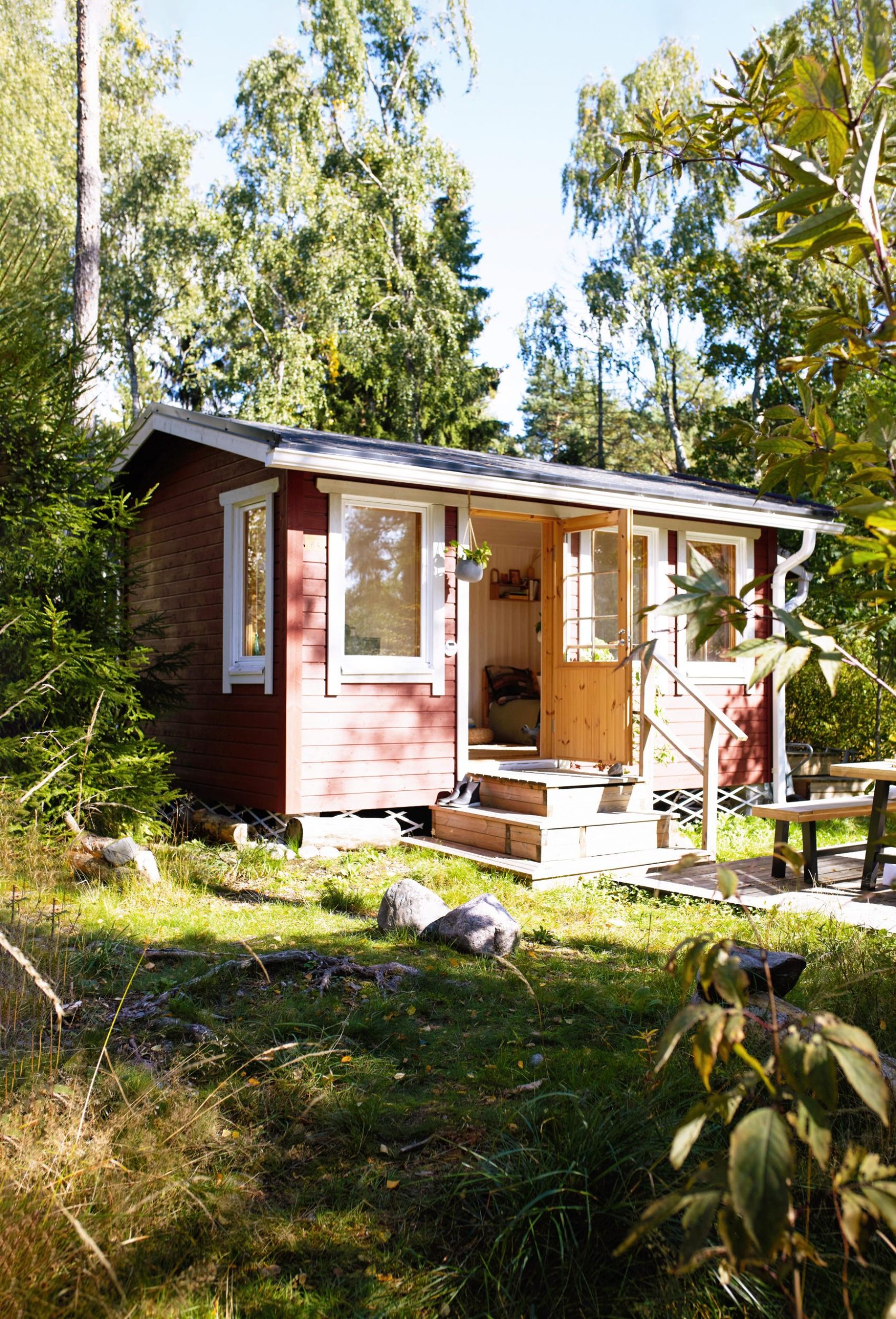
In 2014, Melanie Dower, a New Zealander, moved to Finland with her family and was captivated by a charming cabin hidden in the woods. Let’s delve into her enchanting miniature retreat.
The Charm of Tiny Cabins
Upon first seeing the tiny cabins, I was instantly smitten. These miniature houses, nestled on an island near our downtown Helsinki apartment, are scattered among the trees like something from a storybook.
While summer cabins are a Finnish staple, most vacationers prefer secluded cabins where neighbors are out of sight. These tiny cabins, however, offer a unique mix of tranquility and accessibility.
Lauttasaari: A Hidden Treasure
Just a 15-minute bike ride from the city center, the cabins are located on an island called Lauttasaari, which means “ferry island”. Once only reachable by boat, the island is now connected to the mainland by a bridge and the metro, which travels underwater as part of Helsinki’s subway system.
Spanning 24 hectares, Lauttasaari is home to around 250 cabins. Although the pathways and facilities are shared, the cabins remain relatively private due to their layout and the lush greenery that surrounds them.
A Dream Fulfilled
My husband Jonathan, our nine-year-old son Miko, and I have lived in Finland since 2014 when Jonathan took a job in the mobile games industry. I work in relocation, helping newcomers settle into life in Helsinki. In my free time, I’m a writer.
When Covid hit last year and we realized we wouldn’t be traveling over the summer, Jonathan encouraged me to find a cabin of my own where I could write. These cabins rarely come up for sale, so I was lucky when a woman moving to a neighboring city put hers on the market. After a simple purchasing process, I became the proud owner of my own mökki—a tiny cabin of 14 square meters with no power, Wi-Fi, or plumbing.
Life Without Modern Conveniences
Like all dwellings on the island built after 1989, my cabin has no electricity. Fortunately, Finland enjoys nearly 24 hours of daylight in the summer, so artificial lighting isn’t necessary. On cooler days, I use my fireplace for heating.
The land is leased from the city, and an association of cottage owners manages practical matters such as rubbish collection and the shared composting toilets, which are kept spotlessly clean. Water is supplied by communal taps scattered around the island. Being so close to the city, the water comes from the municipal supply and is crystal clear, cold, and delicious.
A Sense of Community
A small communal building houses a kitchen, a table and chairs, board games, and books, and a sink with hot running water. I often visit to wash my dishes and have seen others using the power supply to recharge laptops as they “work from home”.
As always in Finland, there is also a sauna, heated every week with different times reserved for men and women. It’s just a short walk to the beach for a dip in the Baltic Sea between sessions.
Historical Importance
Several years ago, the city decided that some of the cabins would be moved back from the beach to increase public access to the shoreline and to protect nearby fortifications from the Crimean War that date back to 1854. Each of these cabins was allocated a new site. Many owners used the opportunity to rebuild rather than relocate their original structure, and that is how my cabin came to be built in 2015.
Building guidelines set by the city allow for structures of up to 14 square meters, with a maximum of 2 square meters of outdoor storage and a small terrace. Elements such as construction materials and paint color are defined by the city to be in keeping with the cultural and historic environment.
Year-Round Access
Owners can access their cabins all year round but are not allowed to live in them permanently. Due to the harsh winters, most people visit between May and October, after which time the water is turned off to prevent the pipes from freezing.
Although some of the cabins were linked to a power supply before 1989, no new electrification can be carried out, but solar panels are permitted. However, as it’s daylight for almost 24 hours a day in summer, artificial lighting isn’t needed, and on cooler days, I use my fireplace for heating.
Nature’s Abundance
According to the rules of the association, the area surrounding my cabin must be kept as natural as possible, with no fencing, planting, or paving allowed. However, there are wild raspberries and bilberries to pick, and I grow mint and lemon balm in a consented boxed herb garden. Often, I come here alone to read and write.
Jonathan and Miko join me for dinner, which we cook on our small outdoor grill. It’s a short bike ride to the supermarket, and a nearby café sells coffee and pastries. I enjoy my time outdoors and am often visited by squirrels, pheasants, and hares.
A Personal Touch
The best part of having my own cabin is the freedom I have over its decor. I can finally display all the keepsakes I’ve collected while traveling, which my husband calls “dust gatherers”.
My favorite place to shop is an antique store near home, where I’ve bought bottles from Finland’s prohibition era. I use them as vases for wildflowers. Sometimes I feel like a child again, playing in a cubbyhouse, surrounded by my favorite things. It’s a delightful feeling that grows even stronger as I anticipate next summer—my second as a tiny cabin owner.
For more information on Finnish culture and travel, you can visit Visit Finland.