Tracing History: Collecting as a Lifestyle and Art Form
Tracing History: Collecting as a Lifestyle and Art Form
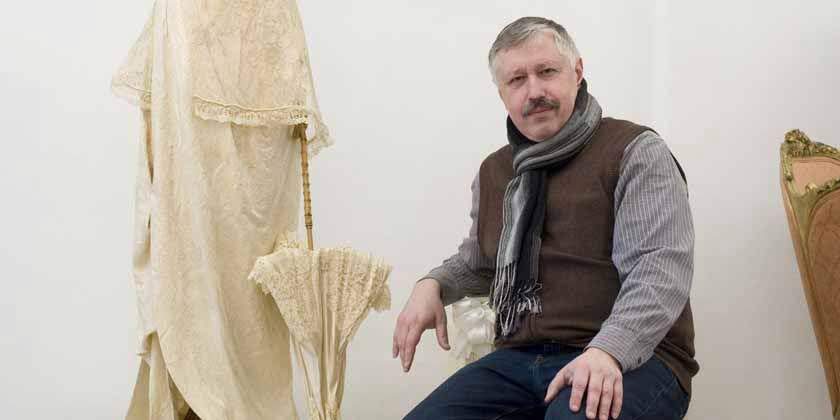
Meet Igor Vyacheslavovich Surmachevsky, an artist, restorer, and collector whose life and work are deeply intertwined with the study of Belarusian and European artistic culture. His upbringing played a pivotal role in shaping his aesthetic preferences in art, which eventually led him to the conscious path of collecting.
The Roots of a Passion
Igor Vyacheslavovich’s fascination with world artistic culture stems from his family history. His grandmother’s stories during his childhood visits to Fanipol, then a village with scarce books, ignited his imagination. Later, in Minsk, his father’s tales of World War II, published in journals like “Rodnoe slovo” and “Neman,” further fueled his interest.
Principles of Collecting
Igor’s passion lies in beautiful objects, their energy, and cultural value. He doesn’t merely collect; he studies and delves into the essence of his artifacts. Provenance, the history of an artwork’s creation and ownership, is crucial to him. His initial fascination with Belarusian art heritage was sparked by lectures from Mikhail Fedorovich Romanyuk at the Belarusian State Theatre and Art Institute.
For Igor, aesthetics, historical significance, exclusivity, and provenance are key principles in acquiring art. His first artifact, a late 19th-century icon of “All-Ruler,” was discovered in a village house’s storeroom. The icon’s engraved message, “A new commandment I give to you, that you love one another,” is typical for icons blessing newlyweds.
A Multifaceted Collection
Igor’s collection is diverse, ranging from material and artistic heritage of the Grand Duchy of Lithuania and the Polish-Lithuanian Commonwealth to ladies’ dresses and accessories from the 18th and 19th centuries in St. Petersburg, Berlin, London, and Paris. Many items are unique to Belarus and Europe.
His collecting journey began in the 1970s in Minsk, with the formation of the first communities of collectors interested in Belarusian history and art. His initial acquisitions were Orthodox icons, which hold significant value for him. Over time, his interests expanded to include the material and artistic culture of the Grand Duchy of Lithuania, the Polish-Lithuanian Commonwealth, and the European Romanticism period.
Restoration and Philanthropy
In the late 1980s, Igor turned to restoration work. Many artworks were in poor condition, and he felt compelled to restore Belarusian cultural monuments. His self-education in restoration became a unique professional experience and an essential part of his life.
A notable event was the return of the 16th-century Ephesus icon to the Polotsk Spaso-Evfrosinievsky Monastery in Belarus. Igor restored and donated the icon, acting as a patron of Belarusian spiritual art. He believes that philanthropy is a central aspect of collecting, especially regarding sacred artifacts.
Igor’s story is a testament to the power of passion, history, and the enduring value of art. His collection is not just a hobby but a lifestyle, a journey through history, and a contribution to the preservation of cultural heritage.