Top HIIT Workouts for Women Over 50: Boost Health and Fitness
Top HIIT Workouts for Women Over 50: Boost Health and Fitness
High-Intensity Interval Training (HIIT) has been a fitness sensation for nearly a decade. Research shows that incorporating bursts of high-energy activity into your workout, alternated with slower movements, can significantly enhance fat burning, muscle strengthening, and heart health.
The benefits of HIIT are undeniably appealing. When executed correctly, HIIT workouts for women can reduce the time spent exercising each week while simultaneously boosting fat and calorie burning.
Moreover, studies suggest that HIIT workouts excel in building muscle strength, enhancing flexibility, and improving heart health. As women age, reducing the risk of stroke and heart attack becomes increasingly crucial.
Addressing Concerns About Intensity
The term “intensity” might raise concerns for older adults. Are HIIT routines too strenuous after 50, especially for non-athletes? Even if medically cleared for HIIT, what’s the best way to start? Can a simple park walk be transformed into a heart-pumping, fat-burning workout?
Preparing for HIIT
Health experts advise HIIT beginners to consult with a healthcare provider before starting. It’s essential to ensure there are no medical reasons preventing you from handling the vigorous parts of a HIIT workout, particularly concerning cardiac and pulmonary health.
Jumping straight into high-intensity interval training could risk overstressing your heart and lungs or causing injuries like torn tendons and swollen joints. However, any current limitations can also be reasons to gradually begin a HIIT routine. HIIT can help build flexibility, muscle strength, and heart function, potentially protecting overall physical health in later years.
Enhancing Your Daily Walk
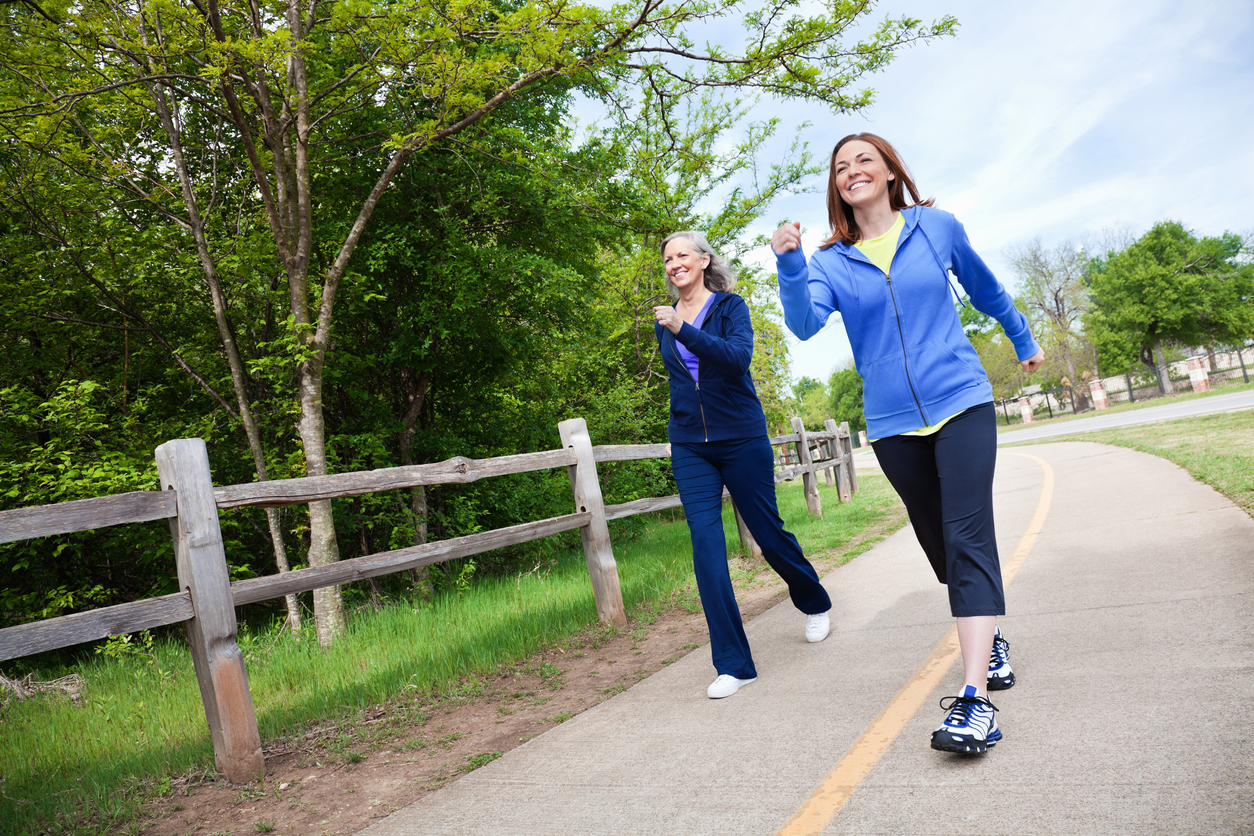
For women over 50, walking is often a natural entry into HIIT workouts. It’s one of the best low-impact activities that can be modified for high-intensity interval training. If joint issues are a concern, walking is an ideal way to improve overall health without damaging vulnerable joints.
Beginner and Advanced HIIT Walking Routines
If you haven’t done much cardio lately, start any HIIT workout slowly. After a 5-minute warm-up stroll, walk briskly for 20 seconds, then walk more slowly for 90 seconds. Repeat this pattern at least four times and finish with a 2 to 5-minute cool-down walk.
Gradually, extend the length of your walking workout and the resting and intense phases within it. After a 5-minute warm-up, alternate brisk and slower walking, each for 3-minute periods. End with a 5-minute cool-down walk. Some women may progress to jogging during the high-intensity portions, but brisk walking is sufficient if you’re concerned about strain on your lower body. Ideally, aim for 30-minute sessions three to four times a week.
Additional Low-Impact HIIT Options
If you want to diversify your high-intensity, low-impact workouts, consider these effective HIIT options for women:
- Swimming: Alternate slow laps with faster ones. Vary your strokes and pace, such as alternating a slower backstroke with a more demanding butterfly stroke. Aim for at least four repetitions of faster and slower laps, totaling eight laps. Push yourself during the high-intensity portions but stay within your comfort zone.
- Cycling: Both indoor and outdoor cycling are suitable for HIIT workouts and are easier on the joints as they are not weight-bearing exercises. Start with a 5-minute warm-up at a moderate pace. Follow with a 20-second burst of vigorous cycling, then 90 seconds of slower pedaling. Repeat this pattern at least four times and finish with at least 2 minutes of moderate pedaling.
- Elliptical Machines: These are helpful for people with joint issues as they engage both arms and legs without putting too much weight or twisting on joints. Begin with a 5-minute warm-up, then move into a pattern of 20 seconds of active movement followed by 90 seconds of slower movement. After at least four repetitions, cool down for at least 2 minutes.
As you become more conditioned, lengthen the time of both your speed bursts and slower periods. Work your way up to longer overall HIIT cycle workouts.
Is HIIT Right for You?
Like any fitness trend, HIIT may not appeal to everyone, regardless of age, gender, or physical condition. Some women may find that HIIT workouts don’t suit their fitness preferences, even without endurance or joint issues.
Some people prefer to let their minds wander during workouts rather than tracking intervals. However, the trade-off is that a 20-30 minute HIIT workout can yield results similar to a 45-minute moderate-paced workout.
If you’ve hit a fitness plateau, HIIT workouts might be the key to losing weight, building muscle, achieving better balance, and improving heart health. For more information on the benefits of HIIT, refer to this article.