The Three-Year Crisis: A Psychologist Explains Why Barbeder Was Wrong
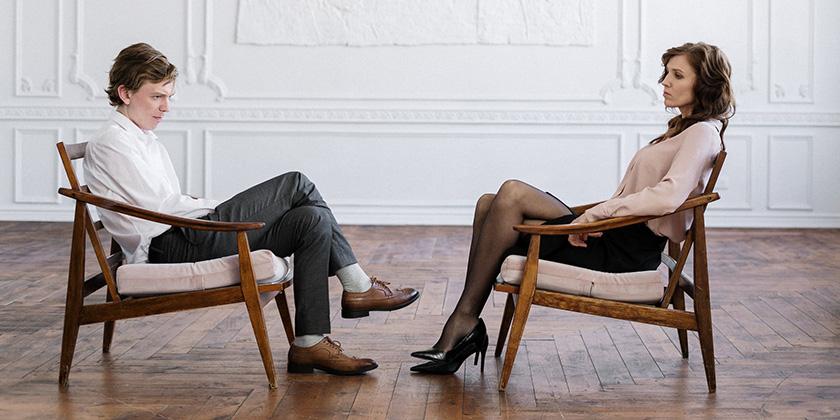
The Three-Year Crisis: A Psychologist Explains Why Barbeder Was Wrong
“Love lasts three years” is a common and well-known phrase from a novel of the same name. But is there any truth to it? Together with a specialist – practicing psychologist Marta Kasnitskaya – we tried to find an answer to this question and figure out if it’s possible to save relationships after a crisis.
Marta Kasnitskaya
Stereotypes are the worst enemy of healthy relationships. If we believe that love lasts three years, then that’s how long it will exist. In reality, love, including the preservation of marriage, is our conscious choice. Instead of working on the relationship, we often follow made-up rules and observe certain rituals, thereby building walls between ourselves and our partner that destroy that very love. Love has no expiration date. Infatuation may last three years, but not love – it is born through joint efforts. In other words, this feeling is a second job.
Crisis Periods in Relationships and Marriage
Regarding crises, it’s worth noting that there are several in marriage/love:
- One-year crisis: The destruction of the image of an idealized partner, followed by disappointment.
- Three-year crisis: This often coincides with the birth of a child. It’s good if you’ve thought through this decision with your partner and made it consciously. It’s bad when having a child is the result of the thought that it will save the marriage. This is a lie. When a child is born, the usual way of life changes.
- Five to seven-year crisis: So-called love on autopilot. During this period, relationships lose romance, and everything seems boring and tedious. “We’ve been through this before” – routine. When breaking up, you shouldn’t look for someone to blame. As I said above, preserving the marriage or getting a divorce is our conscious choice.
How to Preserve Marriage and Make It Happy?
Before getting married, think and discuss why you specifically need it, define roles and responsibilities. Communicate and don’t avoid discussing problems, but don’t overdo it. Respect your partner and their personal boundaries. “Choose” your partner every day.
Find common interests – something that connects you besides everyday life and intimacy. Tactility is important; don’t be stingy with expressions of love through touch – this way you show your partner that you love them and they are not alone. Be interested in each other’s problems and help; don’t let your partner constantly face difficulties alone.
When even one partner decides to take a step and change something, they work through their internal conflicts with a specialist (irritation towards the partner, some suspicions), look for the root cause, etc. That is, one of the partners will become more conscious, with acquired skills of reflection/self-regulation.
When Should You See a Psychologist?
As for therapy, it has never hurt anyone. The main thing is that two adult people make a voluntary and conscious decision to see a psychologist or psychotherapist when they realize that a crisis has come in the relationship; otherwise, everything can be destroyed. To begin with, one of the partners should go to a specialist alone. Then, in any case, one of the partners will begin to notice that the other has become calmer and more open after the sessions, and it is clearly easier for them to live. This can undoubtedly cause a desire to deal with their own problems. Since there is always a balance in a couple, when one person goes through changes, it affects the other, whether it’s something bad or good (therapy). A positive result will occur if the couple is “alive,” and the union is not stagnant (i.e., they go through difficulties but don’t know how to deal with these difficulties; difficulties = crisis, and yet they still want to live together – then it will work).
The Difference Between Couple and Individual Therapy with a Psychologist
Usually, therapy is something personal, but if a partner wants to share with their significant other what they talked about with a psychologist/psychotherapist, this is a great sign and will only benefit: an open conversation of this kind, where there are no signs of a quarrel, always leads to positive results. But it’s important to understand that changes occurring in one of the spouses disrupt the “status quo” in the couple. The partner may begin to feel that they don’t know the person they have lived with for many years because, thanks to psychotherapy, stereotypical behavior is broken, and this can temporarily create alienation between spouses or its illusion. But the changes occurring in one lead to changes in the other, forcing the second partner to develop.
The essence of couple psychotherapy is that partners begin to see each other as they really are, without unnecessary idealization. It happens that partners start to make assumptions for the other, attribute their thoughts and motives to them, and as a result, they are offended by unfulfilled expectations. A psychologist helps resolve such conflicts, helping spouses look at the situation and the partner from a different angle: to see the true needs and desires of a loved one, to show compassion and understanding. As a rule, after visiting a psychologist, the relationship in the couple changes for the better.
Benefits of Couple Family Therapy with a Psychologist
The advantage of couple therapy is that the psychologist in the sessions will not figure out who is right or wrong, blaming someone, but will perceive the couple as one whole and good (for them, everyone is good, just a little confused). In psychology, there is such a concept as “resistance.” It is more difficult to work with this in individual counseling/therapy; in a couple, thanks to the group method of work, it is overcome by itself. Even if partners break up during therapy, this is also a plus because, most likely, they came to the psychologist, having long harbored the thought of breaking up. Thanks to the consultation, they often find the resolve in themselves and realize a long-standing, often unconscious, desire. Sometimes, a client transfers the image of someone close, for example, their father, onto their partner and during therapy suddenly realizes that, as it turns out, their partner is not the person they should be with, but simply the result of unresolved relationships with their father/mother. If the marriage is built on false foundations and partners live together not out of love but for some other reasons, breaking up is better than constant conflicts or boredom.
Psychologist or Psychotherapist?
First, you should choose where and with what request you want to go: to a psychologist (counseling, self-improvement, acquiring new skills, etc.) or to a family psychotherapist, which will be, of course, a bit more painful but also more effective, as this is a more specialized specialist working with couples.
Methods of Working with a Family Psychotherapist
Systemic Family Therapy
In systemic family therapy sessions, the problem is not considered as a feature of the behavior or feelings of the partners but as a result of the functioning of the couple as a whole. The family therapist works not with an individual person but with the family as a whole – it acts as a single organism that is constantly developing. All processes occurring in the family system are simultaneously the cause and consequence of each other. The family system has sufficient flexibility, so in some cases, even one meeting may be enough.
Narrative Therapy
In building a perception of yourself and your life, you highlight some episodes while omitting others. But in a meeting with a narrative therapist (narrative in English means “story, narrative”), the hidden details that you ignore are important: they will help you look at yourself and your partner from a different angle and, at the same time, reconsider the history of the relationship. The narrative approach can be used both in individual work and with families.
For further reading, consider this resource: American Psychological Association.