The Naked Truth: Why Concealing Nudity is the Ultimate Body-Positive Statement
The Naked Truth: Why Concealing Nudity is the Ultimate Body-Positive Statement
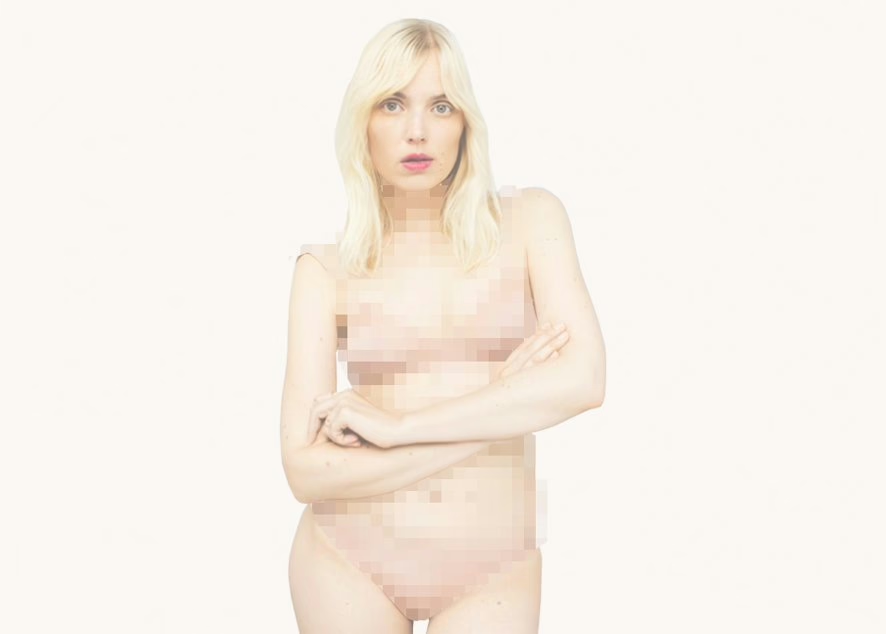
In today’s world, it’s easy to get lost in the whirlwind of societal thoughts and trends surrounding feminism, body positivity, and self-love. While these ideas promote equality and self-acceptance, they can also pressure women into actions that may not align with their true desires. Celebrities often bare it all on red carpets and magazine covers, while fashion publications encourage women to love and respect their bodies. But is this trend of nudity truly body-positive, or is it merely a sensational tactic to grab attention?
The Historical Context of Nudity
Nudity has always been a complex topic, evoking various reactions throughout history. During the Middle Ages, nudity was often condemned as sinful. In contrast, the Renaissance celebrated the human form as a natural beauty. The hippie culture of the 1960s advocated for body freedom and naturalness. However, as time progressed, the female body became increasingly objectified, often seen as a fetish or an object needing male approval.
The Modern Trend of Nudity
In 2016, naked celebrities began to dominate television screens and magazine covers, promoting self-love and body positivity. Shows like “Naked and Afraid” on Discovery Channel and “Dating Naked” on VH1 turned nudity into a tool for gaining popularity rather than a statement of liberation. Celebrities like Demi Lovato and Selena Gomez have embraced this trend, claiming it boosts their confidence. But does this truly represent body positivity?
The True Essence of Body Positivity
Body positivity is undeniably important as it challenges societal stigmas and encourages individuals to be themselves rather than striving for an unattainable ideal. It aims to free men and women from the pressures of societal norms that have haunted them since childhood. The movement advocates for equality and the naturalness of beauty and sexuality. However, the extremes to which some adherents take these ideas can be problematic.
The Paradox of Feminism and Nudity
Feminism, another influential movement, encourages women to break free from male judgment and societal standards. Yet, many women who embrace feminism also participate in the trend of public nudity, claiming it as an act of freedom and self-love. This paradox raises questions about the true intentions behind such actions. Are these women genuinely expressing their freedom, or are they succumbing to media influences that promote nudity as a trend?
The Psychological Impact of Nudity
A study conducted at the University of Michigan revealed the psychological impact of nudity on women. Participants were asked to perform cognitive tasks while dressed in either swimsuits or casual clothing. The results showed that women in swimsuits performed worse on mathematical exercises compared to those in casual attire. This suggests that nudity can objectify women, affecting their mental performance. For men, the results were not dependent on clothing.
The Importance of Privacy and Safety
While societal opinions may label modesty as a sign of low self-esteem, there are numerous positive and healthy reasons for choosing to conceal one’s nudity. Safety is a primary concern for many women who wish to avoid unwanted attention, harassment, or violence. The reality is that not all women want to be objects of evaluation or scrutiny. Choosing to keep one’s body private is a personal decision that should be respected, not criticized.
The Freedom to Choose
In a world where media often dictates trends, it’s crucial to remember that true freedom lies in the ability to choose. For many women, concealing their nudity is a healthy habit, much like avoiding walking alone in a city at night. It’s essential to respect these choices and not label them as unhealthy or problematic. Being in harmony with one’s body and choosing not to display it publicly is a valid and positive stance.
Conclusion
Confidence and self-love are vital, but so is respect and the freedom to choose what feels right for each individual. It’s time for media and society to recognize and promote the idea that body positivity can also mean choosing to keep one’s nudity private. For further reading on body positivity and its impact, you can visit Psychology Today.