The Evolution of Pink: From Boys to Girls and Beyond
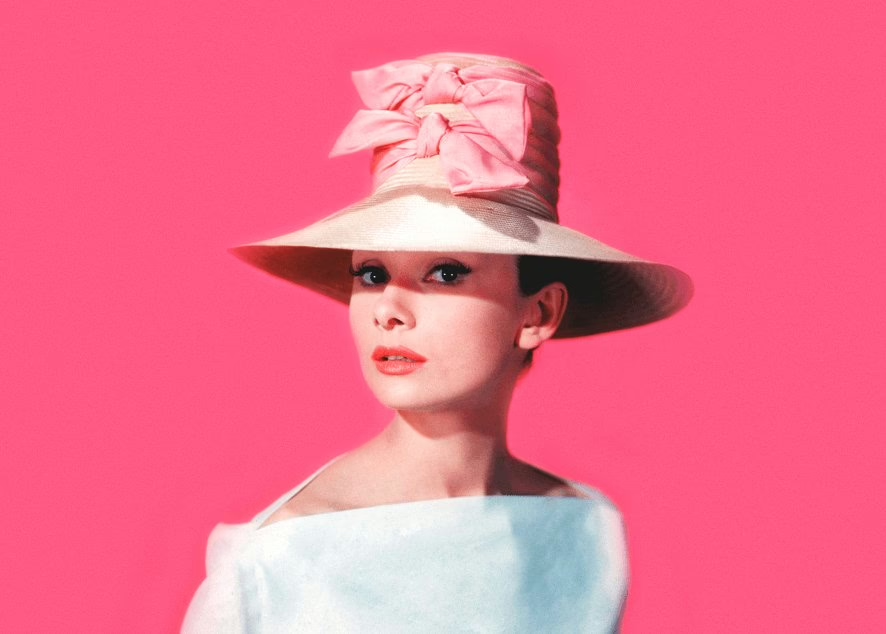
The Evolution of Pink: From Boys to Girls and Beyond
Pink, a color now synonymous with femininity and grace, doesn’t inherently possess characteristics that influence our perceptions. Instead, the meanings we attribute to colors are shaped by historical and cultural contexts. Surprisingly, a few centuries ago, pink was considered a color for boys, while light blue was associated with girls. This article explores the fascinating journey of how pink became a symbol of girls and women.
The Historical Context
In the past, children’s clothing was not gender-specific. The primary goal was to distinguish children’s attire from adult clothing. Children wore loose garments resembling nightshirts and dresses, with color being of little importance. Since many boys wore long locks until a certain age, it was nearly impossible to determine a child’s gender until they were around 10-12 years old.
The Shift After World War II
The division of colors based on gender began after World War II in the USA. The fashion industry started creating children’s clothing that resembled adult clothing, introducing color differentiation. The trend of the 1950s, initiated by the US First Lady Mamie Eisenhower, played a significant role. She loved pink so much that she wore it constantly, making it a fashionable and feminine color.
Pink as a Symbol of Femininity
By the late 1980s and early 1990s, pink as a color of femininity was firmly established. It also became a symbol of the social movement supporting breast cancer patients, adding to its connotations as a ‘female’ color. The popular musical Funny Face also praised pink, associating it with successful modern women.
50 Shades of Pink in Russia
In Russia, including Soviet Russia, the color code for pink emerged much earlier. Babies in maternity hospitals were marked with pink and blue ribbons for girls and boys, respectively. This practice originated in the Russian Empire, where princes and princesses wore orders on blue and pink ribbons, respectively. However, this color differentiation did not extend to clothing.
The Double Meaning of Pink
When pink first appeared in women’s fashion, it was seen as rebellious and a symbol of independence and strength. Over time, it became ingrained in culture as a traditional feminine color. However, activists of homosexual movements had already claimed it as a symbol of feminist, tolerant, and active beginnings. This meaning has almost faded now, and the word ‘pink’ has taken on a negative connotation in some contexts.
Interestingly, pink was first used to denote homosexuality in a tragic historical context. Pink triangles were used to denote homosexuals in Nazi camps. The general public is not widely aware of this, so the history of modern ‘non-traditional pink’ has nothing to do with the Nazis.
For further reading on the history of colors and their cultural significance, you can visit Wikipedia’s page on Pink.