Tatyana Slavinskaya-Puzyrevich: Bridging Generations Through Children’s Literature
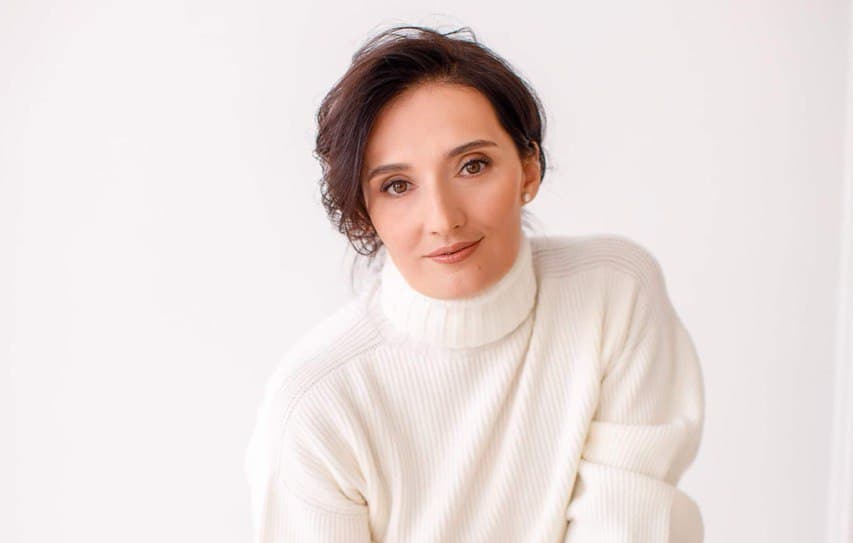
Meet the Literary Enchantress
Our heroine resembles a sorceress. How else can you describe someone who selflessly organizes numerous beneficial book events for children and their parents, bringing together a diverse group of highly skilled professionals? In Tatyana’s bookstore, people gather to discuss issues, listen to new stories, enjoy a cup of coffee, and then perhaps purchase a book. Her project, “The Chest of Children’s Books,” has confidently weathered economic crises, slowly but steadily expanding its horizons. It now includes a Literary Club, a Suspended Book initiative, Expert Meetings, and a Human Reads program. Tatyana is brimming with ideas, but what she possesses even more of, it seems, is light.
The Birth of “The Chest of Children’s Books”
For many years, Tatyana was involved in academia and believed that business and she were incompatible. When the idea of “The Chest” emerged, she immediately understood that this project would not be purely commercial. Pure business strategies simply do not interest her. The project is aimed at realizing her ideas about what can be done with children’s books. Therefore, an online store and a physical bookstore with comfortable reading zones are not her primary goals. At the heart of everything she does are events related to children’s books in all conceivable aspects.
The Most Interactive Project
Tatyana’s most interactive project is the Children’s Literary Club, where they conduct cycles of events on science and art, organize musical and theatrical book meetings, host loud readings with thematic master classes, and essentially do whatever comes to mind. They started with simple read-alouds but quickly realized that reading is a very intimate process. A unique magic arises during reading, and Tatyana wanted this magic to occur primarily between the child and the parent. Therefore, they decided not to focus solely on reading and began adding discussions, master classes, and quests to the process.
A Dream of a Book Space
From the very beginning, Tatyana dreamed of a book space where children could communicate with talented people. This was largely due to the fact that for a long time, the main idea of success transmitted in our culture was associated with material wealth. But around her, she always saw other people: successful and happy in what they did, professionals who, most importantly, derived great pleasure from their work. Among them were many brilliant young scientists, theater people, writers, and artists. Tatyana really wanted a place in Minsk where these people could come and communicate with children. Thus, they began to supplement book events with meetings with professionals who love their work. Their guests included wonderful theaters “Beads,” “Cardboard,” “BuSeMaPa,” “Batleyka.”
Inviting the Best Masters
Writers such as Evgenia Pasternak, Andrei Zhvalevsky, Maria Bershadskaya, Andrei Smetanin, and Valentin Postnikov visited them. This is how the idea of inviting the best masters to conduct master classes arose. For example, Zoya Prishivalko, who not only bakes very tasty gingerbread but can also show how to decorate them and fascinatingly tell the story of their origin, told them how to decorate gingerbread. Art historian, artist, and designer Natalia Biletnikova conducted painting master classes for them. Essentially, the central idea of all their projects can be expressed as “professionals for children.”
Finding Professionals
It’s very easy! There are many true professionals in Minsk. Most of the invited experts are people she often meets at various city events. In general, according to her feelings, over the past four years, many bright intellectual and cultural projects for children have appeared in Minsk, changing the atmosphere of the city.
The Evolution of the Bookstore
In one of her interviews, Tatyana talked about dreaming of a bookstore with a large intellectual zone. That was two years ago. Has she achieved this?
Not yet, but they are moving in that direction. To create such a space, it is first necessary to commercially ensure its existence. The main difficulty so far is the high rental rates for premises of 100-120 square meters. Moreover, a large intellectual zone implies its high-quality filling with projects not only for children but also for their parents. However, there are no difficulties with this; they currently have many projects they are actively working on.
At the same time, their current level of development is significantly different from what it was two years ago. They have moved to a new office, which has a book zone. Here you can sit, browse books, drink tea or coffee, and chat about eternal topics. Additionally, they have a small but very bright space that encourages creativity, where they hold chamber club meetings. For Tatyana, this is a very big step, as everything started with an online store and books in boxes that were stored at her home.
The Changing Landscape of Children’s Books
Let’s talk about children’s books. They have changed a lot recently compared to those from my childhood. For example, now there are not only fairy tales and stories about Dunno, but also books about death, loneliness, and depression. Why is this? Have children become different: smarter, more perceptive? Or have parents become lazy to explain and shifted everything onto children’s literature?
There are no bad times, only bad people. And children are always the same: wonderful, curious, and creative. But children’s literature has indeed changed significantly over the past 20 years. The first children’s book, “Scatterbrain,” was written by psychiatrist Heinrich Hoffmann for educational purposes. Today, many parents perceive this book as a horror story, and if they buy it, it is only as an art object or a collector’s item. Until the beginning of the 20th century, children were read the Bible, folk tales, and adult books that were accessible to them. Modern adults have gone from fairy tales and adventure stories to Russian and world classics. After finishing school, some began to read contemporary Western literature and study philosophical texts, while others stopped at newspapers and magazines.
The Importance of Intermediate Reading
When Tatyana taught philosophy at BSU, she suggested her students read Sartre, Camus, Nietzsche—philosophers whose texts are not very complex and quite accessible. But she encountered the fact that many students interpreted these authors literally, without revealing hidden meanings. She thinks this could be because there was no intermediate link in their reading history, connecting naive children’s texts with serious, multifaceted works. After all, if we are honest, we must admit that classical literature in school years is not always truly appreciated.
Modern Children’s Literature
Modern children’s literature is trying to fill this gap. It is becoming more complex, addressing serious topics such as death, loneliness, and depression. This does not mean that children have become smarter or more perceptive. It means that literature is trying to keep up with the times, helping children understand the world around them. Parents are not shifting the responsibility onto literature; they are simply looking for ways to explain complex topics to their children.
In conclusion, Tatyana Slavinskaya-Puzyrevich’s work is a beacon of light in the world of children’s literature. Her projects bring together professionals and children, creating a unique space for learning and growth. The changing landscape of children’s books reflects the evolving needs of society, and Tatyana’s initiatives are at the forefront of this change.