Tatiana Fedosova on the ‘Beauty and Fashion: The 20th Century’ Exhibition: A Journey Through Time
Discover the ‘Beauty and Fashion: The 20th Century’ Exhibition in Gomel
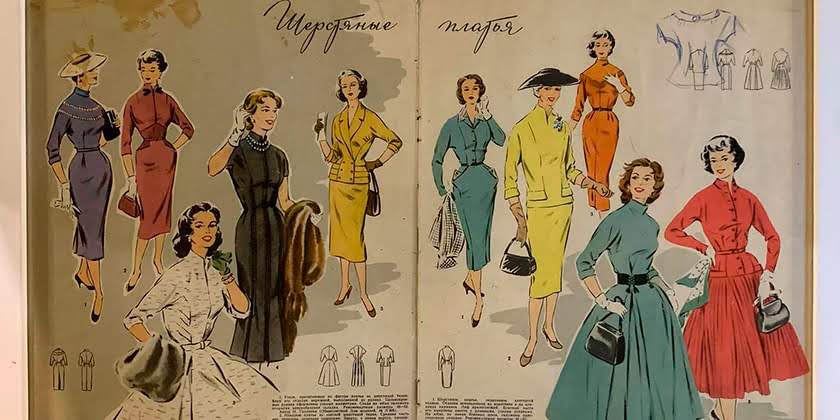
In late May, the exhibition hall of the Rumyantsev and Paskevich Palace in Gomel will open its doors to a captivating retrospective collection titled “Beauty and Fashion: The 20th Century”. Visitors will have the unique opportunity to admire original dresses, accessories, and fashionable artifacts that encapsulate the distinct essence of each decade in the 20th century. Tatiana Fedosova, the curator of this remarkable collection, shares her journey of assembling these treasures and the allure of this extraordinary event.
The Genesis of a Passionate Collection
Tatiana Fedosova’s collection began to take shape in the early 2000s. What started as a modest hobby soon blossomed into an extensive exhibition project. Her initial acquisitions were made at flea markets and thrift stores, a time when the internet was not yet the go-to platform for vintage and antique shopping. Back then, unique pieces could be found among everyday household items sold by elderly women or those unaware of the true value of their possessions.
Today, the landscape has shifted dramatically. Rarities are swiftly snatched up by knowledgeable dealers and enthusiasts who recognize their worth. The advent of international platforms and auctions, coupled with the rise of Instagram, has fueled a global interest in collecting. A simple hashtag search can lead to the discovery and purchase of a coveted item from anywhere in the world.
The Spark of Inspiration
The impetus for Fedosova’s collecting journey was her teaching career. As an instructor for the course “Stylistics of Fashion Image,” she aimed to familiarize hairstylists and makeup artists with the history of fashion and its characteristic styles. She realized that visual and tactile aids were essential for a more comprehensive understanding. This revelation led her to share her thoughts with a client, who later presented her with a brooch that belonged to her grandmother. This brooch, adorned with blue stones, became the first exhibit in Fedosova’s collection.
Word of mouth and media coverage played significant roles in expanding the collection. Clients began bringing in bags, dresses, and accessories from their mothers, grandmothers, and great-grandmothers. Friends and acquaintances found it easier to choose gifts for holidays, and strangers were also inspired to contribute after seeing the collection featured in publications.
A Diverse and Enchanting Collection
Fedosova’s preference lies in items directly related to fashion. This encompasses not only dresses and shoes but also a vast array of accessories, jewelry, hats, handbags, fashion magazines, books on designers, perfumes, and cosmetics. She takes particular delight in acquiring pieces from renowned designers and fashion houses, as well as items from the wardrobes of famous or media personalities. However, the primary criterion for any addition to the collection is its reflection of the fashion trends of its time.
While Fedosova’s passion for collecting has led her to discover beautiful items for her personal enjoyment, such as exquisite porcelain, she acknowledges that space constraints may limit their inclusion in the exhibition.
The Journey to a Museum Exhibition
The turning point in Fedosova’s collecting journey came in 2006 when she had the fortune of meeting Alexander Vasilyev, a renowned fashion historian. After attending his lectures, she extended an invitation for him to visit Belarus. Despite initial hesitation, Vasilyev agreed, and a lecture was organized in Minsk. This event marked the first public display of Fedosova’s modest collection, which was met with positive feedback from Vasilyev, further motivating her to continue her passion.
Fedosova never imagined that her hobby would evolve into a full-fledged collection. She initially thought that she would donate her modest assemblage to a museum in her retirement. However, the enthusiasm of the workers at the Gomel Palace, who were the first to see the exhibits taking their places in the display cases, filled her with joy and a sense of accomplishment.
Following the initial display at Vasilyev’s lecture, the exhibits participated in various fashion forums and exhibition projects, including those at the Center for Belarusian-Jewish Cultural Heritage. National museums also expressed interest in the collection, leading to its inclusion in projects at the Historical and National Museums. A spontaneous full-scale exhibition of the collection was held at the stunning estate of Kozel-Poklevsky in Krasny Bereg.
The story of the next exhibition took an amusing turn. During an interview about her collection, Fedosova mentioned her dream of showcasing it at the Nesvizh Castle of the Radziwill princes. Although she had no concrete plans, the journalist’s report sparked interest, and representatives from the castle were invited to view the collection. A month later, the collection was on display in the exhibition hall of the princely residence.
The first significant step had been taken, and the second was easier, albeit still exciting. Gomel holds a special place in Fedosova’s heart as it is her husband’s hometown. The Rumyantsev and Paskevich Palace, which she visited during her first encounter with her husband’s family, left a lasting impression on her. She recognizes the palace and park as the heart of the city, a source of pride for its residents, and an incredible monument of historical and cultural significance on a national scale. Her husband fondly refers to the ensemble as the “pearl of Polesia.”
The True Value of the Collection
The primary value of each exhibit, and the collection as a whole, lies not in the expensive fabrics or the craftsmanship of the designers, but in the unique stories that the dresses, handbags, and perfume bottles tell as witnesses to the 20th century. Each item carries the destiny of its owners and the fascinating tales of its creation and creators. Many of these fashion stories are worthy of film plots or novels, such as:
- The connection between Grand Duke Dmitri Romanov and the creation of Chanel No. 5 perfume
- The shared history between Chanel No. 5 and the Soviet perfume “Red Moscow”
- Elsa Schiaparelli’s use of the color pink and her conversations with Joseph Stalin
- Christian Dior’s creation of the silhouette worn by Lyudmila Gurchenko in the film “Carnival Night”
- The significance of crimplene in fashion history
These captivating narratives bring the collection to life, making it a treasure trove of fashion history and a testament to the enduring allure of the 20th century.