South Sudan’s Silent War: Women Fight Back Against Brutal Violence & Oppression
The Hidden Crisis: South Sudan’s War on Women
In the heart of Africa, a devastating crisis rages on—one that rarely makes headlines but shatters lives every single day. South Sudan, a nation born from decades of struggle, has become one of the most dangerous places in the world for women and girls. A recent UN report doesn’t hold back, describing the situation as “hellish,” fueled by unrelenting conflict, crippling famine, climate disasters, and a horrifying surge in conflict-related sexual violence. For years, South Sudanese women have endured unimaginable suffering in silence. But now, they’re breaking that silence—loudly, courageously, and with a determination that could change their nation’s future.
The Everyday Horror: Survival at Any Cost
In South Sudan, even the most basic tasks—fetching water, gathering firewood, or walking to a market—can turn deadly for women. After two decades of fighting for independence followed by a decade of internal strife, generations of men have grown up in a culture where violence is normalized. Rape, abduction, murder, and human trafficking are so rampant that authorities often look the other way. The UN report, based on years of survivor testimonies, details horrific accounts of prolonged gang rapes, sometimes committed in front of helpless family members.
The perpetrators? They’re not just rogue soldiers or armed groups. In some cases, they’re high-ranking government officials. As Yasmin Sooka, chair of the UN Commission on Human Rights in South Sudan, bluntly states: “It is outrageous and completely unacceptable that women’s bodies are systematically used on this scale as the spoils of war. Urgent and demonstrable action by authorities is long overdue, and South Sudanese men must stop regarding the female body as ‘territory’ to be owned, controlled, and exploited.”
Behind Closed Doors: The Domestic Violence Epidemic
The violence doesn’t end at the conflict zones. Domestic abuse, particularly intimate partner violence, is a pervasive and often invisible epidemic in South Sudanese communities. Despite the country’s 2011 constitution granting women certain rights, deep-seated cultural biases prevent them from achieving true equality. Traditionally, girls are treated as property—over 50% are married off as child brides, often in exchange for dowries like cattle. For many families, this transaction is a matter of survival. Divorce, if it happens, means returning the dowry—a financial burden most can’t afford.
Even as women grow older, they’re denied economic rights and excluded from family and community decisions. Miriah John, advocacy coordinator for Women for Women International (WfWI) in South Sudan, explains: “It’s an environment that breeds violence, one that can take the form of beatings and torture, especially when men are under the influence of alcohol and drugs. Violated women are left feeling unsafe, hurt, and helpless.”
Education and Advocacy: The Path to Empowerment
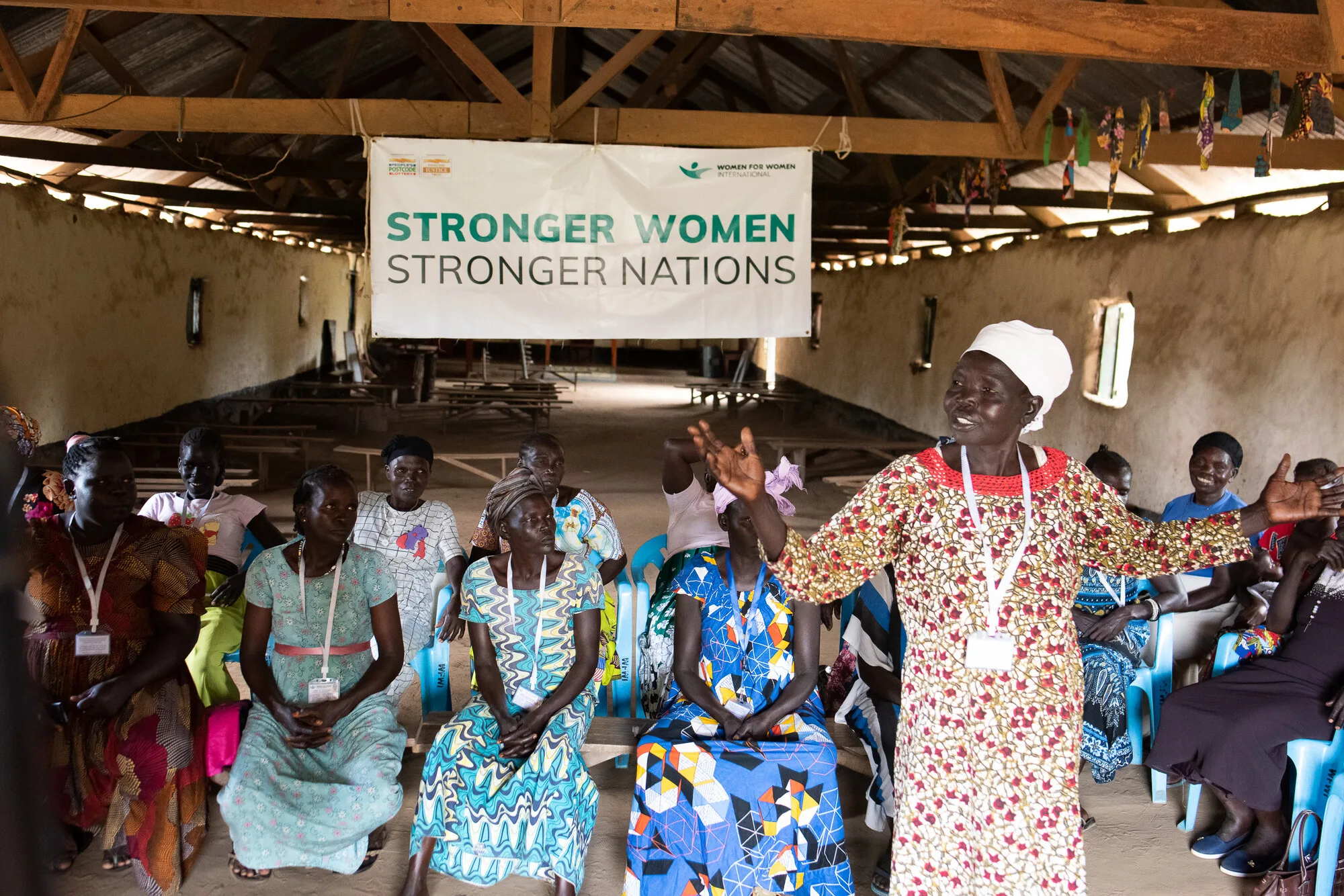
Changing deeply ingrained cultural perspectives is no small feat, but organizations like WfWI are making progress. Their Stronger Women, Stronger Nations program equips women with the tools they need to take on more powerful roles in their families and communities. The first step? Informing women of their rights under South Sudanese law:
- Rape is a criminal offense, and perpetrators must be held accountable.
- Every woman has the right to life, dignity, and protection of all human rights.
- Victims of violence against women (VAW) should have immediate access to medical care, psychosocial support, and legal assistance.
WfWI’s Change Agents program takes this a step further by training women in communication skills, enabling them to advocate for their communities and take action on behalf of women’s rights. To combat the rising tide of VAW, these Change Agents have found an innovative way to spread awareness: radio.
Radio Waves of Change: Spirit FM’s Impact
In a region where internet access is unreliable, radio remains a lifeline. Spirit FM, one of the leading stations in Yei River State, reaches over 2.5 million listeners daily across a 150-kilometer radius, extending into Uganda and the Democratic Republic of Congo. The biweekly show covers a range of topics, with VAW, women’s rights, and advocacy among the most popular.
Women from all corners of the region call in to share their stories and ask questions, giving program leaders invaluable insights into their needs. Most importantly, listeners realize they’re not alone. Sylvia Iyete Jigomoni, a WfWI Change Agent and survivor of forced marriage, shared her story on a recent program: “I myself am a survivor of forced marriage. I became pregnant as a teenager and was forced to leave school and marry the man who impregnated me. I regret it till today. My husband passed on after my first child, and I was still forced into another marriage. I wish I had continued with my education.”
Overcoming Fear: The Power of Collective Action
Speaking out in South Sudan requires immense courage. Women face countless obstacles when seeking justice, from threats of retaliation against themselves and their families to the physical challenges of reaching courthouses, many of which are inaccessible due to flooding. Yet, as Miriah explains, WfWI’s program offers women a new way to protect themselves: by standing together.
“By coming out and sharing their stories,” Miriah says, “our participants believe they help empower other women who may be going through similar issues but have not yet sought support.” Charity Sande, a Change Agent graduate in Jansuk, is a testament to this transformation. Once suffering in silence, she now proudly declares at WfWI gatherings: “A woman has a right to possess land, a woman has a right to inheritance, a woman has a right to education. She also has a right to participate in leadership and decision-making in the community.”
In another session, Change Agents in Jansuk composed a song to accompany their action plans. The lyrics capture their resolve: “The world is a harsh place. Let’s arise and strive to be change agents to make the community a better place.”
These women are not just survivors—they are warriors, fighting for a future where their daughters won’t have to endure the same horrors. Their voices, once silenced, are now rising, demanding justice, equality, and the right to live without fear.