Sexism in Advertising: How the Image of Women is Distorted in Sales
Sexism in Advertising: How the Image of Women is Distorted in Sales
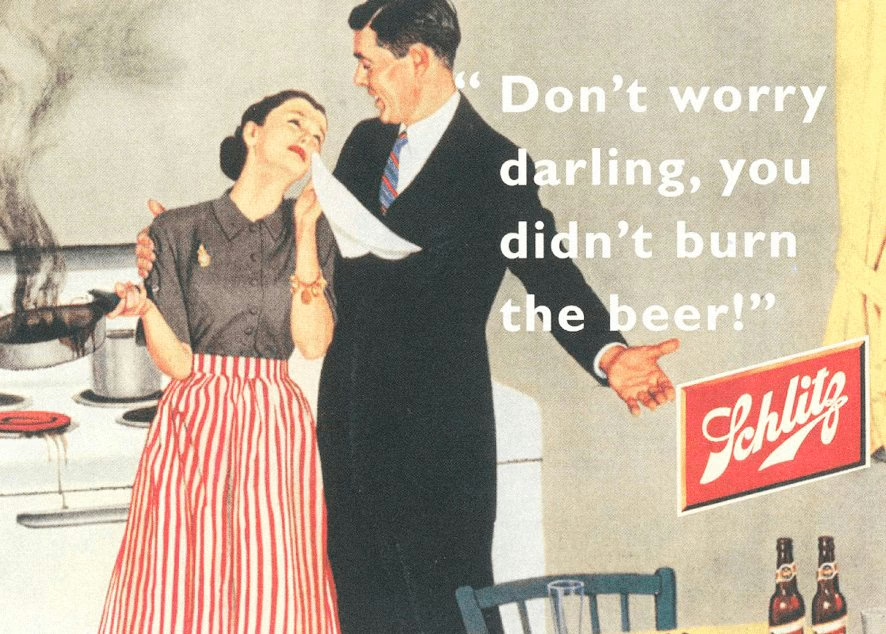
In the mid-20th century, sexist advertising was the norm. Women were portrayed as silly, weak, and capricious creatures, suitable only for cleaning and cooking. Even then, poor housekeeping could be forgiven if a woman was obedient, dressed as her husband liked, and never gained more weight than the fashionable standards dictated. It seemed those times were long gone, and women had made significant progress in achieving equality and eradicating humiliating sexism. However, this is not entirely true, as offensive messages still surface in advertisements from large companies and international organizations.
Objectification
The most common treatment of the female image in advertising is objectification. Attractive women are compared to items that can be purchased, such as cars or food. For instance, an advertisement might play on the words “Koreyanka”—a resident of Korea (and an erotic Asian fantasy for many men)—and “Koreyanka”—a car manufactured in Korea. This seemingly harmless wordplay reinforces the idea that women can be bought like luxury items.
Such cases have occurred in Moscow’s advertising space, and public movements have successfully intervened. Numerous complaints from activists to the Federal Antimonopoly Service helped remove these offensive advertisements. The lesson here is clear: if you see offensive advertising, do not stay silent. Complain and share news through social media and blogs to stop the spread of humiliating sexist stereotypes.
Women are also often compared to food: meat, dessert, or something “delicious.” This brings to mind Margaret Atwood’s feminist novel “The Edible Woman,” where the protagonist feels like a cake that might be eaten. In advertisements, women’s bodies are treated as objects—edible and tasty, but objects nonetheless, which can be acquired for a certain price.
Weight and Figure
Significant changes in sexist advertising over the past 70 years have occurred in the portrayal of women’s figures. While advertisements once blatantly stated that men would leave women if they gained even a little weight, the situation is now handled more subtly. Advertisements often feature only slim and model-like women, as if other body types do not exist. However, there are still instances where advertisements directly dictate the standards of women’s figures. Beauty salons, fitness centers, and various advertisers often link discounts and price reductions with low weight, implying that only slim women are desirable, and the slimmer, the better.
Gender Stereotypes
If aliens visited Earth and formed an image of humans based on advertisements, they would be surprised by the stark differences between men and women. Men are portrayed as brutish, intelligent, and active, while women are shown wearing pink, thinking only about fashionable clothes and cosmetics, and having mysterious PMS that turns them into wild beasts. In general, women are depicted as silly and not very smart, but men graciously forgive these flaws. In return, women spend men’s money and pout capriciously.
For example, the TV channel “U” acts extremely indicatively. Moreover, women in the advertising version are ready for anything for money, expensive gifts, and marriage. “Everything” usually includes sexual services or, in a milder version, simply sympathy for a man. This either collectively equates all women to being venal or again hints at the possibility of purchasing them.
Is it really worth reducing the image of men to “brutish guys” and women to “capricious silly girls”? Children see these advertisements and grow up thinking that girls are associated with dolls and pink, while boys are associated with cars and blue. Such behavior can begin to be perceived as normal.
Exploitation of Sexuality
The most egregious sexist sin in advertising is the exploitation of female sexuality. Semi-nude bodies are used to sell anything from sushi bars to perfume. While large companies tend to avoid direct sexual innuendos, leaving them for viral advertising, smaller firms often use salacious double entendres and semi-nude female bodies with hints of sex. For example, Carl’s Junior has long used slogans like “This breast is softer than buns” for chicken breasts, with corresponding images of semi-nude busts and buttocks next to burgers. Burger King, known for its scandalous campaigns, has also used such associations.
The “Middle Ages” in advertising are not as far from us as we thought. Sexism can and should be fought, and the most important thing is not to leave it unattended, even in advertising.