Sex and the City Reboot: A Nostalgic Journey or a Modern Misstep?
Sex and the City Reboot: A Nostalgic Journey or a Modern Misstep?
As the Sex and the City reboot graces our screens, it’s natural to wonder if the magic of the original could ever be recaptured in today’s world. The original series, a groundbreaking show that aired from 1998 to 2004, was a product of its time—a time when the world seemed a bit simpler, and the complexities of modern life hadn’t yet taken hold.
The Nostalgia Factor
In an era where technology dictates our every move and social interactions are fraught with complications, it’s no surprise that many of us are turning to nostalgia for comfort. The original Sex and the City was a riot of sexual innuendo, fashion, and outright exposition that defined a generation. It was a show that explored the lives of four women navigating love, careers, and friendships in New York City.
For many, the show was a form of escapism, a way to immerse oneself in a world where the biggest concerns were finding the perfect pair of shoes or dealing with a breakup. Today, the world is vastly different. The COVID-19 pandemic has changed the way we interact, and technology has become an ever-present shadow overlord, dictating who can and cannot have an opinion.
Fashion as a Character
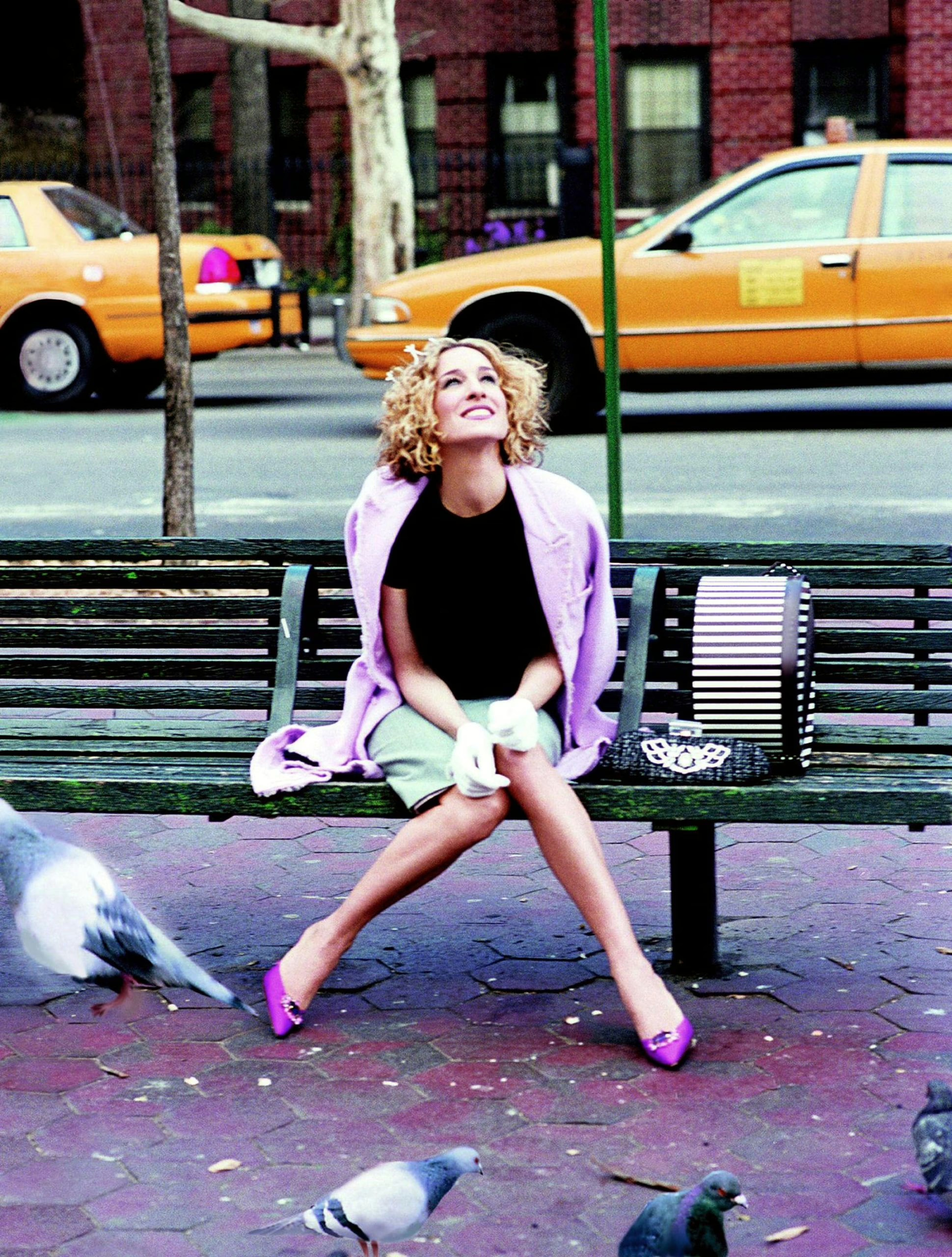
One of the most iconic aspects of Sex and the City was its fashion. The show was the first to blur the line between costuming and styling, making fashion another character in the series. Carrie Bradshaw’s outfits, in particular, were legendary. From her emerald green silk bunny hop skirt to her tight white crepe dress, each outfit had a mood, a movement, and a moment.
Patricia Field, the legendary costume designer, once said, “It’s a storytelling situation.” And indeed, the fashion in Sex and the City told a story. It reflected the characters’ personalities, their moods, and their experiences. It was a visual feast that added depth to the narrative.
A Pre-Cancel Culture World
What’s perhaps more interesting than the fashion is watching a show written and filmed pre-cancel culture. The original Sex and the City was a time when questionable opinions were opined, and the sky didn’t fall down. It was a time when characters could explore different ideas without the fear of being scrutinized or canceled.
The four women in the show often spewed awful sentiments, at least to each other, and apparently weren’t afraid of being ‘unfriended’ because that charming prospect didn’t exist pre-Facebook. There was homo-obsession and fetishization of Black men, there was slut-shaming and materialism, but there was also the right to be wrong and less of an appetite to take oneself so seriously.
The Reboot: A Sense of Humor in a Self-Scrutinizing World
With the current level of self-scrutiny and righteousness, it’s hard to imagine what the reboot will be like or how it will manage to have a sense of humor. The original show’s initial pre-internet optimism hinted at the opportunity to get better, and the writers didn’t seem to be checking every sentence to ensure it wouldn’t offend anyone from now until the end of time.
If the reboot fails to capture the essence of the original, we can at least go back in time and binge-watch the ballerina skirts, strappy sandals, and golden namesake necklaces of an arguably less complicated era. For more insights into the cultural impact of Sex and the City, you can visit The Hollywood Reporter.