Rosy Knees and the Little Black Dress: Women’s Fashion in the Roaring Twenties
The Roaring Twenties: A Decade of Revolution
The 1920s was a decade of explosion in human history. It was the era of jazz, the Charleston, Art Deco, cinema, massive urbanization, and industrial growth. The era seemed to know that it would end with an incredible crash – the Great Depression – and thus, it hurried, pushed, and flew full steam ahead. Women were more exposed than ever, powerful and submissive, breathtaking! Away with corsets! The fashion of the 1920s was about light, straight dresses, entwined with long strings of pearls. Alluring and seductive, smooth and wild, women lived for pleasure. And it’s easy to understand why.
Inspiration and Transformation
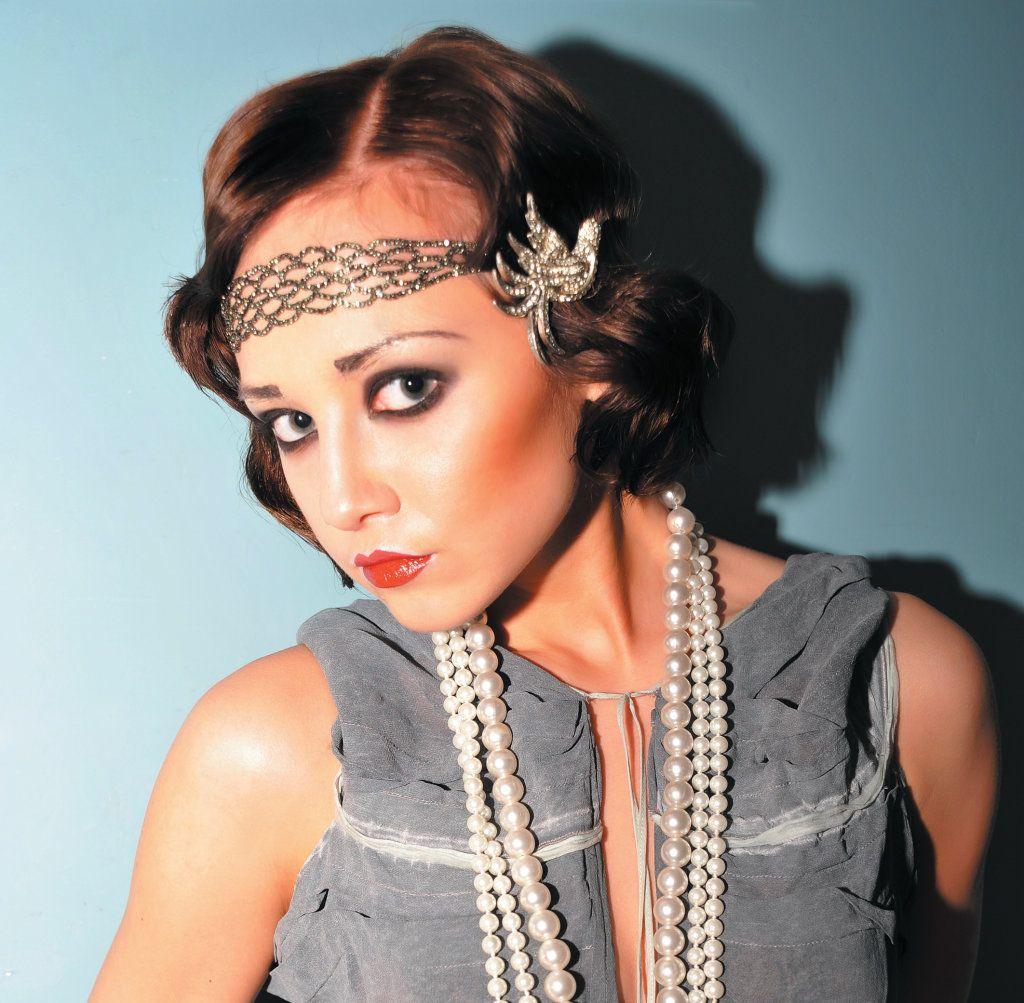
We continue our series of articles on fashion and women of the 20th century. The inspiration for this series is the author’s project “Retro Autumn” by Tatyana Anyukova. Within this project, Tatyana recreated original female images of the past century, embodied by ordinary Belarusian women. The highlight of the project is that all the details of the wardrobe, from dresses to brooches and handbags, are from Tatyana’s personal retro collection. These items help in styling the fashionable images of the 20th century.
The Aftermath of War
World War I turned the familiar world upside down. Blood, pain, hunger, revolutions, the terrible epidemic of “Spanish flu” – for a decade, people continuously fought either with an external or internal enemy. By the beginning of the 1920s, starving for a normal life, Europeans and North Americans literally went all out! The world was again filled with colors, came alive, bubbled, and breathed a sigh of relief. The fashion for simplicity and modesty had exhausted itself completely – and women blossomed, giving themselves over to the power of the new era. This was not only in terms of clothing but also in their behavior, freedom of choice, and even in some indecency.
Jazz, Sex, and Sports
Finally, after long war years, women had the opportunity to become beautiful seductresses again and not be ashamed of their frankness. They used this opportunity to the maximum. Women have never been more luxurious, mysterious, sexual, and attractive since then. Fashion historians say that the first postwar period of the 20th century forever drew a line between the fashion of the past and the future. It was in the 1920s that the modern interpretation of the female image began: short haircuts, bright makeup, little dresses, thin boyish silhouettes, an abundance of jewelry, and bold color combinations.
A New Silhouette
Women seriously took care of their figures, as a thin silk dress combination with a seductive string of pearls required a certain thinness and miniaturization, and short curly hair required a long and beautiful neck. The fashion for thinness gave impetus to the creation of a sports style. Women, along with men, began to participate in sports competitions, car races, and even piloted airplanes.
Fashionable Innovations
Fashionistas of the 1920s adopted… pajamas! Designer Jeanne Lanvin created such elegant pajamas that women dared to go out in pajama suits on the street and use them as evening lounge wear: sewn from flowing fabrics, richly decorated with lace, embroidery, and fringe. At that time, knitwear became popular, from which the first swimsuits and fashionable coats were sewn.
Short Dresses and Dancing Shoes
Short dresses and shoes with a stable heel came into fashion. The emancipated ladies of the new decade knew not only how to work but also how to have fun. Noisy jazz parties, where women danced until they dropped, contributed to the introduction of short dresses and shoes with a stable heel into fashion. To this day, shoes with a closed toe on the instep and a small heel are classic for ballroom dancing.
The Purpose of Life is Pleasure
Tired of the hardships of war, women and men plunged into the enjoyment of life with full force! City dance floors literally burned under the feet of pretty and desperate dancers. The most eccentric and unique dancer of the 1920s was rightfully considered Josephine Baker. She sang, danced, tumbled, grimaced, and twirled like a fairy-tale imp. “…In the finale of her number, Josephine ran away on all fours, with her bottom raised above her head, like a young giraffe. And with all this comedy, she was extraordinarily erotic. Flexible, like a snake, with singing arms, with a hot sparkle in her eyes, and with coffee-with-milk-colored skin, she attracted the attention of the entire hall. And how Josephine danced the Charleston! No one danced like that. It seemed that a merry imp had settled in her legs, who was leading the dance. This is not a woman, not a dancer – it is something incomprehensible, as delightful as the music itself,” – this is how they wrote about her at that time.
The Flappers
And you know, in this short piece of text, the entire energy of the 1920s is encoded. A frenzied, stunning, unbridled time! The colorful character of Ilf and Petrov’s “The Little Golden Calf,” Ellochka the Cannibal, is a bright example of a girl of the 1920s. Independent young ladies at that time were called flappers (from the English “flapp” – “to flap”), had their own slang, which stunned the decent Victorian generation of grandparents, and wanted only one thing: to enjoy life!
Rosy Knees, Big Eyes, and Hats
In the 1920s, women thickly lined their eyes with black and used dark red lipstick with exotic names like “bull’s blood.” Big eyes and a tiny mouth were in fashion. The new contour of the lips was called “Cupid’s bow”: the curve of the upper lip resembles the wavy handle of a bow, and the lower one resembles a taut string. There were even special inventions that helped girls achieve the desired lip effect.
Fashionable Accessories
Since dresses now reveal the legs, ladies began to rouge their knees! Stockings with patterns became very fashionable, and the most desperate fashionistas wore wristwatches on their ankles. A tan came into fashion, which carried rather a protest function of refusal from everything old, including the aristocratic pallor, which was in honor at the end of the 19th – beginning of the 20th century.
The Significance of Hats
Hats, whose significance has almost completely diminished in our time, were exceptionally good in the 1920s! They were embroidered with beads and decorated with feathers, ribbons, brooches, and pins. The most popular models of that time were a small round hat with fields. Especially beloved by fashionistas was the felt cloche hat, shaped like a bell. In summer, such a hat could be made of straw, and for the cold season – from anything. Women dared to go out in pajama suits on the street and use them as evening lounge wear.