Revolutionizing Skincare: The Power of 3D Diagnostics in Aesthetic Medicine
Unveiling the Essence of 3D Skin Diagnostics
In the realm of cosmetology, the quest for effective evaluation of various procedures has been a hot topic. Today, professionals have access to advanced methodologies that provide an objective assessment of treatment results, aiding patients in selecting personalized care. One such groundbreaking technique is 3D skin diagnostics. Dr. Sergey Kozlenko, a renowned cosmetologist from the ShineEst Center for Aesthetic Medicine, shares insights into this innovative approach and the age-related skin challenges we face.
The Core of 3D Diagnostics
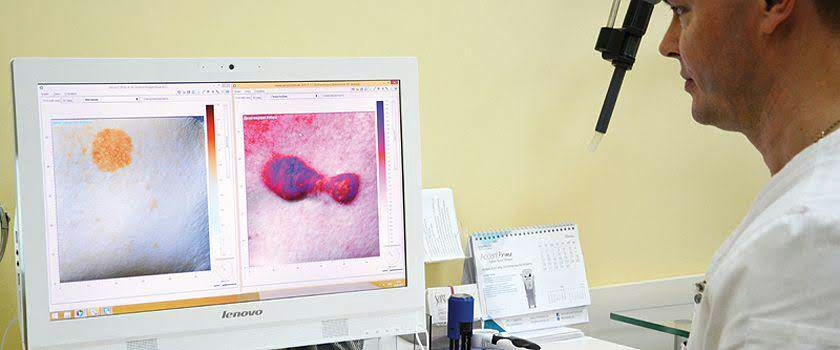
3D diagnostics employs a high-resolution camera to create a three-dimensional image of the skin’s surface. This technology enables a thorough examination of the skin’s condition, texture, and the depth and width of fine lines, wrinkles, and scars.
The camera’s software, equipped with multispectral analysis, measures melanin and hemoglobin levels, providing crucial data on skin photodamage, vascular conditions, and more.
One of the key advantages of this diagnostic tool is its speed and simplicity. No special preparation is required; patients only need to remove any makeup. The doctor connects the camera to a computer, captures images, and selects visualization and analysis modes based on the diagnostic objectives.
Multiple images are typically taken to accurately identify skin issues that may not be visible to the naked eye and to monitor changes over time. The camera also offers comparative analysis, helping patients assess the effectiveness of their treatments.
Detecting Skin Conditions
Skin conditions such as rosacea (characterized by red acne) and melasma (pigmentation disorders) often begin in the lower layers of the epidermis and gradually surface. These issues can manifest as facial redness or darkening pigment spots.
For instance, a patient might notice persistent facial redness after consuming alcohol, visiting a sauna, or experiencing stress. 3D diagnostics can predict the progression of skin diseases and recommend preventive treatments.
In the case of melasma, pigment reduction can be slow, making it difficult for patients to notice immediate results. Diagnostics can quantify the lightening of spots in percentage terms and estimate the number of additional treatments required. This diagnostic process can be conducted after each session.
Safety and Motivation
3D diagnostics is entirely safe with no contraindications. The minimal contact with the skin involves a frame on the lens that touches the skin and is disinfected before use.
Oncologists can also utilize 3D diagnostics to photograph and monitor new growths.
Individuals of all ages, including teenagers, can benefit from this diagnostic procedure and receive personalized skincare recommendations. Addressing aging-related skin issues is more effective when they are detected early, allowing for timely and cost-effective interventions to slow down the aging process.
Post-Treatment Diagnostics
3D diagnostics can also be performed after cosmetic procedures to evaluate their effectiveness in addressing previously identified issues. However, each procedure has a specific recovery period. Some treatments may result in mild redness that subsides within 30 minutes, while others require more extensive rehabilitation, including time off work.
In such cases, 3D diagnostics should only be conducted after the recovery period has ended.
Skincare Through the Ages
Age 25
At 25, individuals without harmful habits and with an active lifestyle typically have minimal skin issues. Proper care, nutrition, and stress management are usually sufficient to maintain healthy skin.
Common concerns at this age include post-acne scars. During treatment courses, such as resurfacing, 3D diagnostics can be used to monitor skin condition and predict the number of remaining sessions.
While pronounced wrinkles are rare at this age, pigmentation and vascular issues may occur. It is essential to use skincare products tailored to one’s skin type and to protect the skin from excessive UV exposure. Using creams with SPF is crucial, especially during outdoor activities like sunbathing or skiing, where an SPF of at least 50 is recommended. Regular cleansing, masking, and superficial peels are also beneficial.
Age 35
Visible skin changes often become apparent around the age of 30, with the formation of the first expressive wrinkles, typically around the brow, forehead, and eyes (crow’s feet). Botulinum toxin injections are highly effective for these concerns.
Annual bio-revitalization procedures with hyaluronic acid are also recommended. This treatment hydrates the skin and stimulates the renewal of collagen and elastic fibers. It can be performed year-round but is particularly beneficial in spring and autumn.
Summer is a stressful season for the skin, so it is essential to prepare and hydrate the skin before and restore it afterward.
Plasma therapy can be alternated with bio-revitalization. At 35, gravitational ptosis (skin sagging) is not yet pronounced, and skin tone can be maintained with massage procedures like the Toffa massage.
Age 45
By 45, women generally accept the aging process and have clear goals for improving their appearance. At this stage, the skin loses its smooth texture and elasticity, and expressive wrinkles become more pronounced. Gravitational ptosis sets in, causing the cheeks to sag and nasolabial folds to deepen. Dark circles and bags under the eyes may also appear.
A variety of procedures can be recommended for individuals aged 45 and above. Bio-revitalization and botulinum therapy are fundamental treatments, but more intensive laser procedures combined with injectable techniques can also be explored.
Men between the ages of 35 and 50 often seek cosmetic treatments for various reasons, frequently related to professional image and success.
Age 55
At 55, the focus shifts to aging gracefully. While wrinkles are inevitable, there are always ways to enhance one’s appearance. Regular skincare and advanced treatments can help maintain a youthful and vibrant look.