Oksana Lesnaya: Embracing Life’s Paradoxes with Grace and Strength

An Afternoon with Oksana Lesnaya: A Glimpse into Her World
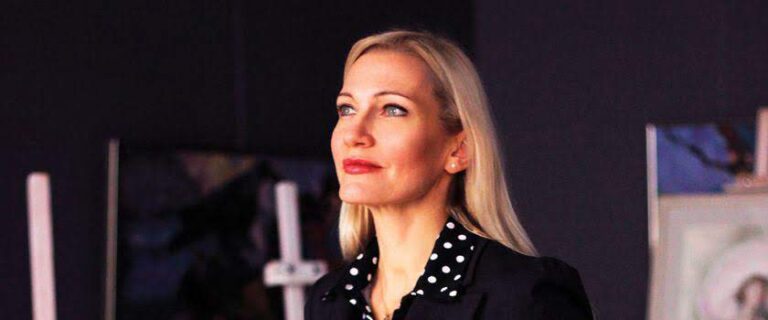
On a quiet Monday evening, in a cozy café nestled in the heart of Minsk, I had the pleasure of meeting Oksana Lesnaya. Despite her busy schedule filled with rehearsals, shoots, and tours, she managed to squeeze in some time for a chat. The woman sitting across from me was soft-spoken, with a gentle gaze and a delicate face, almost devoid of makeup. It’s intriguing how film directors often cast her as the “iron lady” roles.
Oksana Lesnaya: A Prolific Career
With an impressive portfolio of over 50 films and TV series, Oksana has graced the screen in numerous notable productions. Some of her most memorable works include “Emergency Help,” “Kamenskaya,” “Provincial Woman,” “Temptation,” “Massacre,” “Wolves,” “Supermarket,” “Boomerang,” “Sniper: Weapon of Retribution,” and “We Swear to Defend.” Additionally, Minsk’s theater enthusiasts hold a special place in their hearts for her performances in the Russian Theater’s productions such as “Intimate Comedy,” “Hanuma’s Antics,” “Wolves and Sheep,” “Ninochka,” “Caught in the Net,” “Vassa,” “An Ideal Husband,” and the more recent comedies “Twelfth Night” by Shakespeare and “Lady for a Day” by Oleg Danilov.
Learning from the Best: Zinaida Ivanovna Brovarskaya
Oksana’s primary mentor at the institute was the renowned People’s Artist of Belarus, Zinaida Ivanovna Brovarskaya, who dedicated her life to the Kupala Theater. Known as the “warrior” for her unwavering commitment to her craft, immense willpower, and extraordinary talent, Brovarskaya left an indelible mark on her students.
This August would have marked Zinaida Ivanovna’s 100th birthday. When she began teaching Oksana and her peers, she was already in her seventies. Despite her age, she was an incredibly striking woman, with an impeccable figure, graceful gait, and a penchant for beautiful attire, often donning high heels or platform shoes. The young girls in her class admired her greatly, aspiring to emulate her poise and elegance.
During acting classes, Brovarskaya would demonstrate how to perform headstands and somersaults with grace and finesse. Today, Oksana acknowledges the immense discipline and hard work required to maintain such physical prowess, especially as she approaches her fifties. She reflects on how Brovarskaya’s seemingly effortless agility was a testament to her extraordinary dedication and skill.
“Your strength lies in your partner,” Brovarskaya would often say. “If a scene isn’t working, if it’s falling flat, you must engage more deeply with your partner, rather than trying to outshine them.” As a young actor, Oksana didn’t fully grasp the significance of these words. However, with experience, she came to understand the importance of the emotional connection between actors, which captivates the audience’s attention.
The most crucial lesson Brovarskaya imparted was the emotional essence of the profession. An actor must be a conduit of emotions, both receiving and transmitting them. Their nervous system must be finely tuned and exposed, allowing their inner emotional self to respond instinctively, even before they utter a word.
The Misconception of Actors’ Excentricity
There’s a common stereotype that actors are eccentric in their everyday lives. Oksana believes this to be a misconception. While some individuals may naturally possess a more volatile emotional disposition, it’s unusual for actors to be overly dramatic outside of the theater. Personally, Oksana found it easier to cry on command than to laugh genuinely on stage. As a self-proclaimed melancholic, she had to learn to find joy in things to master the art of laughter, which she now appreciates greatly.
The Double-Edged Sword of Emotional Sensitivity
Oksana acknowledges that heightened emotional sensitivity isn’t always beneficial in everyday life. In certain conflict-ridden situations, one must maintain composure and refrain from displaying their emotions openly. For instance, visiting a housing office hardly warrants an outburst of laughter or tears.
While actors possess the ability to don various masks, it requires preparation. Before entering a housing office, one must mentally prepare themselves, adopting the persona of a determined individual who will stop at nothing to achieve their goal. Oksana recalls an amusing encounter with a journalist who genuinely inquired about her ability to cry on command. She playfully responded that actors have tiny tubes, like clowns, that release tears at the push of a button. However, the truth is that actors immerse themselves in their characters and the atmosphere of the play, allowing their emotions to flow naturally while maintaining technical awareness of their surroundings.
The Art of Immersion: Striking the Right Balance
Oksana believes that complete immersion in a character can be detrimental to a performance. She draws a parallel with a character from W. Somerset Maugham’s novel “Theatre,” who, despite genuinely suffering from love, delivered a lackluster performance on stage. Oksana recalls a personal experience where she found herself overwhelmed by emotions during a particularly intense scene. She realized that her inability to control her emotions was bordering on a psychological issue. Actors must strike a balance between genuine emotion and technical prowess to deliver a harmonious performance.
Oksana’s Journey: From TYUZ to Gor’kovsky Theater
Oksana’s professional journey began at the Minsk Youth Theater (TYUZ). After graduating from the theatrical institute, she received offers from both TYUZ and the Youth Theater but ultimately chose the former due to the presence of experienced actors from whom she could learn. She fondly recalls the warmth and camaraderie she experienced at the theater, which she still holds dear to her heart.
Some of her initial roles at TYUZ included playing a troubled teenager nicknamed “Giraffe” with a mohawk in the play “All Hope” by Mikhail Roshchin, a young heroine in “Wild Boar” by Viktor Rozov, and Lizbeth in “Peter Munk and His Stone Heart” by Hauff. She also played a tall butterfly in the entourage of Thumbelina in a fairy tale. However, her time at TYUZ was cut short due to maternity leave.
Upon returning from maternity leave, Oksana joined the Gor’kovsky Theater at the invitation of Boris Ivanovich Lutsenko. The 1990s were a challenging time, with the country in turmoil and many actors forced to seek alternative professions to make ends meet. Oksana’s first husband, Sergei Lesnoy, also an actor by training, ventured into business to support their family. Despite the hardships, Oksana remained committed to her craft, navigating the complexities of the theatrical world with resilience and determination.