Life in Full Color: The Inspiring Journey of Daria, the Barista from Inclusive Cafes
Life in Full Color: The Inspiring Journey of Daria, the Barista from Inclusive Cafes
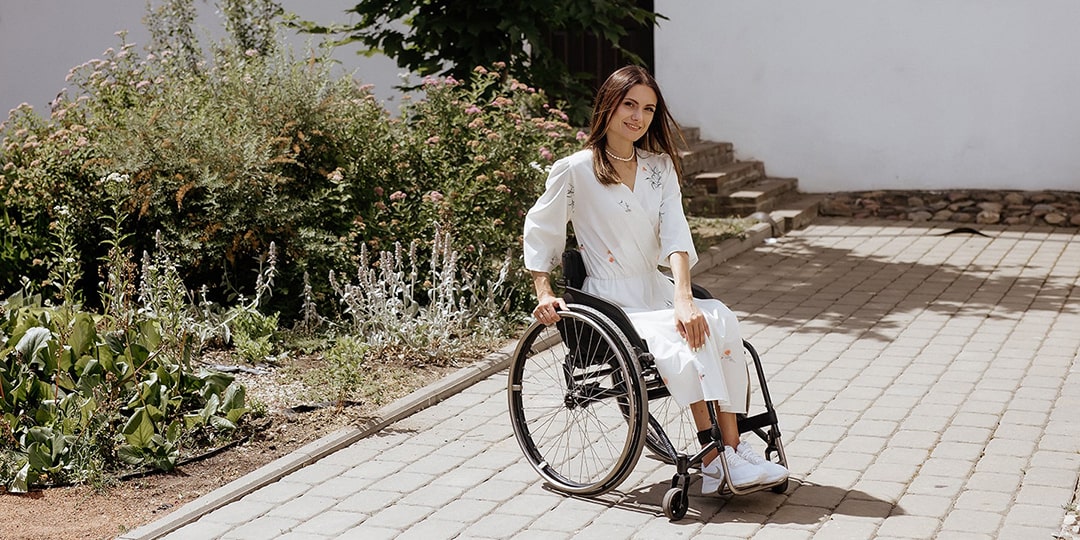
An accident shattered Daria’s life into a thousand pieces. She parted ways with her husband, moved back in with her parents, and lost the ability to walk. But now, six years later, she has found love again, made new friends, moved to Minsk, and wakes up an entire office every day, energizing everyone with her positivity as a barista. “I am happier now than I was before the injury,” Daria smiles. Together with A1, we begin a series of publications about baristas from “Inclusive Cafes.” We start with the amazing and inspiring story of Daria.
Daria: “After Winter Comes Spring”
“I have a good story, a happy one,” Daria smiles brightly. “I am happier now than I was before the injury.” Due to an accident and spinal injury six years ago, Daria lost the ability to walk and found herself in a wheelchair. But it’s clear that the girl is not lying—she is truly happy.
A Black-and-White World: “My Life Was Somehow Empty”
We meet on a Saturday: on this day, there are fewer customers in the coffee shop at the main A1 office on Internatsionalnaya Street, and by the end of the working day, Dasha still has enough energy to socialize. She has been working here as a barista for three years. Her friends and fiancé Lesha have already arrived at the coffee shop and are waiting for her: they have plans for the evening.
“My life was somehow empty,” Daria continues to reflect on her past and present. “Now, outwardly, it is no different from the one I lived before. I have a job, a relationship, I rent an apartment, and I go to visit my parents on holidays. Everything is the same. But I feel everything differently. Before, nothing interested me. I had a home—work—work—home routine. I wasn’t interested in anything; life was passing by uninterestingly.”
Seven years ago, Daria lived in St. Petersburg, worked in an office at a logistics company, and was married. However, the profession of a logistician turned out not to be her calling; the office exhausted her, and her relationship with her husband left much to be desired. With a wistful look and a slight grimace, Daria describes a possible version of her future: a mortgage, buying a home, children, the same job.
Seeing the Goal: “I Realized That Life Can Be Lived Already”
“It seemed to me that it had to be this way and no other. As if the world was black and white, and this version of life was the right one, and all the others were not. I even got married because I thought it was necessary to get married. Now, looking back, you think: ‘Girl, you’re not that stupid, why did you have these incomprehensible beliefs in your head?’ But I wouldn’t change anything: I am very afraid of changes.”
Changes crashed down on the girl in an instant. On Christmas Eve, Daria was traveling with her relatives from a visit. Her sister-in-law was driving, lost control, and an accident occurred. Daria found herself on the verge of life and death: multiple fractures, lung damage, resuscitation.
“At first, you can really go crazy. You, an adult and independent person, are like a little child: you can’t do anything. In the hospital, I was just a bedridden patient. Then you leave the hospital, return home, and still lie down. The toilet, the bathroom, you can’t brush your teeth, pour yourself a glass of water! Everything is in Dad’s hands. It was terrible,” Daria recalls, handing me a coffee.
She enjoys being a barista. The work keeps her in good shape: she is always busy, always with people, and there is no opportunity to stay at home and be lazy. For this job, Daria moved from Vitebsk to Minsk three years ago, having no experience of independent living in a wheelchair. It was scary, but she managed. Coping with difficulties helped her determination.
“After the accident, I was helped by the fact that I had a goal to which I was moving. And all the side noises didn’t bother me so much anymore. Even when my husband sent a message that we were getting divorced, I put the phone aside and continued to do my own thing.”
After resuscitation, Daria, as a citizen of Belarus, was transferred to a hospital in Vitebsk. Her husband visited her several times; his relatives, whom she considered her family, did not call her. After the hospital, Daria returned to live with her parents and engaged in her recovery. She put all her efforts into walking again.
“For two and a half years, my whole life was continuous rehabilitation. We tried everything: acupuncture, medications, IVs, endless massages, continuous physical therapy.”
Once, thanks to her determination, Daria fulfilled her big dream and entered a prestigious university in St. Petersburg on a budget. Throughout the 11th grade, she was focused only on her studies and was not distracted by anything else. Everything worked out. Now, Dasha is just as focused on getting back on her feet and is confident that everything will work out again. Moreover, there were successes, and they supported her: every six months, the girl went for rehabilitation, where she learned to walk again using her hip joints in special devices on her legs.
At first, she walked with a walker, then on crutches under her arms, then on crutches, leaning on her elbows. It seemed that a little more, and support would not be needed.
“During this period, I came to an active rehabilitation camp where people in wheelchairs after accidents gather. And I saw that people are doing well. They have children, families, jobs, travels, they drive cars, look good, and play sports. I thought that I probably want that too. Before that, I thought that I needed to recover to continue living. And here I realized that life can be lived already.” Daria switched to a new goal—to live.
Loving Life: “Everything is Made Up of Little Things”
Twice a week after work, Dasha goes to the gym. It’s convenient that it’s located right in the building where she lives. It’s inconvenient that the entrance is not adapted for wheelchair users. The administration met Dasha halfway and allowed her to enter through the staff entrance. However, in winter, when there is snow, slush, or slippery roads, Dasha cannot even get to her workouts through this door. She faces similar obstacles constantly.
“Yes, there are many difficulties. And it’s sad that not all of them can be overcome. In winter, for example, I stopped going to workouts. Winter is generally a difficult time for wheelchair users: we all sit at home; even getting to work can be very difficult. Well, I sat at home in winter and was sad. But it’s okay; after winter comes spring. Now it’s paradise for us!” Dasha smiles.
Now Dasha savors all the diversity of the world. She loves walking around Minsk—unexpectedly for herself, she has come to love this city very much, happily meets new people, notices and enjoys what she did not see before.
“How did I live before? I walked from work, knowing that I would go to the store, buy this and that. Did I notice anything around me on the way? No. I sat in the office, thinking only about my tasks. Did I see anything or anyone else? No. You live in your little world; you are closed in it.”