I Was Twelve in ’41: A Girl’s Memoir of Minsk Under Occupation
Firsthand Accounts of War: A Precious Legacy
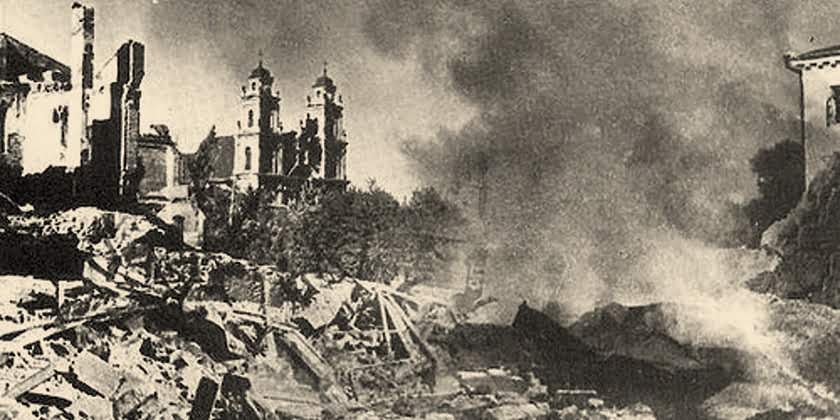
Firsthand accounts of war are invaluable. They lack the contrived pathos of cinema, but they are real. This reality makes reading memoirs even more harrowing. The smoldering streets of Minsk; women giving birth under bombardment; the neighbor boy, Alyok, executed in the Nemiga ghetto; a frozen potato for breakfast… Our author, Svetlana Denisova, has delved into the poignant memories of a Minsk girl, Lena, for you.
A Daughter’s Call
One spring day, the daughter of Ivan Anisimovich Insarov, a legendary figure who served as the Minister of Health of the BSSR from 1948 to 1966, a friend of Yakub Kolas himself, and the editor of the journal “Healthcare of Belarus,” called.
“You wanted to write about my father,” Natalia Ivanovna began. “But I have something else—memories of the occupation.”
Memories of Occupation
“Memories of the 1941-1944 Occupation by Elena Nikolaevna Spiridonova, born in 1929. P.S. I was 12 years old in 1941.” This was the title of her manuscript.
Elena Nikolaevna Spiridonova, a candidate of medical sciences, was born and lived in Minsk. Ivan Anisimovich Insarov was her lifelong idol. Elena Nikolaevna recorded her war memories chronologically, in calligraphic handwriting, divided into parts with subheadings. As I began to read, I realized from the first lines that these were special materials.
The Outbreak of War
In June 1941, Lena Spiridonova, with all her few dresses, as she wrote, was sent to a pioneer camp located in the village of Kolodishchi. Neither the children nor the counselors knew about the start of the war. Here are a few fragments from the text:
“We listened in horror to the explosions and saw a wall of black smoke over Minsk. The crying in the camp was terrible; we were gathered and walked with the pioneer leaders somewhere towards Moscow. Suddenly, we saw tanks with fluttering red flags. We rushed towards them, right under the tanks, and—oh horror!—these were German tanks; their flags were also red, but with a white circle and a swastika in the middle. Fortunately, we were not shot, but we continued along forest roads. We reached the town of Smilovichi and stopped in some house…
It turned out that free movement, according to the new order that had already been established, was only allowed from ten in the morning until noon.
We had nothing to eat, and it was impossible to go looking for food. We went back to Minsk. We walked barefoot because our sandals had fallen apart. We walked in silence, in fear: what awaited us at home?
A Teacher’s Betrayal
We reached the Svislach River in the Lyahovka area (this is where our Postovaya Street began)—the bridge over it was destroyed. I ran down the street and looked down—I was afraid that if I looked up, I would see the burned houses, and they were terrifying—and only by the sidewalk tiles did I recognize my house. I looked—and was horrified: only a stove chimney remained. I didn’t even think to approach the ruins—there, on the stove pipe, my mother had left a note.
With a scream, I rushed back to the column. Together with everyone, I reached Kransoarmeyskaya Street, where my aunt lived, but her house had also burned down. Fortunately, neighbors were found. They fed me and told me that my aunt was alive and that they would take me to her. I slept for a day, and then we went to my aunt, and she took me to the red brick houses of the Iskra settlement. In the basement of one of them, the surviving residents of the burned Postovaya hid.
Waiting for Mother
It turned out that my mother was not there—she had gone to Kolodishchi to look for me. For two days, I stood by the road, waiting for her, and when I saw her familiar face, I thought that I would never, ever upset my mother again, never hurt her in any way…
Father’s Fate
In June 1941, my father was called up for maneuvers in Grodno. According to him, they were given old, patched uniforms, and instead of combat weapons—a “rifle with loose bolts.”
My father was taken prisoner. There were many prisoners like him; my father said that the Germans were probably confused. As a doctor, he joined a German medical unit accompanying the column. Remembering his gymnasium German, he persuaded the doctor to give him some bandages and iodine—and along the way, he provided what assistance he could to other prisoners like himself.
This is how they reached Minsk. The medical unit stopped in the building of the former monastery, on the territory of the 2nd Clinical Hospital (the corner of Yanka Kupala and Maksim Bogdanovich streets today). My father asked the German for permission to go look for his family and promised to return. He came to our burned street.
Just like me, he did not approach the stove pipe in the depths of the yard, did not go into the surviving brick building of the Iskra settlement, but began to ask people who were in the huge pipe of the then-under-construction Dynamo Stadium if they had seen a woman with a child. He said that he would come again the next day at 12 o’clock. My mother was told that some man was looking for a woman with a child. The next day, she stood on the street and met my father, and he did not return to the hospital. Fortunately, no one was looking for him…
“Such luck only happens in the movies!” Elena Nikolaevna added in red ink.
Minsk Under Occupation
Minsk (the center) was completely destroyed; only wooden houses survived on the outskirts. The streets stank: our dead soldiers were left lying there; my mother and I covered their faces with tree branches.
After the column of prisoners was driven through, the dead were left lying on their path. And at the same time, voices from the column shouted: “Have they already given out the land?” Yes, exactly like that: many were deceived by German propaganda and then perished in concentration camps.
Survival in Winter
Before fleeing from the bombing and fires, people in the yards dug pits and threw in everything they could quickly gather. So did my mother (alone); she gathered what she could, but in her haste, she did not take the good things that were hidden further away. So, she did not take my warm clothes, and during the winter of 1941-1942, I walked in what good people gave me (and therefore I was often sick, catching colds).
We began to live on the outskirts (for a fee). The hunger was terrible; the only thing that helped was that my father, as a doctor, was known to the railway workers (he worked in the railway hospital), and they had gardens, and my father went to them and brought a few potatoes (happiness!).
Generally, people who lived on the outskirts and were more resourceful looted the shops and, apparently, lived a little better.
It seemed that there was no hope. On every pole hung German leaflets: so many hostages had been shot, Jews were ordered to wear yellow circles on their backs and chests. A newspaper was already being published, and in every issue, there were the words: “At the Gates of Moscow,” and we lost all hope. But to our joy, whether in June, August, or September—always “At the Gates of Moscow.” And we raised our heads: a glimmer of hope appeared.
In October, the frosts hit, and the Germans began to freeze. Near the railway crossing where we lived, German equipment gathered; trains with it went east, and it seemed to us that nothing could be done with the Germans: their machines were huge, covered with tarpaulins, prepared for our dirt and slush. But in the winter, sanitary trains began to arrive from the front. That means they are being beaten! We will win!