How to deal with bugs on your indoor plants
How to Handle Bugs on Your Indoor Plants
Instagram star Hilton Carter lives surrounded by hundreds of plants. His new book includes tips on how to display indoor greenery and keep it healthy.
Shopping
You could have had plants in your home for years and suddenly find yourself dealing with an infestation. Often, the plant you just brought home from the store could be the culprit. When shopping for a new plant, give it a thorough inspection. Treat your plants like pets. Imagine you’ve just taken your dog for a long walk through tall grass. Just as you would check your pup for ticks, you should inspect your plants for bugs.
Even if you’re buying from your favorite plant store, it doesn’t mean the plant isn’t already infested. Before purchasing, check the top and bottom of the leaves and around the top of the soil for anything that doesn’t look like part of the plant. Some bugs move around a lot, while others are motionless and can be easily missed. If you’re unsure whether what you’re seeing is a bug, ask an assistant at the nursery for help. The first step in limiting bugs in your home is ensuring you’re not the one bringing them in.
Checking In
While every plant parent should expect to see a bug here and there, you won’t run into an infestation overnight. It’s not like there’s one bug one day, two the next, and then a thousand the third day. That’s not how it works. But if you’re not paying attention to your plants, that’s when it will happen. The best way to keep your plants as bug-free as possible is to check in on them at least once a week. Give them a good look over, just as you did when shopping for them.
If you want to ensure your plants are thriving and avoid finding yourself with a plant covered in mealybugs or spider mites, this work is necessary. While you’re at it, go the extra mile and wipe the leaves down. Try to do this every other week to keep an eye out for bugs and to remove any dust that has built up on the foliage. Removing that layer of dust can help bring more light to the foliage, making it vibrant and restoring your plant’s natural shine.
Sometimes, I’ll place a droplet of mild dish soap in about 4 liters of lukewarm water and use that with a soft cloth to wipe the leaves down. While removing dust, the mild dish soap can also deter and kill bugs. Afterward, I’ll come back and wipe the leaves down again with a clean cloth.
Cedar Wood
Nature has a way of protecting itself. For example, when you cut the leaves of a philodendron, the scent they release warns other plants that danger is near. I love that. When it comes to cedar, its scent makes it a great bug repellent. It releases a scent that bugs like termites, moths, mosquitoes, and gnats dislike. An easy method to rid your plants of these bugs is to place cedar chips, sawdust, or even pencil shavings on top of the soil. Yes, I said pencil shavings! Some good-quality pencils are made of cedar and can be used to deter bugs from coming around your plants. I like using pencil shavings because, one, I’m repurposing the shavings I already have from sharpening my pencils, and two, it looks cool.
Base Watering
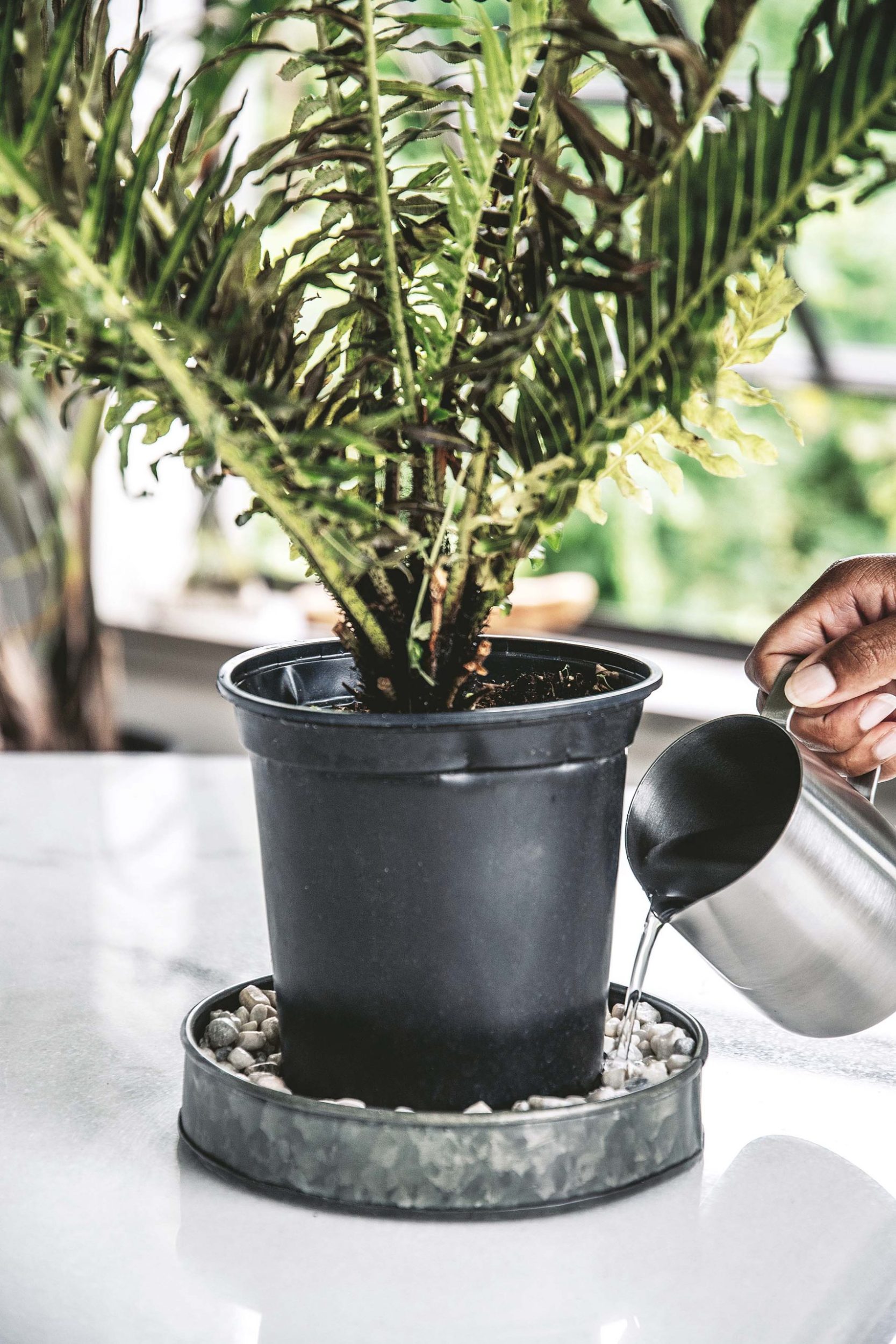
Watering your plant from the base allows the soil and roots to pull moisture in without getting the leaves and the topsoil wet. Gnats love being around damp soil, so if your topsoil isn’t as wet because you’re watering from the base, you’ll see fewer bugs flying around your plant. When watering from the base, it’s important to only allow the water to sit in the base tray or let the pot sit in water for 30 minutes. After 30 minutes, dispose of any remaining water or remove your plant from the water.
Old Tricks
Like many of us, I’ve been handed down tips and tricks to deal with things that can occur in our lives. One trick I’ve been shown for dealing with a few pesky gnats is to place a small bottle cap full of apple cider vinegar or leftover coffee on the topsoil or near your plant. This will draw the gnats there to die while the soil of the plant dries out.
Four Bugs to Look For
- Mealybug: White and cotton-like
- Scale insects: These look lifeless with shells that look like droplets of tree sap
- Spider mites: Small and create webs around the edges of your foliage
- Gnats: Small and fly around wet soil