Hollywood’s Unrealistic Beauty Standards: Stars Once Shamed for Their Weight
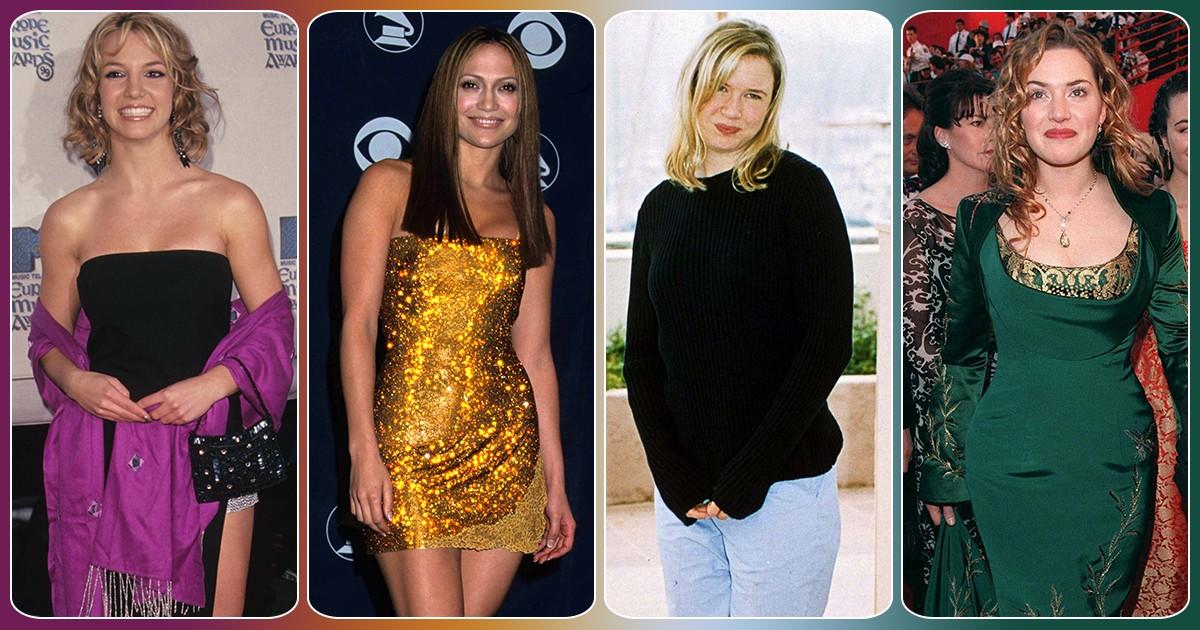
The stringent beauty standards in American show business today are even more demanding than those for Miss Universe contestants. To maintain global stardom, celebrities must look perfect, avoid scandals, and work tirelessly—these expectations have only slightly relaxed in the past decade. Previously, a single unflattering paparazzi photo or a few extra pounds could cost stars their fans’ love. Think Hollywood’s obsession with thinness due to Ozempic is new? It was even worse before.
The Absurdity of Past Beauty Standards
Looking through glossy magazines from 15-20 years ago reveals how stars were once labeled as “chubby,” with diet tips placed under their photos—ranging from green apples to cucumber and tomato salads. Many of these accusations of being “overweight” nearly cost them their careers and mental health, yet today these claims seem utterly absurd.
Kate Winslet
Kate Winslet almost lost the iconic role in “Titanic” due to her weight. Director James Cameron liked her audition but thought she would look too large in a corset, so he hired a personal trainer for her. The grueling shoot combined with intense workouts pushed Winslet to her limits. When she later spoke about the humiliation she faced on set, critics dismissed her as a complainer, advising her to “take better care of herself.”
Renée Zellweger
Remember Bridget Jones’s weight struggles? Surprisingly, her average weight was 60 kg, perfectly normal for her height. Bridget’s occasional ice cream and chips binges weren’t so bad if she balanced her daily calorie intake with protein and fiber. Yet, both Bridget and Renée Zellweger, who played her, were considered the ultimate “chubby” icons of the 2000s. Zellweger always called her character beautiful and disagreed with the director’s perspective.
Jennifer Lawrence
When Jennifer Lawrence started her career, Hollywood had begun embracing body positivity. She vowed never to torment herself for any role, believing that if she didn’t fit one part, another would come along. However, for “The Hunger Games,” she had to compromise her principles because she loved the project. To portray the starving Katniss, producers put her on a strict diet, hinting that she should maintain a slim waistline afterward. Lawrence later revealed that these dietary restrictions severely impacted her health, as her body was still developing.
Britney Spears
Britney Spears survived on just 1200 calories a day for years. While this is technically survivable, considering her intense dance rehearsals, additional workouts, and constant touring, this calorie count was catastrophically low. The constant criticism about her weight, even from her family, led to severe complexes. Spears even believed that paparazzi digitally added cellulite to her photos to make her look bad.
Drew Barrymore
At one point, Drew Barrymore’s life became consumed by her struggle with weight. She openly admitted to turning to pastries during stressful times but was generally content with her reflection. A turning point came when a stranger in a coffee shop congratulated her on a supposed pregnancy. Weighing 68 kg at the time, Barrymore began a desperate weight loss journey, initially motivated by looking good on screen and red carpets. Later, she realized that daily physical activity and health were far more important than mere thinness.
Alicia Silverstone
In 1997, Alicia Silverstone starred in “Batman & Robin,” playing Batgirl and spending most of the film in a tight black suit, looking stunning. Her shock came when tabloids began calling her “Fatgirl.” The constant ridicule led to depression, and she took a long break from acting. Silverstone believes this episode hindered her career, as her insecurities got the best of her.
Jennifer Lopez
In the 2000s, Jennifer Lopez faced criticism for not being “thin enough,” despite having a curvy figure. Even now, at 56, she impresses with her toned physique, achieved through hours of daily workouts and strict dietary discipline, rarely indulging in even a piece of chocolate.
Beyoncé
Today, Beyoncé is the most influential woman in show business, but her early career was marked by bullying due to her less-than-perfect figure. She often dieted strictly to achieve a stick-thin appearance. Her mother fueled these insecurities, believing that Beyoncé needed to be thinner to attract fans.
Christina Aguilera
In 2024, fans unofficially crowned Christina Aguilera the “thinnest” of the year. Having spent much of her life battling weight issues, she lost nearly 40 kg, leading to speculation about her using Ozempic. However, fans would likely forgive her even if she had, given the harsh criticism she faced when she first started gaining weight. Aguilera revealed that producers often shamed her for not being thin enough, but she just wanted the world to love her music, not her appearance.
Geri Halliwell
In the 2000s, Geri Halliwell was known as the “chubby Spice Girl,” though she weighed around 60 kg. The constant ridicule led her to try various diets, and the group’s breakup worsened her struggles. Starting a solo career was tough, and the pressure to lose weight led to bulimia. At 44 kg, her situation became critical, and her friend Robbie Williams intervened, recommending a rehabilitation center that saved her life.
Nicole Richie
In the 2000s, Nicole Richie was often called “Paris Hilton’s fat friend.” Weighing around 70 kg in 2003, the constant teasing pushed her to extreme weight loss measures. She aimed to reach a size S within a year, often going on multi-day fasting periods. By 2007, doctors diagnosed her with anorexia, but she didn’t see the problem and wanted to lose more weight. Only her pregnancy made her reconsider her health.
Lily Allen
Lily Allen admitted that her weight fluctuated with her psychological state. Stress led to weight gain, and she often turned to food for comfort. However, she learned to manage her stress and maintain a healthier lifestyle over time.
For more insights into the evolving standards of beauty and wellness, you can refer to authoritative sources like World Health Organization.