Grand Canyon: Discover America’s Breathtaking Natural Masterpiece
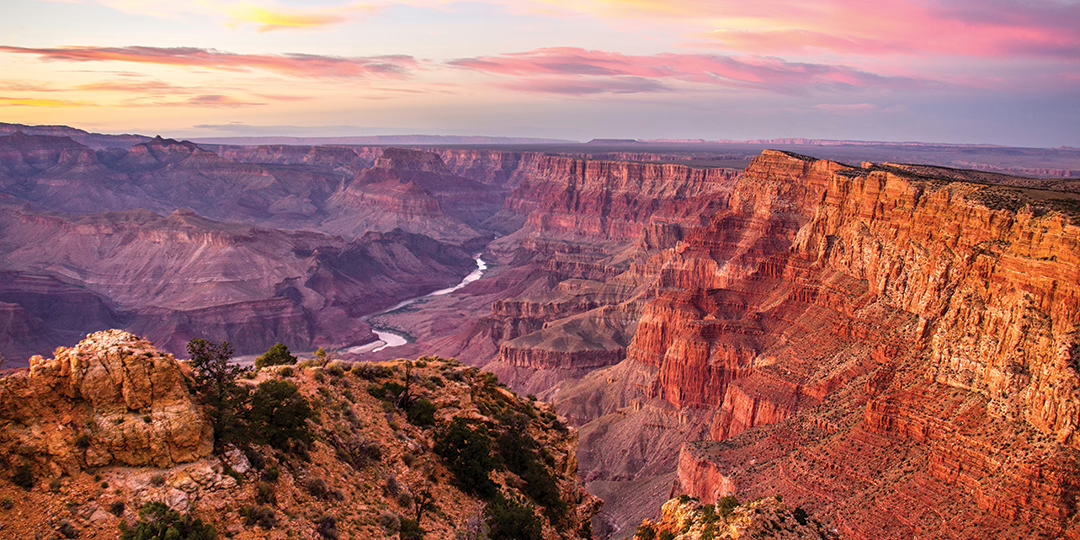
Exploring the Grand Canyon: An Unforgettable Adventure
The Grand Canyon, a name synonymous with awe-inspiring landscapes and stunning vistas, stands as one of America’s most cherished natural wonders. While the United States is often associated with bustling cities and iconic landmarks, its true essence lies in the untouched beauty of its natural landscapes—majestic mountains, winding rivers, serene lakes, cascading waterfalls, vast deserts, and pristine national parks. Today, we invite you to embark on a journey to one of the most renowned and visited natural reserves in America—the Grand Canyon National Park.
The Majestic Grand Canyon
The Grand Canyon lives up to its name with its staggering dimensions: stretching nearly 450 kilometers in length, spanning about 28 kilometers in width, and plunging to depths of up to 1.8 kilometers. Carved by the Colorado River over millions of years, this natural marvel was formed as the river meticulously washed away layers of limestone, sandstone, and shale from the rising plateau. Today, the Grand Canyon is a favorite subject for photographers and a star on social media, attracting over 4 million visitors annually.
Discovering the Park
The park is divided into several sections, each offering unique experiences. There are three main entrances: the North Rim, the South Rim, and the West Rim.
The North Rim
The North Rim is open 24/7 from May 15 to October 15. Outside these dates, it’s essential to check the schedule on the official website of the U.S. National Park Service, as the park may have limited hours or be closed due to inclement weather. This area is perfect for those seeking solitude and tranquility, with numerous challenging trails and fewer tourists.
The South Rim
The South Rim is the most visited part of the Grand Canyon, open 24/7 year-round regardless of weather conditions. Here, you’ll find the Grand Canyon Village, offering hotels, campgrounds, cafes, restaurants, and shops. Free shuttle buses are available to take you to the main viewpoints, and well-organized hiking trails with restrooms and drinking water are plentiful. The South Rim also includes the scenic Desert View Drive, a picturesque route with numerous viewpoints that can be considered part of the eastern section of the park.
The West Rim and Skywalk
The West Rim is home to the famous Skywalk, a glass-bottomed observation deck shaped like a horseshoe, suspended over the canyon. While the Skywalk is located within the Grand Canyon, it is managed by the Hualapai Tribe and requires a separate admission fee.
Admission Fees
- Private Vehicle Pass: $35 (valid for 7 days, includes all passengers)
- Motorcycle Pass: $30 (valid for 7 days, includes all passengers)
- Individual Pass: $20 (valid for 7 days, for those arriving by bus, bicycle, or on foot)
- Grand Canyon Annual Pass: $70 (valid for one year, includes the pass holder and up to three passengers)
- Annual Pass: $80 (valid for one year, includes the pass holder and up to three passengers, covers all national parks in the U.S.)
Exploring the Canyon
There are various ways to explore the Grand Canyon: by car, bicycle, on foot, via free shuttle buses, or even by taking the Grand Canyon Railway. Additionally, helicopter tours and rafting trips on the Colorado River can be arranged from nearby cities. The best time to visit is from May to October, but be prepared for crowds. For a more serene experience, consider visiting in the winter, where you can enjoy the snow-covered landscapes and a deeper connection with nature.
The Unique Ecosystem of the Grand Canyon
The Grand Canyon is a unique geological marvel where weather, flora, and fauna vary with depth. At the bottom, you’ll find cacti, while higher up, deciduous and coniferous trees thrive. During your visit, you might encounter various wildlife, from lizards and chipmunks to deer and coyotes. To fully appreciate the Grand Canyon’s beauty, spend at least a day there to witness its changing colors under different lighting conditions.
Tips and Recommendations
- Book accommodations within the park several months in advance if visiting during peak season. Consider nearby cities like Tusayan, Valle, Williams, and Page for additional lodging options.
- Obtain a permit to camp outside designated areas. The permit costs $10, plus $8 per person or animal (e.g., horse) camping in the Colorado River valley, or $8 per group camping on the canyon rim.
- Carry at least 4 liters of water per person per day. Refill stations are available at marked locations on the park map.
- Bring a first aid kit with bandages, hydrogen peroxide, and adhesive tape.
- Avoid hiking after dark to prevent encounters with dangerous wildlife and to navigate steep slopes safely.
- Do not feed wild animals. Violations can result in hefty fines, as indicated on the official website and park signs.
For more information, visit the official website of the U.S. National Park Service.