Glamour and Femininity: Fashion in the Great Depression Era
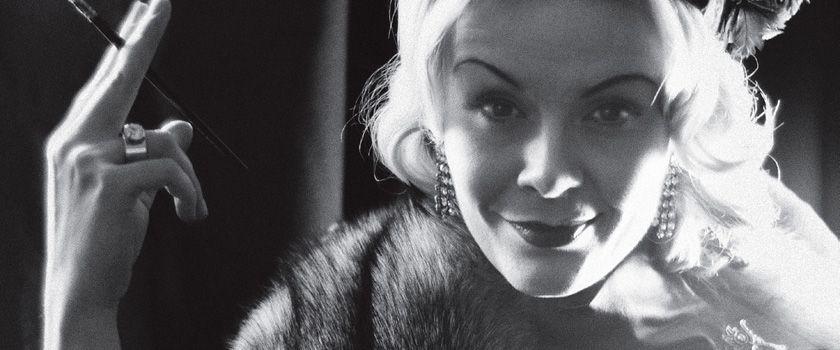
Glamour and Femininity: Fashion in the Great Depression Era
Hunger, unemployment, high crime rates – the global economic crisis of the 1930s gripped the planet and seemed to never let go. Yet, fashion in the 1930s thrived! Despite the catastrophic economic downturn, a new sense of femininity and a style known as glamour emerged.
The Rise of Femininity and Glamour
We continue our series of articles on fashion and women of the 20th century. The inspiration for this series comes from Tatyana Anyukova’s authorial project, “Retro Autumn.” Within this project, Tatyana recreates original female images from the past century, brought to life by ordinary Belarusian women. The unique aspect of the project is that all wardrobe details, from dresses to brooches and handbags, come from Tatyana’s personal retro collection. These items help style the fashionable looks of the 20th century.
The 1920s ended as loudly as they began: with the crash of the New York Stock Exchange. Overnight, half the world found itself on the brink of survival, and a long period of the Great Depression began, lasting a decade.
Surprisingly, during the toughest years, women managed to look their best. How could a new femininity flourish in a time of total unemployment and poverty? How could glamour and Hollywood chic emerge in such difficult times?
However, it was in the 1930s that women began to look like alluring beauties again, without losing their dignity. The 1920s fashion for a “boyish look” was replaced by an emphasized, elegant femininity and even luxury.
The Influence of Hollywood
No matter how poor the ladies of those years were, they never stopped striving for perfection. The American film industry greatly contributed to this. What was the fashion like in the 1930s?
Chic, Glitter, Fur!
A typical beauty of the 1930s was a long-legged blonde in a flowing silk dress with an open back and a fur coat on her shoulders. Everyone wanted to look like that. But only actresses could achieve this look because glamour was out of place in everyday life.
However, cinema in this era did not just influence fashion trends; it created them! Everything that appeared on screen immediately became the number one object of desire for fashionistas. Film producers spent huge sums of money on actresses’ costumes, while male actors often wore their own clothes.
Every lucky girl who fell into the hands of a good film producer was destined to become a style icon. Actresses like Greta Garbo, Marlene Dietrich, Joan Crawford, Jean Harlow, and Mae West popularized clothing that accentuated the female body. They became the legislators of style.
Marlene Dietrich introduced trousers into fashion, and Greta Garbo popularized the male-type suit with broad shoulders. Designers quickly realized how useful cinema could be and created entire collections for screen stars. The rectangular silhouette of the 1920s was replaced by a seductive, feminine silhouette that emphasized the waist, chest, and hips.
Madeleine Vionnet: The Woman Who Shaped Modern Fashion
Few know Madeleine Vionnet, but fashion historians call her “the woman who created everything we wear today.” She invented a simple thing: the bias cut. Similar techniques had been used in clothing creation before, but they were only used in details. Dresses with corsets did not allow full freedom for designer creativity.
Madeleine was the first to create an entire dress using this method. The bias cut gave the fabric a natural elasticity, allowing it to perfectly hug the figure. For her models, Madame Vionnet chose flowing fabrics – satin, crepe, and silk. She introduced the fashion for these materials.
Another of her inventions was outfits whose fabric was gathered with a single seam or knot. She invented the tube collar and the choker neckline, as well as details in the shape of triangles, rectangles, and diamonds. She also invented evening dresses with hoods and coats lined with the same fabric and color as the outfit itself.
Madeleine Vionnet was essentially the first fighter against counterfeit products. Fearing fakes, she photographed each of her dresses from three sides, assigned it a serial number, and entered it into a special album. During her work, her atelier accumulated 75 such albums. Today, they are in the Fashion and Textile Museum in Paris.
Elsa Schiaparelli: The Queen of Extravagance
Elsa Schiaparelli is one of the strongest names in the world fashion book. In the 1930s, she literally did whatever she wanted, shocking the public with her extravagant ideas. Perhaps because she was friends with Salvador Dali? Or because she was a bold and daring innovator by nature?
In any case, Elsa Schiaparelli’s inventions largely determined modern fashion and women’s attitudes towards it. Schiaparelli was the first to use the zipper in clothing. Before that, it was used for the production of shoes and bags. It is impossible to imagine clothes without a zipper now.
Working with artists Salvador Dali and Jean Cocteau, she created a collection of costume jewelry that became a replacement for real jewels. The decorations were made from all kinds of materials – medicines, pencils, candies, feathers, and even dried insects.
Influenced by Dali’s work, Elsa Schiaparelli created a telephone bag, a dress with a lobster image, crazy hats in the shape of an old shoe, a chop, or an inkwell. By the way, she was the “queen of hats” in the 1930s!
Fascinated by the theme of optical illusions, Elsa created a dress with an image that was only visible from a certain angle. Like other Elsa’s inventions, the tear dress shocked people. Many of those who saw this dress in person hurried to give up drugs and alcohol.
And in 1936, Schiaparelli introduced the fashion for the color fuchsia and called it “shocking pink.” She was buried in a dress of this color in 1973. Throughout her life, Elsa Schiaparelli created costumes for 27 films.
The Legacy of the 1930s
By the end of the 1930s, fashion, as if sensing the impending catastrophe, gradually began to change. Elements of the uniform reappeared in the lines of clothing: angular broad shoulders, narrow skirts below the knee, and flat shoes.
In the 1940s, the world would have to endure another terrible war, and fashion would have a new interpretation. However, the 1930s forever remained the era of the flourishing of elegance and refined taste, true glamour, and unparalleled femininity.
For more information on fashion history, visit the Fashion and Textile Museum in Paris.